Model Answer:
India’s rapid solar energy expansion is pivotal for achieving its Panchamrit targets (500 GW non-fossil capacity by 2030) and Net Zero 2070 vision.
1. Ecological Benefits
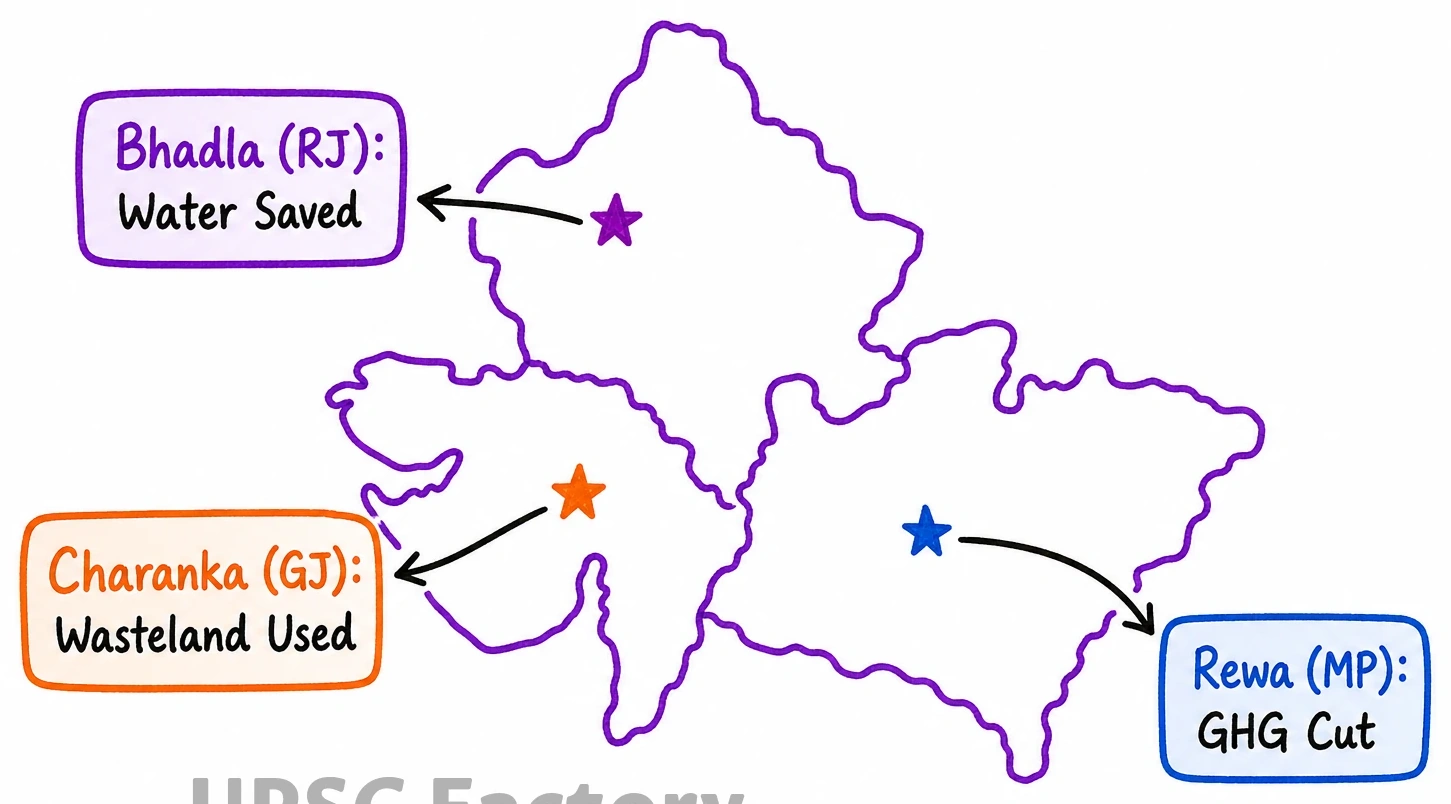
- GHG Mitigation: Displaces coal-heavy grids, drastically curbing carbon footprints (Rewa Solar Plant, MP saves ~15 lakh tonnes CO2/year).
- Water Conservation: Solar PVs require significantly less operational cooling water compared to thermal plants (vital for Bhadla Solar Park, Rajasthan).
- Wasteland Utilization: Transforms barren terrains into productive green assets without triggering deforestation (Charanka Solar Park, Gujarat).
- Air Quality: Eliminates PM2.5 and toxic sulfur emissions inherent to fossil fuel combustion.
2. Economic Benefits
- Macro-Energy Security: Reduces heavy fossil fuel import bills, shielding the economy from global price volatility.
- Cost Competitiveness: A falling Levelized Cost of Energy (LCOE) makes solar tariffs consistently cheaper than conventional thermal power.
- Rural Monetization: Empowers farmers to sell surplus grid power, generating decentralized secondary income (PM-KUSUM Scheme).
- Employment Generation: Drives localized green job creation across manufacturing, installation, and maintenance sectors (Suryamitra Skill Programme).
Harnessing solar potential ensures a sustainable, decentralized energy architecture, fundamentally driving India’s broader macroeconomic resilience and ecological security.