Model Answer:
Non-farm primary activities involve the direct extraction of natural resources, excluding agriculture. Key sectors include mining, quarrying, forestry, fishing, and gathering.
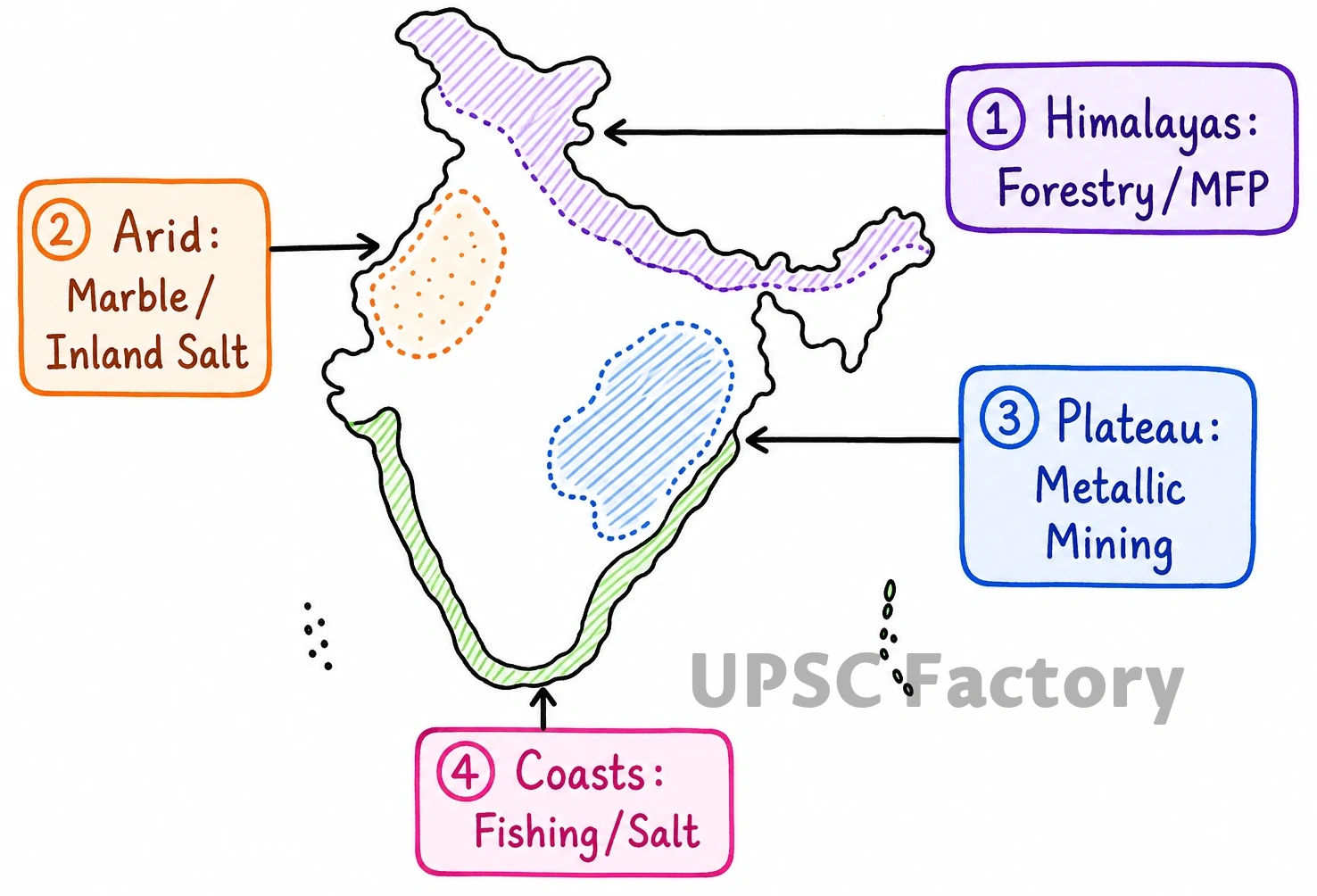
Physiographic Linkages of Non-Farm Primary Activities
- Peninsular Plateau (Mining & Quarrying):
- Metallic Minerals: Stable shields of igneous/metamorphic rocks hold rich reserves (Iron/coal in Chotanagpur Plateau).
- Quarrying: Extensive extraction of granites and building materials (Deccan Trap region).
- Coastal Plains & Islands (Fishing & Salt):
- Marine Fishing: Wide continental shelves and upwelling support rich fisheries (Sardines in Malabar Coast; PMMSY focus).
- Salt Panning: Shallow coastal creeks with high evaporation (Rann of Kutch).
- Himalayan Region (Forestry & Gathering):
- Silviculture: Altitudinal vegetation zones support commercial timber (Pine/Deodar in Pir Panjal).
- Minor Forest Produce (MFP): High biodiversity sustains tribal gathering economies (Medicinal herbs in North-East).
- Arid Plains (Non-Metallic Extraction):
- Building Stones: Exposed sedimentary/metamorphic structures (Marble/Sandstone in Rajasthan).
- Inland Salt: Desiccated saline lakes (Sambhar Lake).
Conclusion: India’s geological history and physiography dictate the spatial distribution of non-farm resources. Sustainable extraction frameworks (MMDR Act, Forest Rights Act) are vital for equitable regional development.