Model Answer:
Article 368 authorizes Parliament to amend the Constitution. However, this power balances parliamentary sovereignty with constitutional supremacy through a delicate framework of procedural hurdles and substantive judicial checks.
1. Procedural Limitations on Amending Power
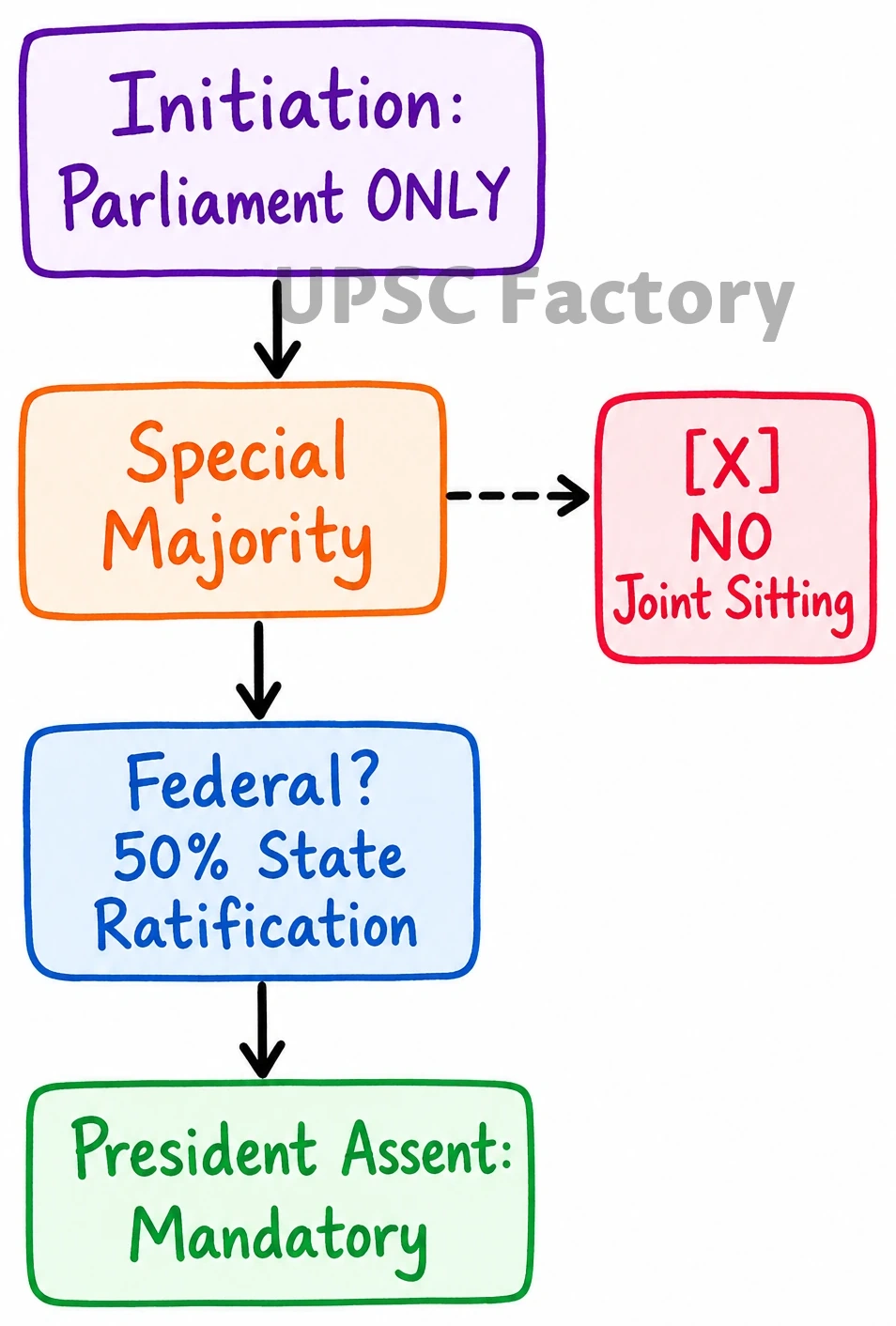
The Constitution prescribes specific mechanical constraints under Article 368 to prevent hasty majoritarian changes:
- Special Majority Requirement: Most amendments demand a dual majority—two-thirds of members present and voting, plus a majority of the total membership (Article 368(2)).
- State Ratification: Amendments altering the federal framework (e.g., Presidential elections, Supreme Court) mandate ratification by at least half of the State Legislatures.
- Absence of Joint Sitting: Disagreements between the Lok Sabha and Rajya Sabha over amendment bills cannot be resolved via joint sitting, granting the Upper House an effective veto.
- Legislative Exclusivity: State legislatures cannot initiate constitutional amendments, confining the procedural origin strictly to the Parliament.
- Mandatory Presidential Assent: While the 24th Amendment (1971) removed the President’s veto on amendment bills, it formalized assent as the rigid final procedural hurdle.
2. Substantive Limitations on Amending Power
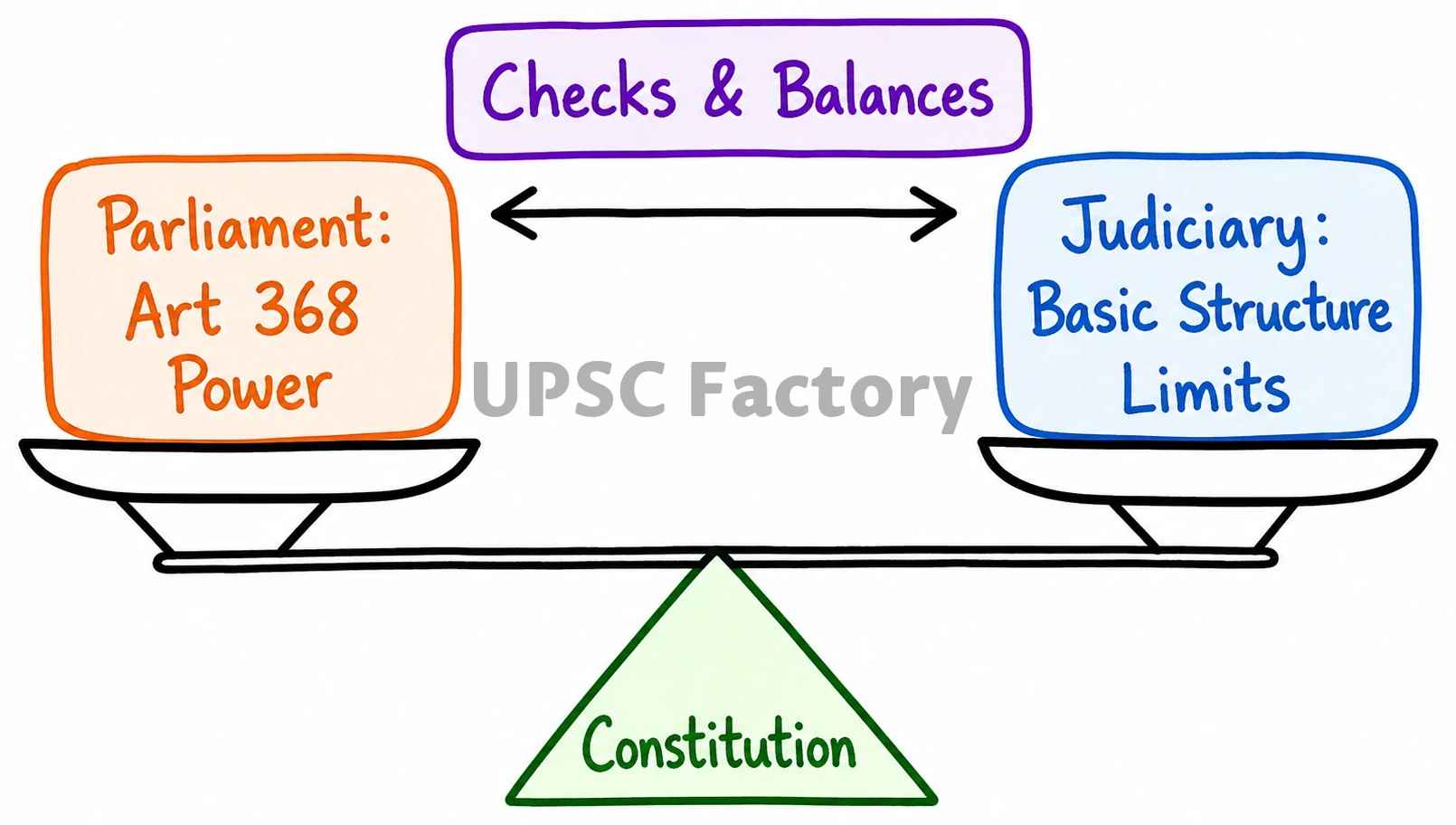
Substantive limitations constrain the scope and content of what Parliament can legally amend:
- Basic Structure Doctrine: Parliament cannot alter or destroy the Constitution’s foundational identity and essential features (Kesavananda Bharati case, 1973).
- Judicial Review: Constitutional amendments are subject to strict judicial scrutiny to prevent legislative overreach (Minerva Mills case, 1980).
- Limited Amending Power: The power to amend is itself a basic feature; Parliament cannot expand it into an absolute, constituent power.
- Separation of Powers: Parliament cannot usurp judicial independence under the guise of amending the Constitution (99th Amendment/NJAC struck down, 2015).
- Core Fundamental Rights: Rights forming the bedrock of the Basic Structure (e.g., Articles 14, 19, 21) are substantively immune from abrogation.
The Constitution masterfully synthesizes flexibility for socio-economic evolution with rigid safeguards. By combining procedural rigidity with substantive judicial doctrines, it effectively prevents majoritarian excess and preserves India’s democratic ethos.