Model Answer:
Industrial effluents containing heavy metals and toxic chemicals severely degrade India’s riverine ecosystems, threatening both water security and public health.
Mitigation Measures for Industrial River Pollution
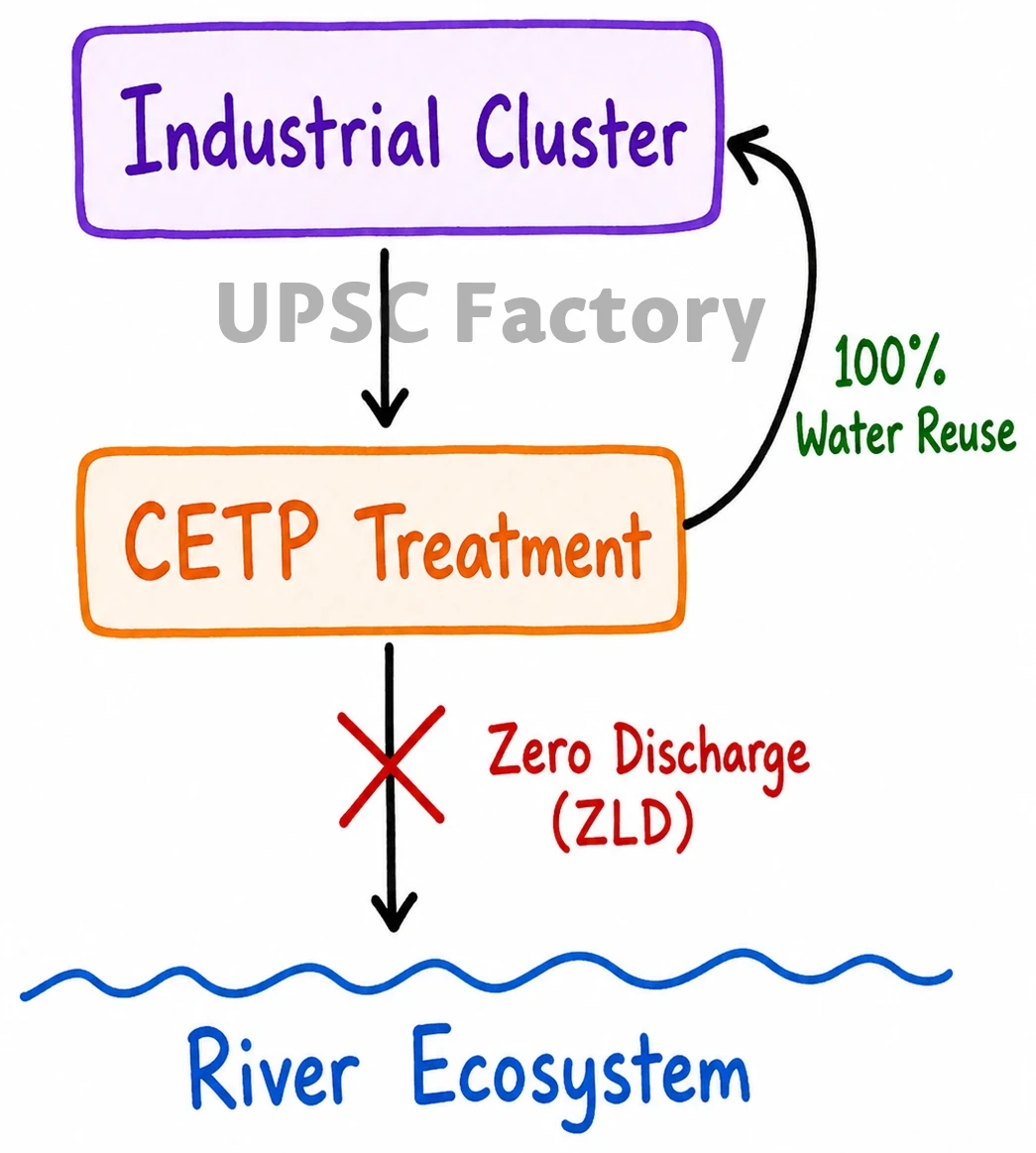
- Zero Liquid Discharge (ZLD): Mandating complete wastewater recycling in highly polluting industries to entirely eliminate toxic liquid discharge.
- Common Effluent Treatment Plants (CETPs): Building pooled treatment infrastructure for MSME clusters to ensure economic viability (e.g., Tiruppur textile cluster).
- Stringent Enforcement: Deploying real-time monitoring with heavy penalties and closure notices for non-compliant Grossly Polluting Industries (GPIs).
- In-situ Treatment: Employing bioremediation, phytoremediation, and constructed wetlands to naturally degrade pollutants before reaching main river streams.
Key Government Initiatives
- Statutory Framework: Strict regulation and penalization of unauthorized industrial discharge (Water (Prevention and Control of Pollution) Act, 1974).
- Namami Gange Programme: Continuous monitoring, upgrading CETPs, and sealing non-compliant GPIs specifically across the Ganga river basin.
- OCEMS Portal: The Central Pollution Control Board’s (CPCB) Online Continuous Effluent Monitoring System for 24×7 tracking of industrial discharge.
- National River Conservation Plan (NRCP): Providing federal financial and technical assistance to states for upgrading effluent treatment infrastructure.
Shifting towards a circular water economy by strictly enforcing the “Polluter Pays Principle” and incentivizing green technologies is crucial for revitalizing India’s rivers.