Model Answer:
Vardhamana Mahavira, the 24th Jain Tirthankara, propagated an ethical framework centered on non-violence, self-control, and spiritual discipline to attain liberation (Moksha).
1. Major Teachings of Mahavira
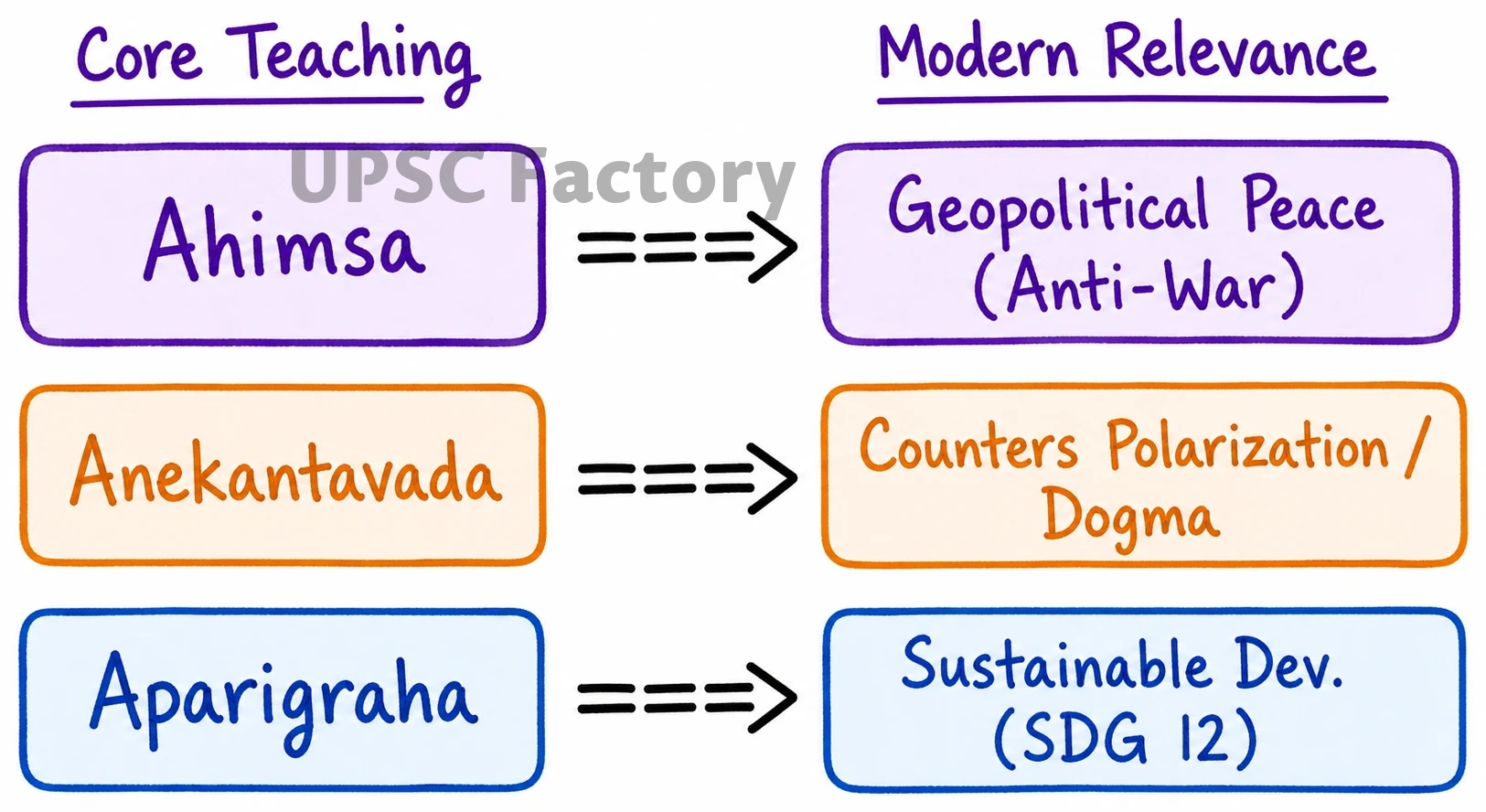
- Ahimsa (Non-violence): Supreme emphasis on non-injury to all living beings in thought, word, and deed.
- Anekantavada & Syadvada (Pluralism): Reality is multi-faceted; no single perspective holds the absolute truth.
- Aparigraha (Non-possession): Complete detachment from material wealth and minimization of worldly desires.
- Pancha Mahavrata: Includes Ahimsa, Satya (truth), Asteya (non-stealing), Brahmacharya (celibacy), and Aparigraha.
- Triratna (Three Jewels): Emphasizes Right Faith (Samyak Darshana), Right Knowledge (Samyak Jnana), and Right Conduct (Samyak Charitra).
2. Contemporary Relevance
- Geopolitical Peace: Ahimsa serves as a moral deterrent against modern warfare and terrorism (e.g., Russia-Ukraine conflict, Middle East crises).
- Countering Polarization: Anekantavada promotes intellectual tolerance, directly combating religious extremism, dogmatism, and digital ‘cancel culture’.
- Sustainable Development: Aparigraha acts as an antidote to hyper-consumerism and ecological degradation (e.g., Mission LiFE, SDG 12-Responsible Consumption).
- Administrative Integrity: Practicing Asteya and Triratna instills probity, self-restraint, and anti-corruption values in public service.
Mahavira’s teachings transcend religious boundaries, offering a timeless, pragmatic blueprint to resolve the modern world’s socio-political, economic, and environmental crises.