Model Answer:
Social re-engineering aims for equitable socio-economic transformation (Article 38). Achieving this requires civil servants to combine cognitive tools (reason) with moral guardrails (ethics).
1. Role of Reason and Critical Thinking
- Evidence-Based Targeting: Uses empirical data to identify genuine beneficiaries and eliminate leakages (e.g., weeding out ghost identities via Direct Benefit Transfers).
- Resource Optimization: Employs rational cost-benefit analysis to maximize welfare impact within strict fiscal constraints.
- Predicting Bottlenecks: Critical thinking preempts systemic implementation hurdles (e.g., mapping digital literacy gaps before mandating exclusive e-governance portals).
2. Necessity of an Ethical Framework
- Mitigating Exclusion: Prevents blind procedural adherence from causing human tragedies (e.g., allowing manual overrides during Aadhaar-PDS biometric failures to prevent starvation deaths).
- Distributive Justice: Ensures rational policies inherently prioritize the most vulnerable, aligning with Rawls’ Theory of Justice (e.g., Antyodaya approach).
- Compassionate Innovation: Merges logical resource mobilization with deep empathy (e.g., IAS Armstrong Pame applying critical thinking to crowdfund the ‘People’s Road’ in Manipur).
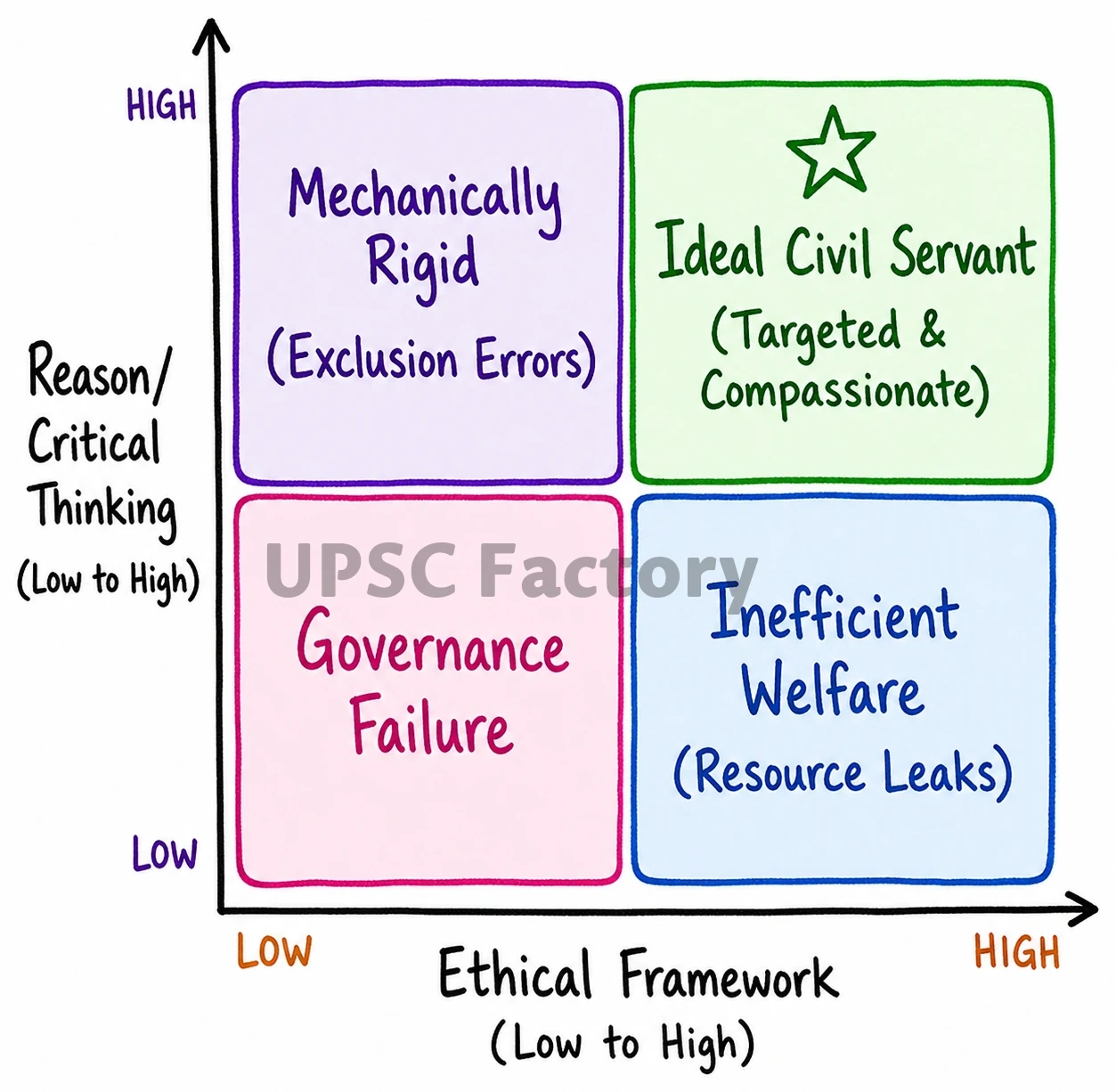
Reason without ethics is mechanically rigid, while ethics without reason is inefficient. Their synthesis guarantees an administration that is both highly effective and profoundly compassionate.