Model Answer:
The Smart Cities Mission (SCM) aligns with SDG 11 by integrating technology and infrastructure to foster sustainable, inclusive urban spaces for marginalized populations.
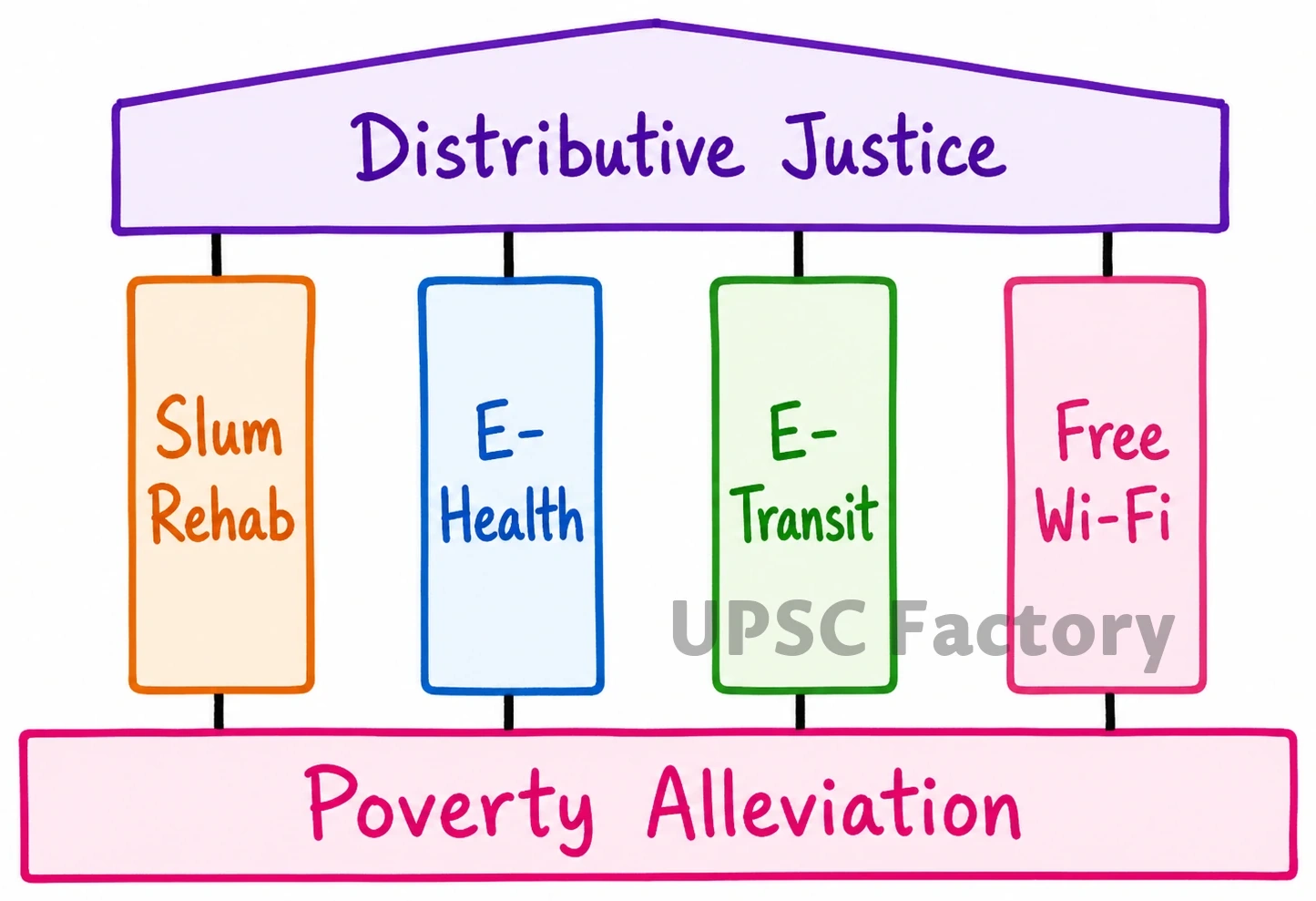
Addressing Urban Poverty
- Slum Rehabilitation: Upgrading affordable housing and ensuring tenure security via targeted Area-Based Development (ABD).
- Essential Services: Deploying smart grids and SCADA systems to ensure equitable water and sanitation in low-income settlements.
- Accessible Healthcare: Implementing e-health networks and localized civic infrastructure (e.g., Pune’s smart health clinics in slums).
- Livelihood Generation: Creating skill development hubs and formalized street vending zones to support the informal economy.
Promoting Distributive Justice
- Digital Inclusion: Providing free public Wi-Fi to bridge the digital divide for Economically Weaker Sections (EWS).
- Spatial Equity: Developing affordable, tech-enabled mass transit (e-buses) to enhance spatial mobility for the urban poor.
- Social Infrastructure: Building integrated community spaces for marginalized groups (e.g., Bhubaneswar’s Social Equity Centres).
- Development Gaps: Over-reliance on ABD often creates “islands of excellence,” risking elite capture and leaving peripheries underserved.
To truly actualize distributive justice, SCM must transition from purely technology-led governance toward a “Right to the City” paradigm, prioritizing pan-city socio-economic integration.