Model Answer:
South Asia’s transboundary river systems (Indus, Ganga-Brahmaputra-Meghna) support 1.9 billion people, acting simultaneously as vital drivers of regional economic growth and focal points of geopolitical friction.
1. Water as a Socio-Economic Asset
- Agrarian & Food Security: Provides extensive irrigation networks sustaining regional breadbaskets (e.g., Indus Basin Irrigated System, Indo-Gangetic plains).
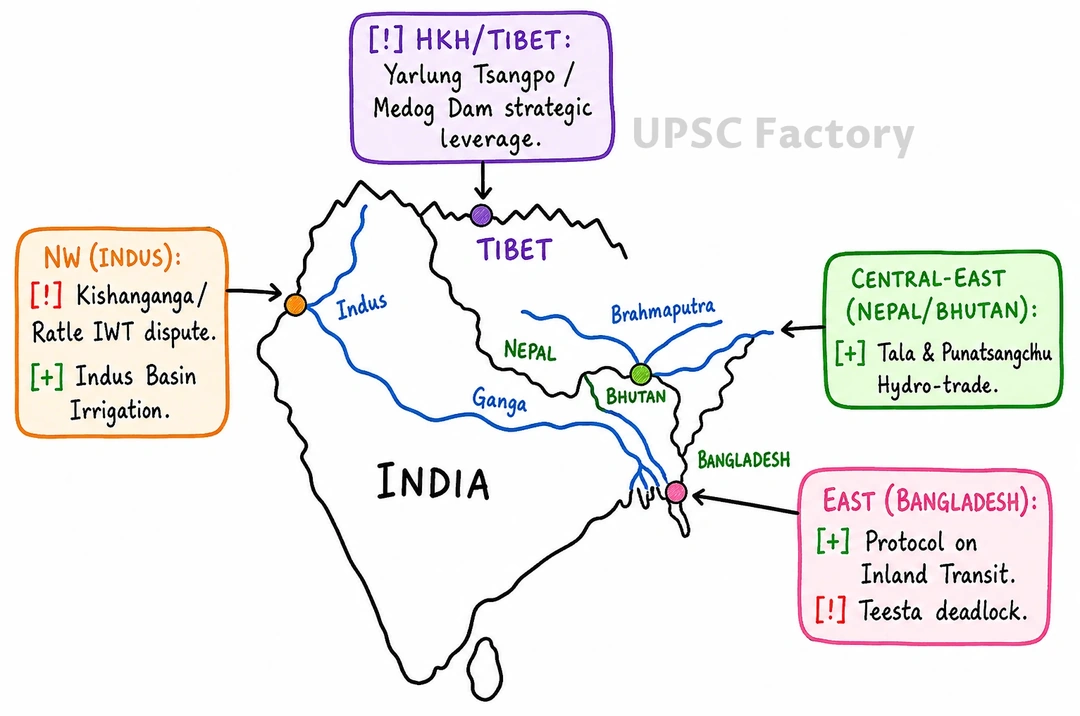
- Clean Hydro-Energy Integration: Drives clean power generation and bilateral energy trade (e.g., India-Bhutan Tala/Punatsangchhu, India-Nepal hydro agreements).
- Transboundary Navigation: Facilitates cost-effective, low-carbon regional transport and trade connectivity (e.g., Indo-Bangladesh Protocol on Inland Water Transit and Trade).
2. Water as a Catalyst for Conflict
- Upper-Riparian Control: Unilateral dam construction creates downstream ecological stress and strategic leverage (e.g., Chinese mega-dams on the Yarlung Tsangpo/Brahmaputra).
- Apportionment Disputes & Treaty Strains: Structural disputes over water sharing and technical designs challenge bilateral frameworks (e.g., Kishanganga/Ratle impasse under Indus Waters Treaty; Teesta River deadlock).
- Climate Stress & Resource Scarcity: Hindu Kush-Himalayan glacial melt and erratic monsoons intensify zero-sum competition over depleting lean-season river flows.
Transitioning from narrow hydro-nationalism to data-transparent, basin-wide multilateral governance is essential for South Asia’s collective ecological and economic security.