Model Answer:
The statement embodies the Bhagavad Gita’s ideal of Nishkama Karma (selfless action), where steadfast commitment to public duty constitutes the highest ethical pursuit and perfection for a civil servant.
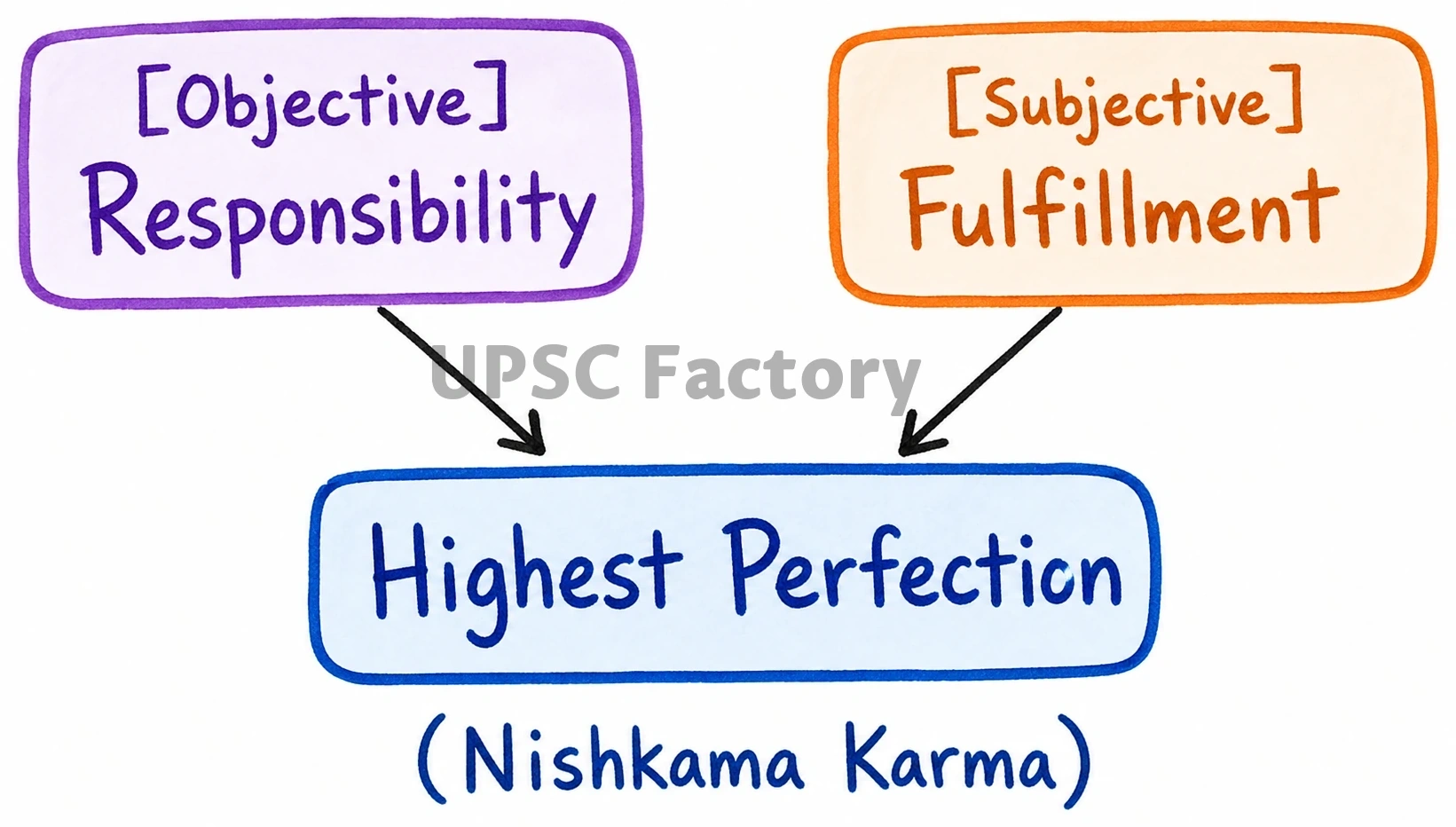
1. Devotion to Duty and Sense of Responsibility
- Objective Action: Prioritizing constitutional mandates and public interest over personal biases (Kant’s Categorical Imperative).
- Public Trust: Institutionalizing absolute accountability, integrity, and selflessness (Nolan Principles) to uphold democratic credibility.
- Resilience in Crisis: Elevating public welfare above personal comfort or safety during emergencies (e.g., frontline district administrators during COVID-19).
- Excellence in Execution: Translating moral responsibility into timely, tangible public outcomes (e.g., E. Sreedharan’s perfection and punctuality in executing the Delhi Metro).
2. Public Service as a Pathway to Personal Fulfilment
- Self-Actualization: Reaching one’s highest human potential through transformative societal contribution (e.g., IAS Armstrong Pame’s fulfillment in building the crowdfunded “People’s Road”).
- Intrinsic Reward: Deriving profound satisfaction from empowering the marginalized, which deeply transcends mere material or promotional incentives.
- Moral Harmony: Aligning professional actions with inner ethical conscience, thereby eliminating cognitive dissonance and fostering lasting inner peace.
For a civil servant, duty transcends bureaucratic obligation; it becomes a meaningful spiritual vocation where the advancement of societal welfare and the attainment of personal perfection seamlessly converge.