Model Answer:
Land reforms in post-independence India yielded uneven results, achieving profound success primarily in states like West Bengal, Kerala, and Jammu & Kashmir.
1. Key Regions and Achievements
- West Bengal: Secured tenancy rights and sharecropper registration (Operation Barga).
- Kerala: Comprehensive abolition of landlordism and intermediary tenures (Kerala Land Reforms Act, 1963).
- Jammu & Kashmir: Radical “land to the tiller” redistribution without compensation.
2. Factors Driving Successful Implementation
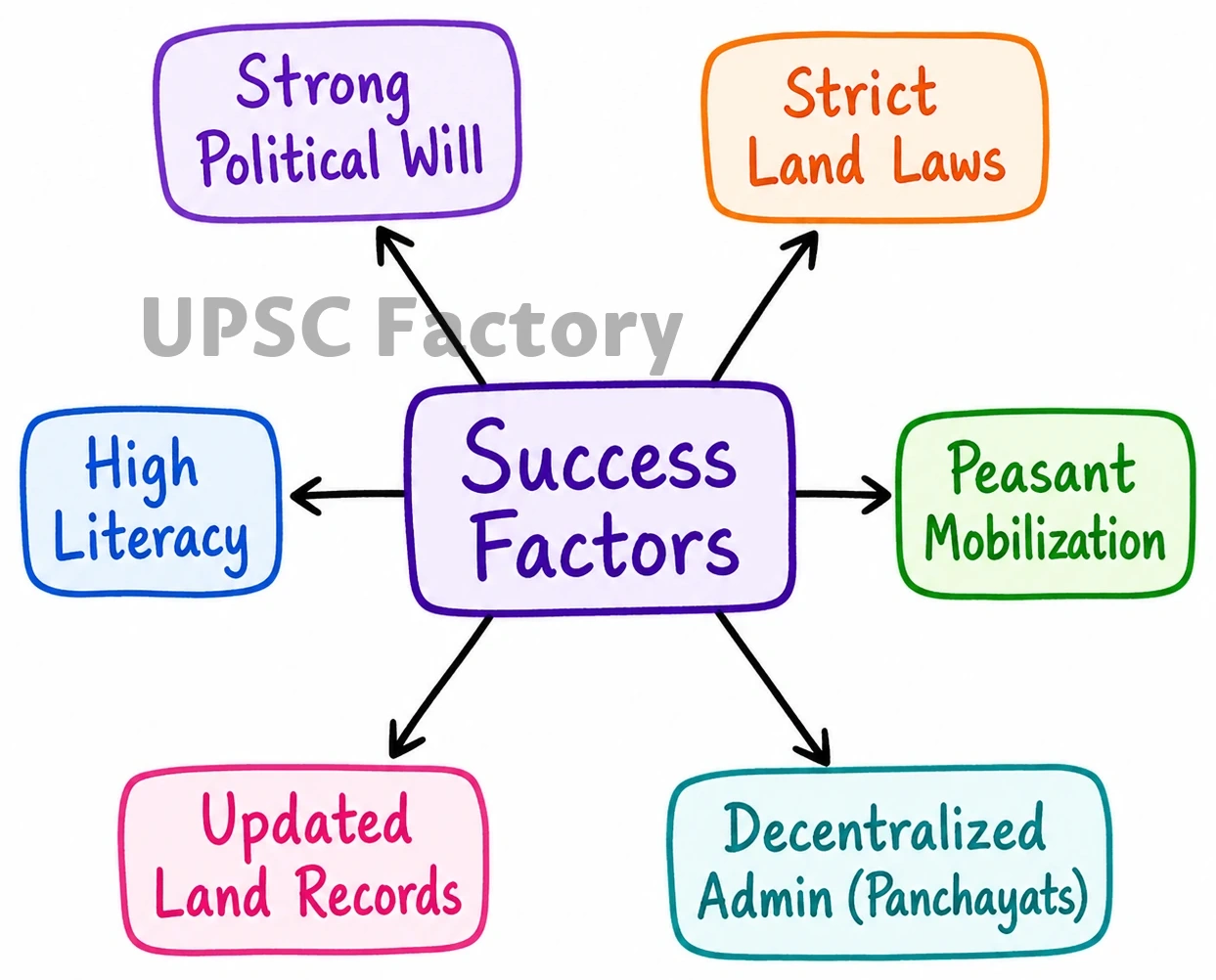
- Strong Political Will: Dedicated ruling regimes prioritized agrarian restructuring over entrenched elite interests.
- Mass Peasant Mobilization: Active grassroots organizations empowered vulnerable tenants to claim their legal rights (Kisan Sabhas).
- Decentralized Administration: Empowered local Panchayats bypassed traditional bureaucratic red tape to accurately identify actual tillers.
- Stringent Legal Frameworks: Loopholes in ceiling limits were minimized, and progressive laws were shielded from prolonged litigation (9th Schedule).
- Aggressive Record Modernization: Proactive bureaucratic drives rapidly updated and secured historical land records on the ground.
- High Literacy & Awareness: Educated rural populations actively demanded accountability and utilized land tribunals effectively (Kerala).
Replicating this historic synergy of political intent and grassroots mobilization remains crucial today for successfully executing second-generation agrarian reforms, such as formalized land leasing.