Model Answer:
Disaster resilience is the ability of a community or system to resist, absorb, adapt to, and rapidly recover from hazard impacts effectively (UNDRR).
1. Determinants of Disaster Resilience
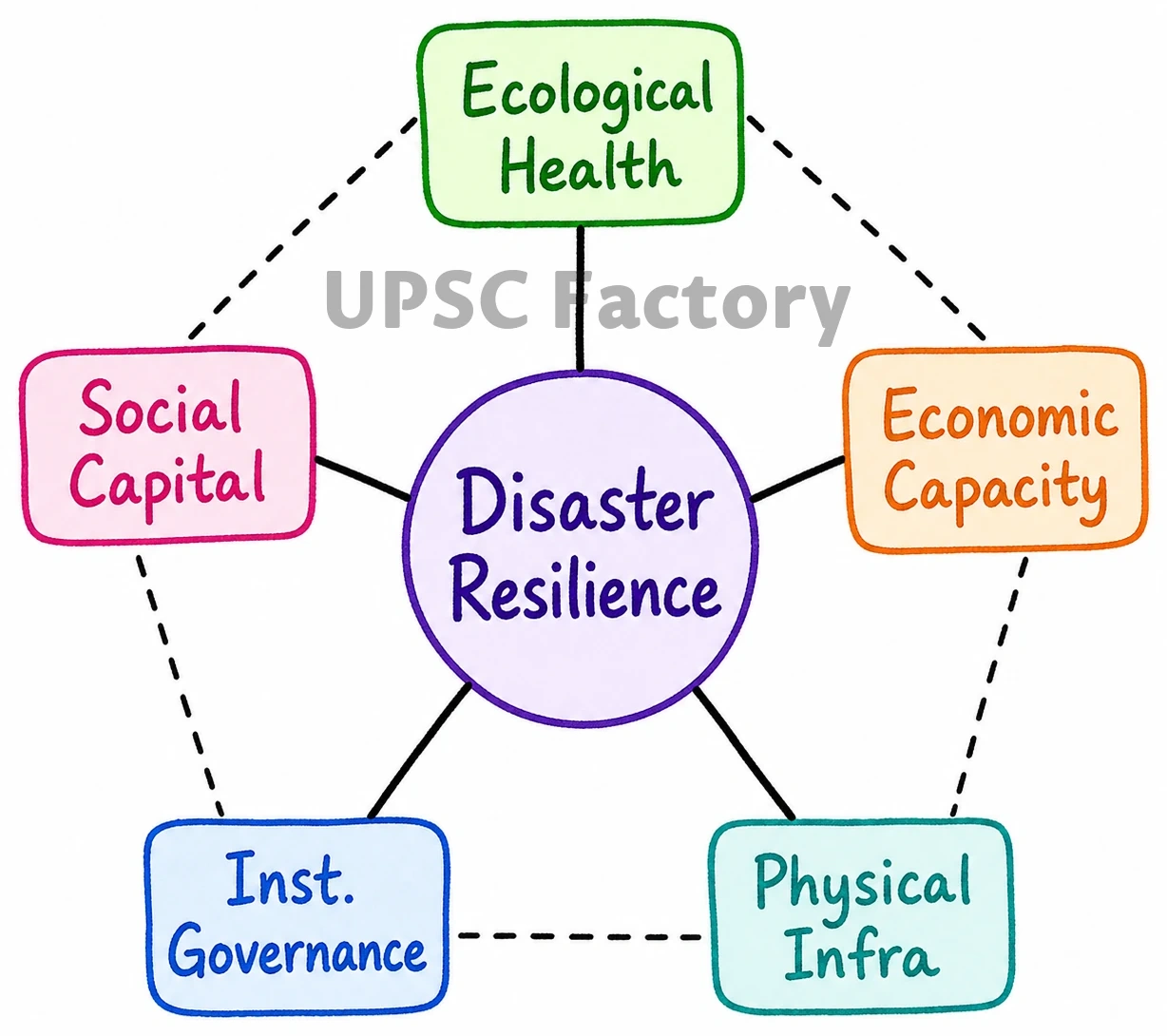
- Social Capital: Community cohesion, hazard awareness, and demographic vulnerabilities (Odisha’s community-level cyclone preparedness).
- Economic Capacity: Availability of contingency funds, livelihood diversification, and insurance penetration.
- Institutional Governance: Effective regulatory enforcement, decentralization, and accountability (NDMA/SDMA frameworks).
- Physical Infrastructure: Structural robustness and adherence to building codes (CDRI guidelines for critical lifelines).
- Ecological Health: Preservation of natural environmental buffers (Mangroves mitigating coastal storm surges).
2. Elements of a Resilience Framework
- Risk Identification: Multi-hazard mapping, vulnerability profiling, and micro-zonation assessments.
- Risk Reduction: Implementing structural (embankments) and non-structural (land-use zoning) mitigation measures.
- Preparedness Readiness: Capacity building, stockpiling, and Multi-Hazard Early Warning Systems (MHEWS).
- Financial Protection: Establishing risk transfer mechanisms, catastrophe bonds, and dedicated disaster response funds.
- Resilient Recovery: Ensuring post-disaster rehabilitation strictly adheres to the “Build Back Better” principle (Bhuj earthquake reconstruction).
3. Global Targets of Sendai Framework (2015–2030)
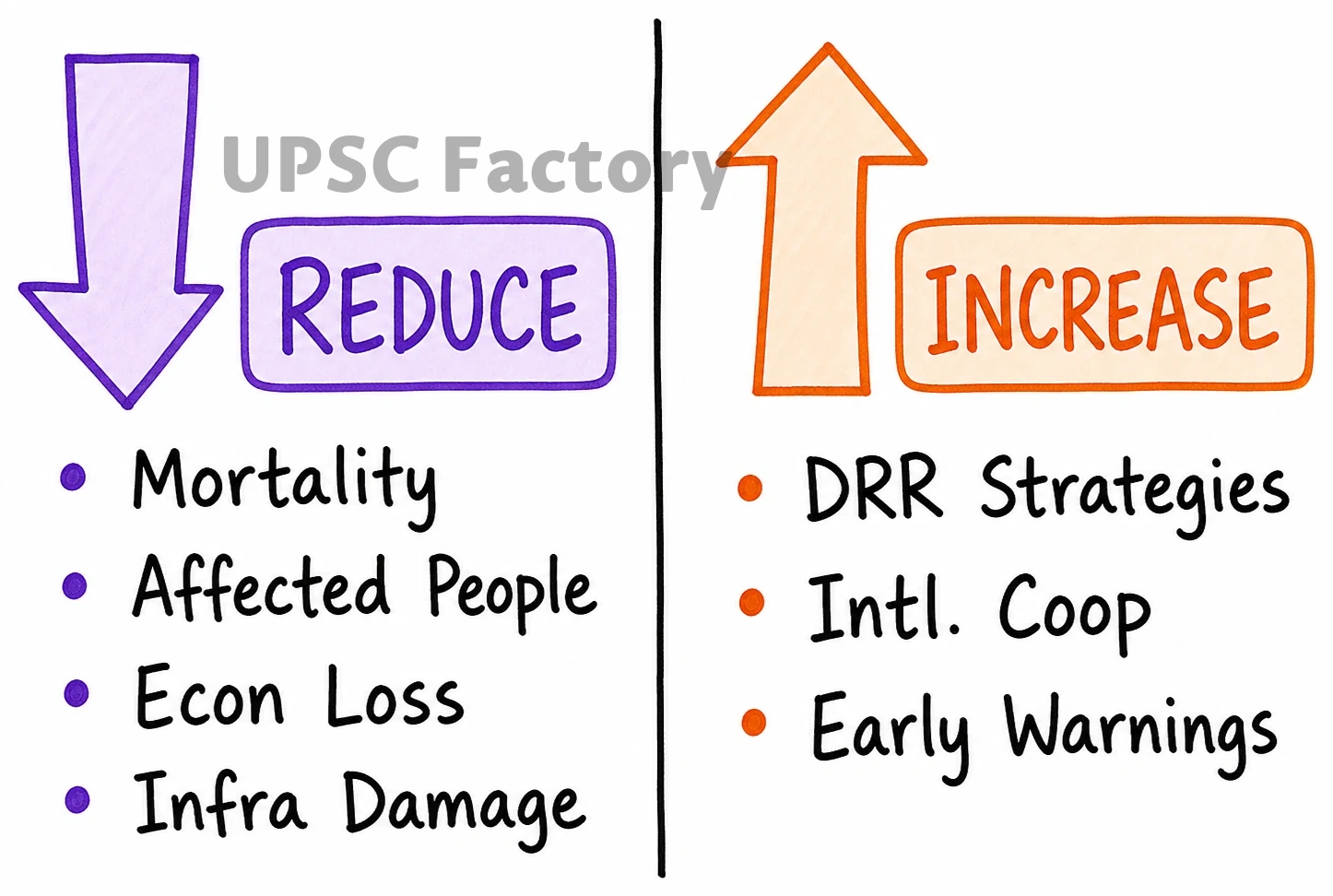
Key Reductions:
- Mortality: Substantially reduce global disaster mortality per 100,000 population.
- Affected People: Reduce the number of affected people globally.
- Economic Loss: Reduce direct disaster economic loss in relation to global GDP.
- Infrastructure Damage: Reduce damage to critical infrastructure and disruption of basic services (health/education).
Key Increases:
- DRR Strategies: Increase the number of countries with national and local disaster risk reduction strategies.
- International Cooperation: Enhance cooperation/support to developing countries for implementation.
- Early Warnings: Increase availability and access to multi-hazard early warning systems and risk assessments.
Mainstreaming resilience into overall developmental planning, championed by platforms like CDRI and NDMP 2019, is imperative for securing sustainable, disaster-proof economic growth.