Model Answer:
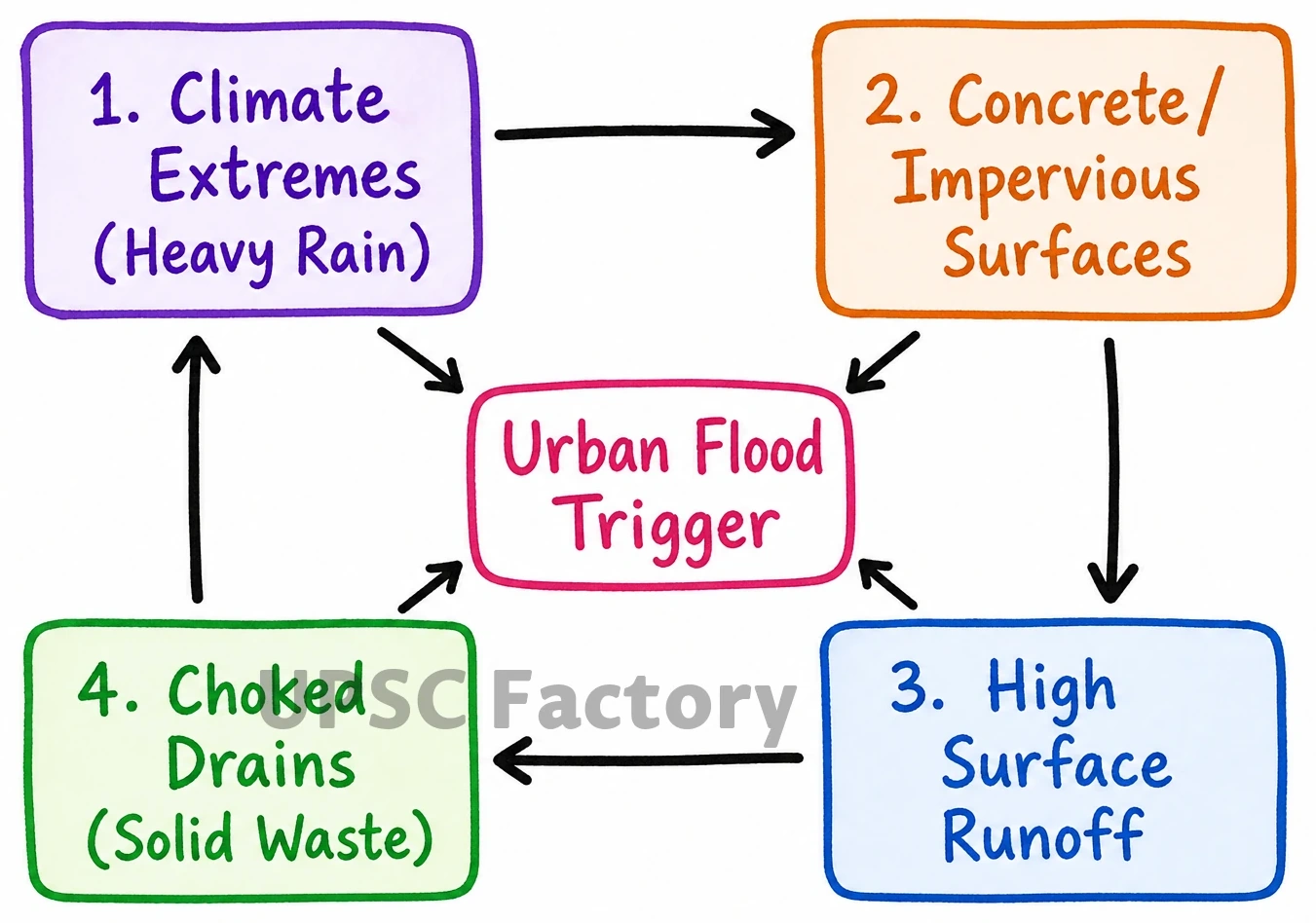
Urban flooding is a severe, recurring disaster where high-intensity rainfall overwhelms city drainage systems, exacerbated by unplanned urbanization and changing climate extremes.
1. Causes of Urban Flooding
- Climate-Induced Extremes: Increased frequency of high-intensity, short-duration micro-climatic rainfall and coastal sea-level rise (IPCC AR6).
- Ecological Encroachment: Construction over natural wetlands, floodplains, and lakes, destroying natural water sinks (Pallikaranai marsh, Chennai).
- Impervious Surfaces: Widespread concreting and asphalt reduce groundwater percolation, rapidly increasing surface run-off.
- Obsolete Drainage Infrastructure: Antiquated storm-water drains designed for lower rainfall intensities.
- Solid Waste Mismanagement: Unsegregated garbage and plastic waste choking urban drainage channels (Mithi River, Mumbai).
2. Features of Two Major Floods (Last Two Decades)
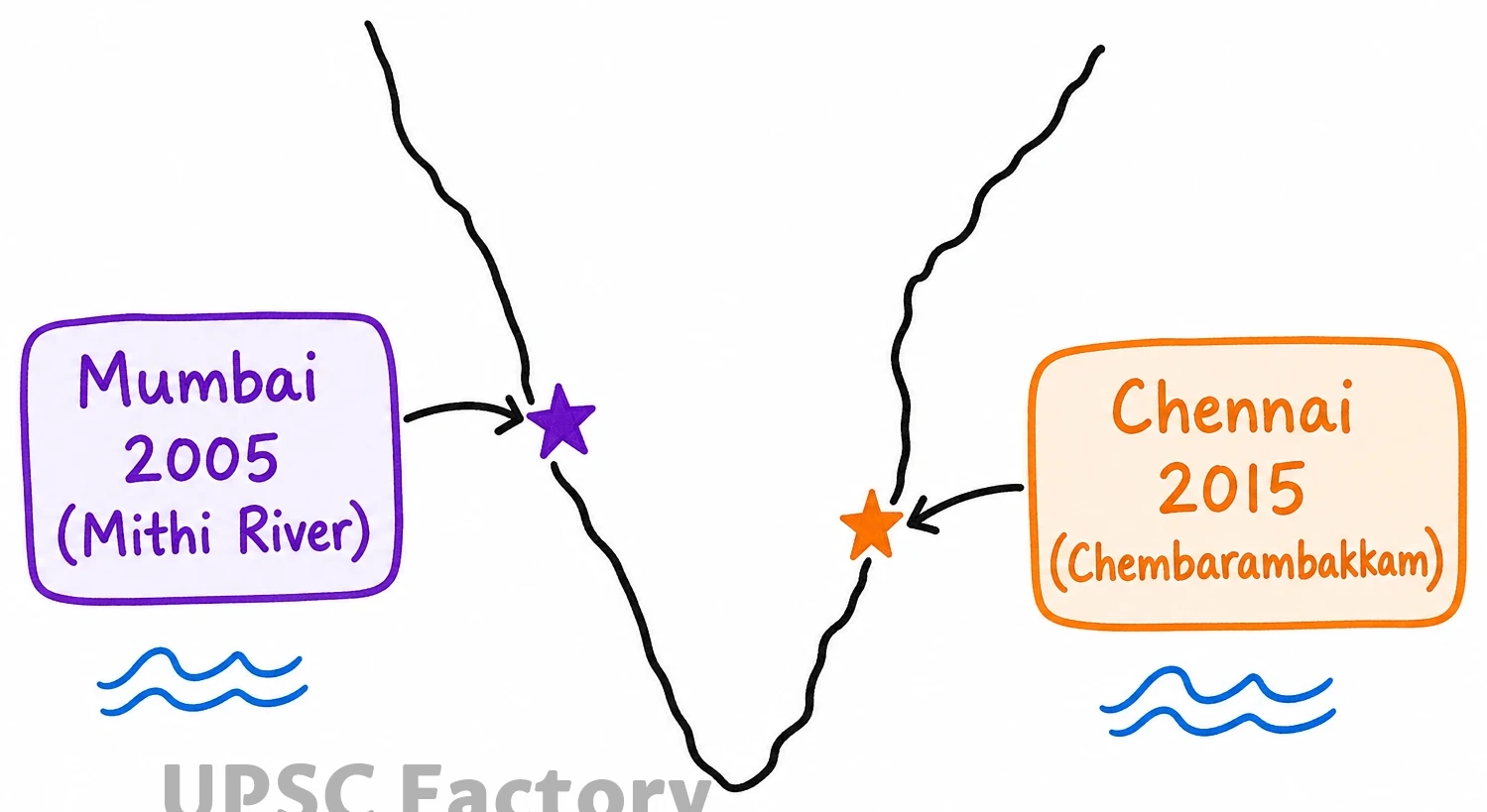
- Mumbai Floods (2005):
- Trigger: Extreme climatic event (944 mm rainfall in 24 hours).
- Aggravators: Severe encroachment of the Mithi River; choked centuries-old storm-water drains.
- Impact: Total collapse of the financial capital’s transport, power, and communication infrastructure.
- Chennai Floods (2015):
- Trigger: Unprecedented North-East monsoon downpours combined with sudden discharge from the Chembarambakkam reservoir.
- Aggravators: Haphazard IT corridor development over natural floodplains and rapid decimation of interconnected temple tanks.
- Impact: Massive human displacement, submerged airport, and industrial supply-chain paralysis.
3. Tackling Policies and Frameworks in India
- NDMA Guidelines on Urban Flooding (2010): Delinks urban flooding from riverine flooding, mandating specialized Early Warning Systems (e.g., I-FLOWS in Mumbai, C-FLOWS in Chennai).
- Disaster Management Act 2005: Empowers State and District Disaster Management Authorities (SDMA/DDMA) to enforce localized monsoon-preparedness and response plans.
- MoHUA Frameworks: The Standard Operating Procedures (SOP) and Manual on Storm Water Drainage Systems mandate pre-monsoon desilting and municipal accountability.
- Urban Infrastructure Missions: AMRUT and the Smart Cities Mission prioritize funding for upgrading drainage networks, water body rejuvenation, and integrating “Sponge City” concepts (permeable pavements, rainwater harvesting).
Building climate-resilient cities requires shifting from reactive disaster response to proactive risk reduction through eco-sensitive urban planning, strict anti-encroachment laws, and localized watershed management.