Model Answer:
Poverty restricts dietary access, causing malnutrition (NFHS-5: 35.5% stunting). This impairs cognitive development, lowering lifelong earnings and perpetuating intergenerational poverty.
1. The Vicious Cycle: Poverty, Malnutrition & Human Capital
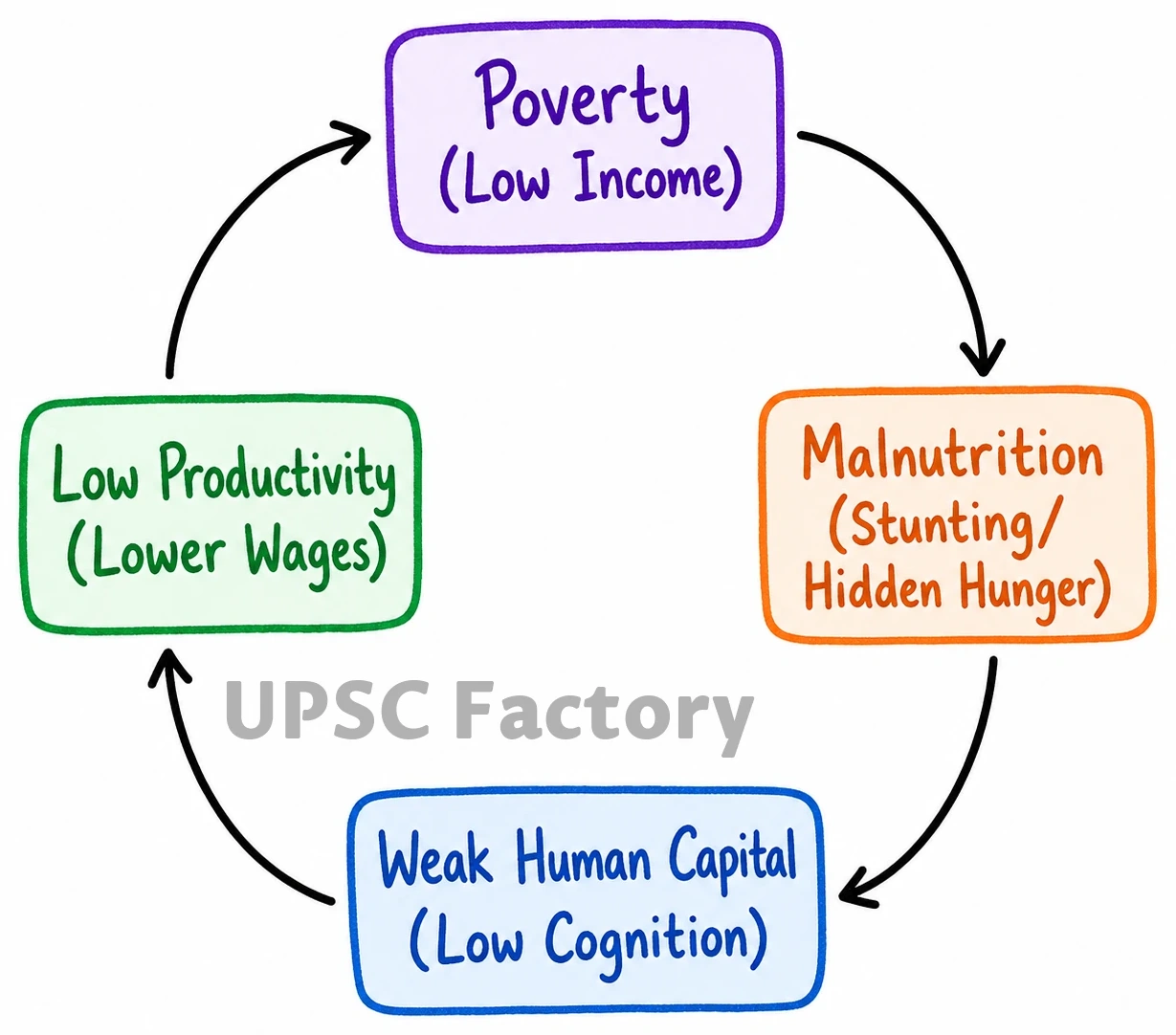
- Nutritional Deprivation: Low income prevents access to diverse, micro-nutrient-rich foods.
- Cognitive Impairment: Childhood undernutrition stunts brain development, reducing educational attainment.
- Productivity Loss: Poor health lowers adult workforce productivity, reinforcing income poverty (Amartya Sen’s Capability Deprivation).
2. Multi-Pronged Steps to Break the Cycle
- Economic Empowerment: Expand rural wage security and promote women-led micro-enterprises integrating livelihoods with nutrition (MGNREGA; Kerala’s Kudumbashree model).
- Nutritional Security: Diversify PDS by mainstreaming millets and expand bio-fortification in targeted feeding programs (PM POSHAN; Poshan Abhiyaan 2.0).
- Maternal & Child Health: Ensure adequate maternal nutrition and strengthen early childhood care to prevent low birth weight (PMMVY; ICDS/Anganwadis).
- WASH Integration: Universalize clean water and sanitation to reduce disease-induced nutrient malabsorption (Swachh Bharat; Jal Jeevan Mission).
- Targeted Delivery: Leverage the JAM trinity for Direct Benefit Transfers (DBT) to prevent leakages and ensure targeted dietary support.
Breaking this cycle requires converging health, education, and livelihood interventions. Achieving SDG 1 (No Poverty) and SDG 2 (Zero Hunger) is critical to transforming India’s population into a productive demographic dividend.