Model Answer:
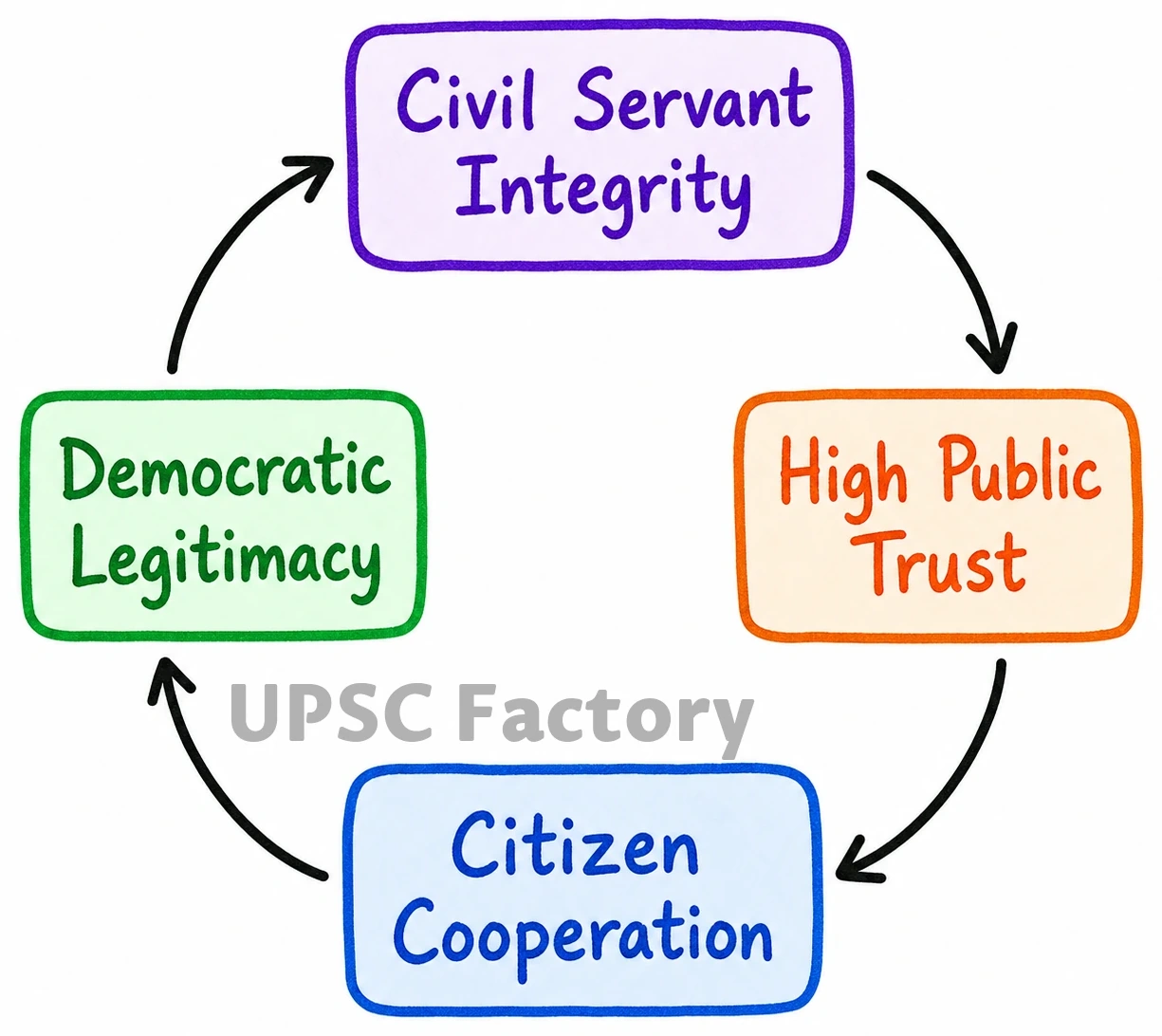
In democratic governance, civil servants are the primary bridge between the state and citizens. Public faith in their integrity is essential to sustain institutional trust and democratic legitimacy.
1. Imperative of Positive Public Perception
- Policy Efficacy: Public trust drives voluntary citizen cooperation in state initiatives (e.g., Swachh Bharat Jan Andolan, Covid-19 protocols).
- Democratic Legitimacy: Positive perception eliminates state-citizen friction, reinforcing the social contract and democratic values.
- Inclusive Development: An image of empathy ensures marginalized sections confidently access state entitlements (e.g., DBT, PDS).
- Systemic Accountability: A recognized culture of integrity actively deters cronyism, political-bureaucratic nexus, and administrative opacity.
2. Frameworks to Institutionalize Integrity and Commitment
- Ethical Scaffolding: Embedding foundational values into public administration (e.g., Nolan Principles, 2nd ARC’s proposed Code of Ethics).
- Capacity & Attitude: Transitioning from a rigid, rule-bound bureaucracy to a citizen-centric, role-based civil service (e.g., Mission Karmayogi).
- Transparency & Grievance Redressal: Empowering citizens to directly monitor and question the bureaucracy (e.g., RTI Act, CPGRAMS, Social Audits).
- Statutory Deterrence: Ensuring swift penalization of malfeasance (e.g., Lokpal, Prevention of Corruption Act).
Fostering a civil service rooted in uncompromised integrity transforms administrators into true ‘Karmayogis’, essential for translating the democratic vision of “Minimum Government, Maximum Governance” into reality.