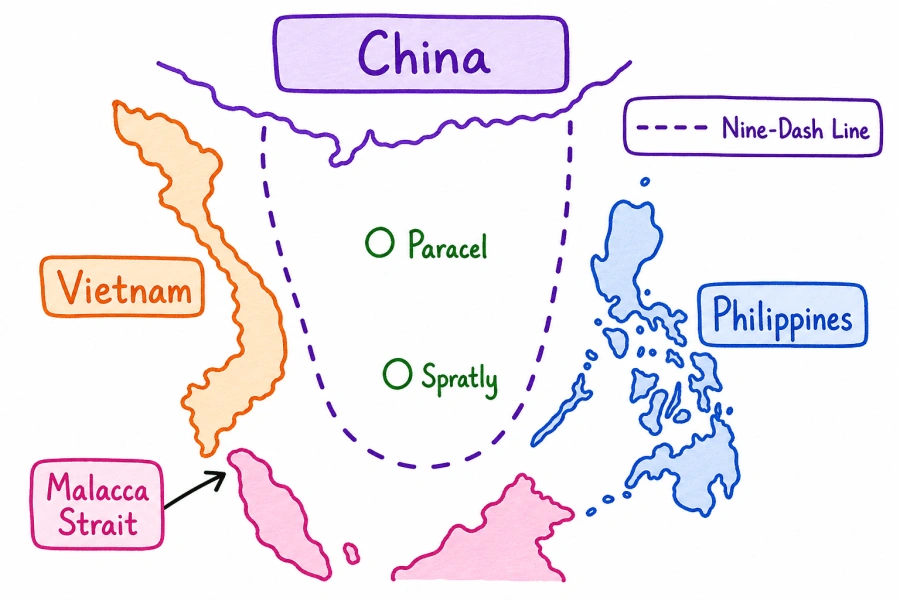
Model Answer:
Western “de-risking” strategies position India as the cornerstone of the “China Plus One” manufacturing framework and the geopolitical anchor of a free, rules-based Indo-Pacific.
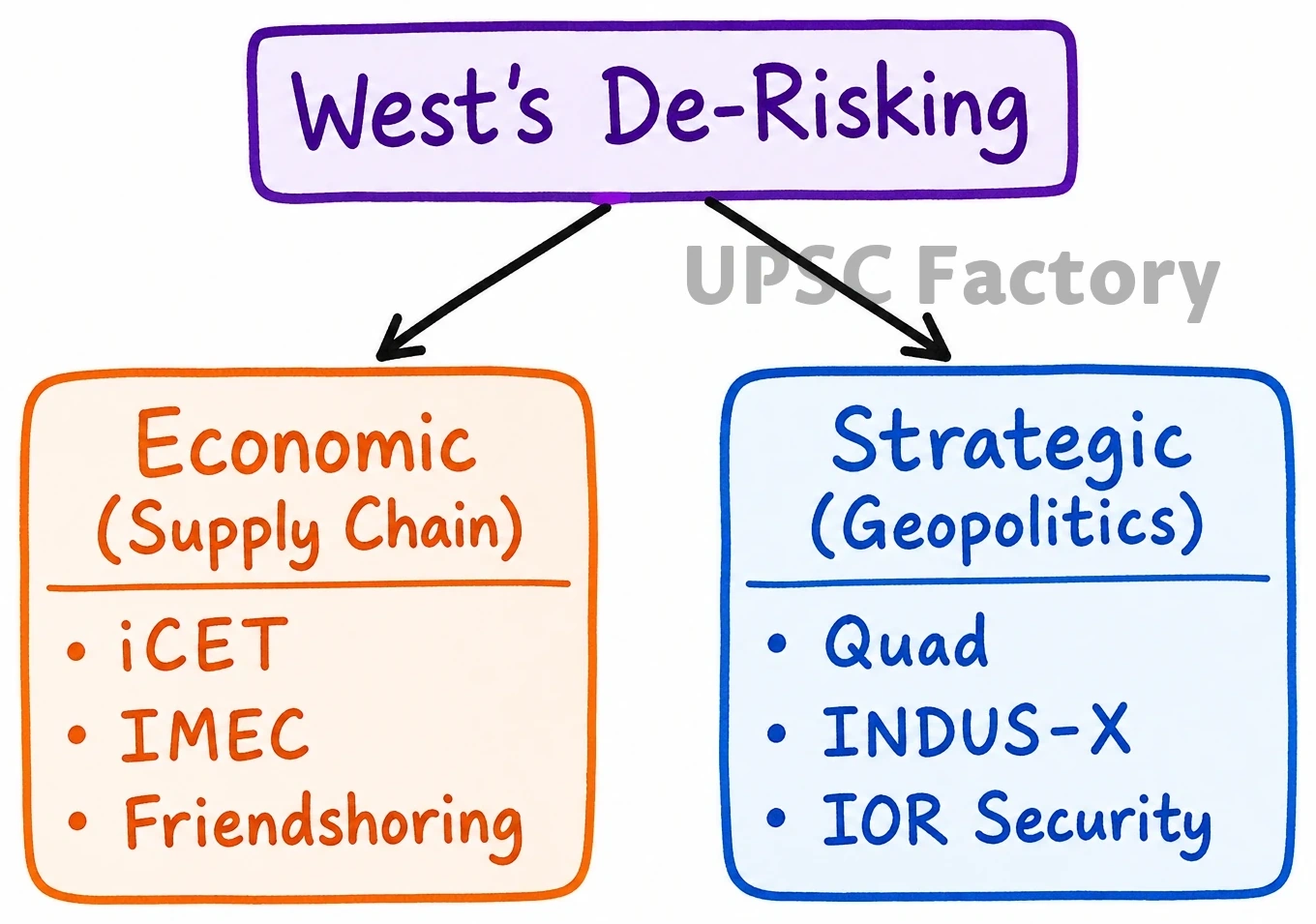
1. India as an Economic Alternative (Supply Chain)
- Friendshoring Initiatives: Shifting critical manufacturing to trusted geographies to reduce overreliance on Beijing (Apple producing 14% of global iPhones in India).
- Technology Partnerships: Fostering advanced innovation outside Chinese ecosystems (US-India iCET agreement for semiconductors and AI).
- Supply Chain Resilience: Mitigating vulnerabilities in green energy and critical resource networks (India’s inclusion in the US-led Minerals Security Partnership).
- Infrastructure Counter-Narratives: Providing viable, transparent alternatives to China’s debt-trap BRI (India-Middle East-Europe Economic Corridor – IMEC).
2. India as a Strategic Ally Countering China
- Indo-Pacific Security: Elevating maritime containment and ensuring freedom of navigation through multilateral groupings (Quad mechanism; Malabar exercises).
- Defence Interoperability: Strengthening military asymmetry against China via advanced technology transfers (US-India GE F414 jet engine deal; INDUS-X).
- Regional Counterweight: Empowering India’s naval capacity to act as the primary ‘Net Security Provider’ in the Indian Ocean Region (IOR).
- Diplomatic Leadership: Backing New Delhi to counter Beijing’s political hegemony among developing nations (India as the ‘Voice of Global South’ during G20).
While aggressively leveraging this Western convergence for capacity building, India continues to exercise “strategic autonomy” to maximize national interests without entering formal, restrictive military alliances.