Model Answer:
The global patenting of life materials is primarily guided by TRIPS Article 27(3)(b), which allows patenting of microorganisms while excluding naturally occurring plants and animals.
1. Global IPR Scenario on Life Materials
- Liberal Regimes: The US broadly allows patents for human-made, genetically modified organisms (Diamond v. Chakrabarty).
- Regulated Markets: The EU permits biotechnological patents but enforces strict moral and ethical exemptions.
- Restrictive Frameworks: India strictly prohibits patenting naturally occurring life forms and traditional knowledge (Sections 3(c) & 3(j), Indian Patent Act).
2. Reasons for Low Patent Commercialization in India
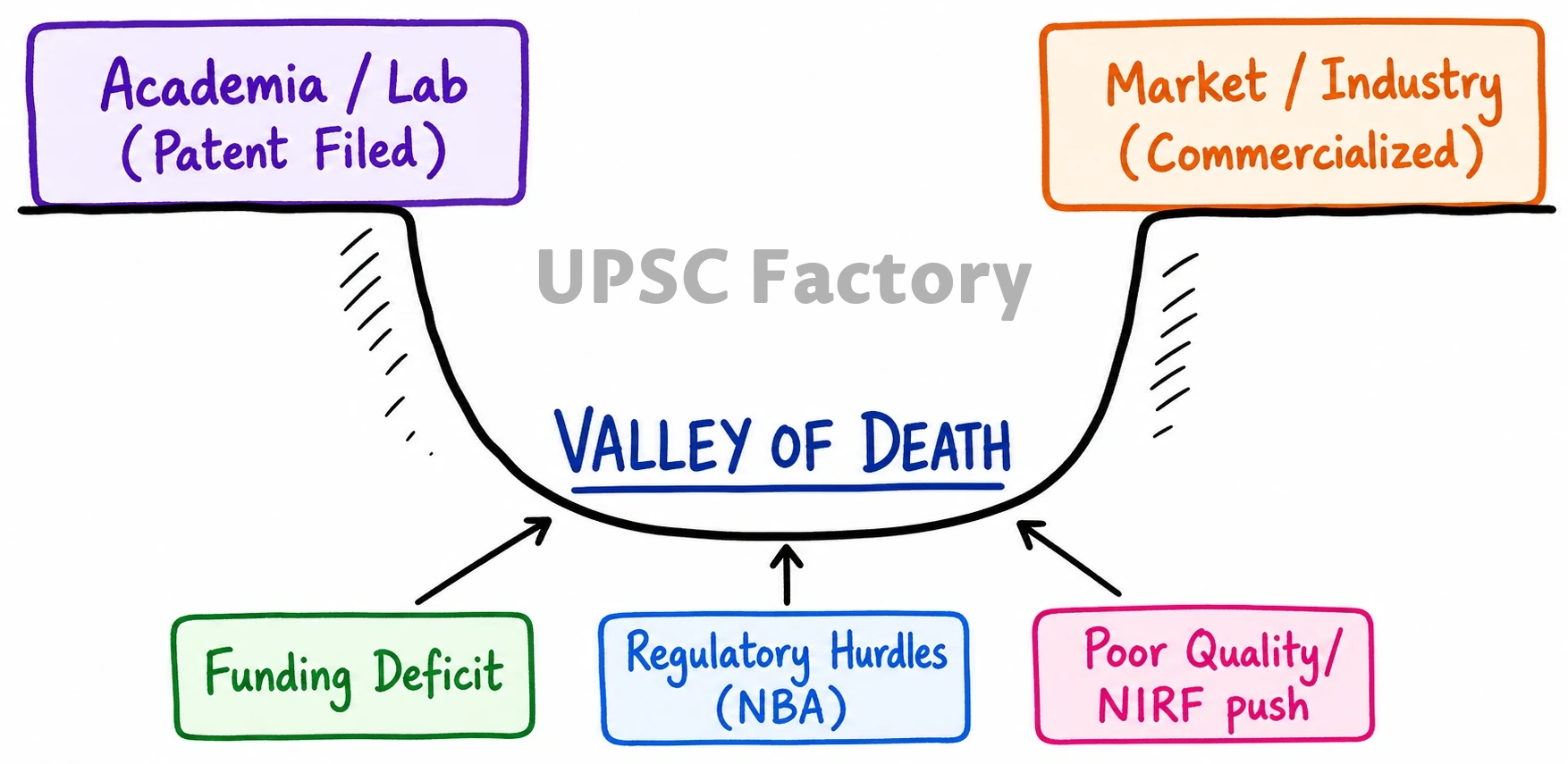
- Academic-Driven Filing: Patents are often filed merely to boost institutional metrics (NIRF rankings) rather than for market viability.
- Weak Industry-Academia Linkage: A persistent “valley of death” exists due to poor translational research and tech-transfer ecosystems.
- Funding Deficit: There is a severe lack of venture capital and risk-funding for scaling deep-tech and biotech innovations.
- Poor Patent Quality: A recent surge in incremental, low-quality filings often lacks genuine industrial application or scalable utility.
- Regulatory Bottlenecks: Cumbersome, multi-agency clearances for biological materials deter rapid commercial scaling (NBA, CDSCO approvals).
Bridging this commercialization gap requires transitioning from “patent generation” to “value creation” by strengthening industry-academia synergies and leveraging the Anusandhan National Research Foundation (NRF).