Model Answer:
Buffer stocks, managed primarily by the Food Corporation of India (FCI), act as strategic grain reserves essential for safeguarding national food security and ensuring macroeconomic price stability.
1. Importance of Buffer Stocks in Stabilizing Agricultural Prices
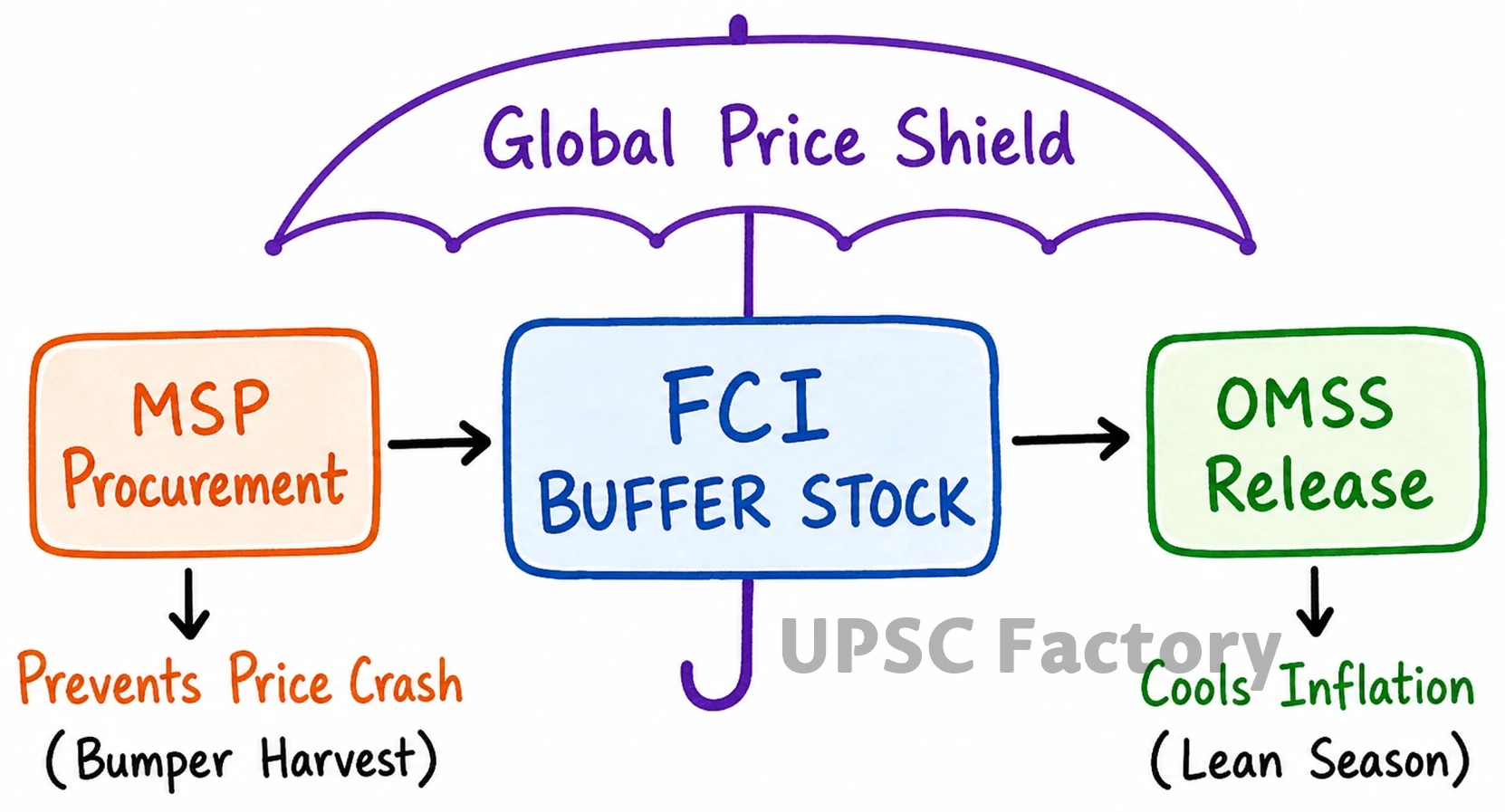
- Floor Price Enforcement: Open-ended Minimum Support Price (MSP) procurement prevents sudden price crashes during bumper harvests, guaranteeing baseline farmer incomes.
- Retail Inflation Control: The government strategically offloads surplus grains via the Open Market Sale Scheme (OMSS) to aggressively cool off retail price spikes.
- Supply Shock Absorption: Reserves bridge critical supply-demand deficits during extreme lean seasons or unexpected climate-induced crop failures (e.g., El Niño droughts).
- Deterring Speculation: Massive state-held reserves act in synergy with the Essential Commodities Act to discourage hoarding and artificial inflation by private cartels.
- Global Volatility Shield: Insulates domestic consumers and markets from extreme international agri-commodity price shocks (e.g., Ukraine war wheat crisis).
2. Challenges Associated with Buffer Stock Storage
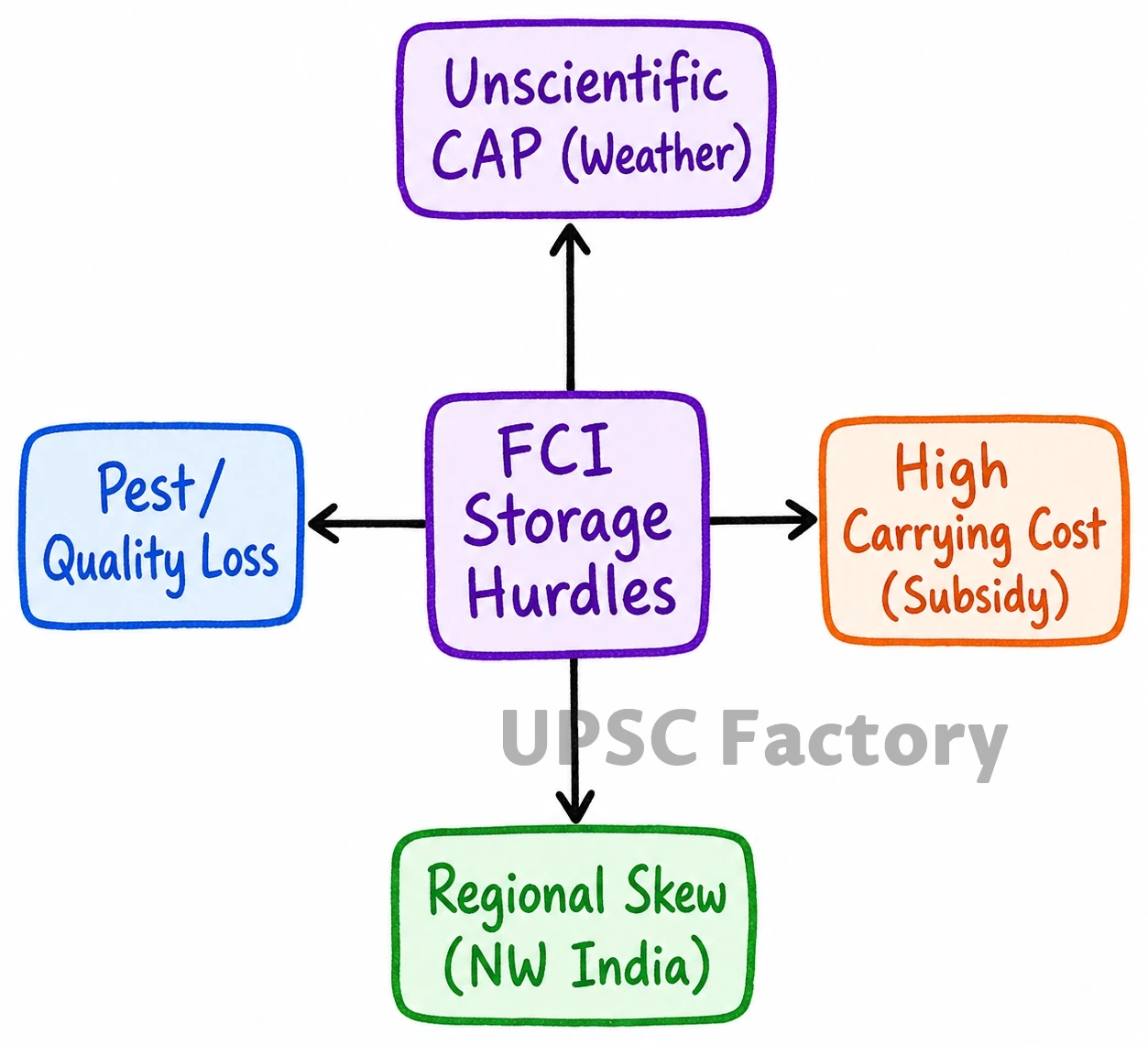
- Infrastructure Deficits: Excessive reliance on unscientific Cover and Plinth (CAP) storage leaves grains highly vulnerable to weather vagaries and rodent infestations.
- Mounting Economic Cost: FCI’s operational carrying costs, including storage and interest burdens, consistently outpace market prices, heavily inflating the national food subsidy bill.
- Over-Procurement Skew: MSP-driven cereal-centric policies frequently result in wheat and rice stocks vastly exceeding mandated strategic reserve norms, straining logistics.
- Regional Imbalance: Storage capacity remains disproportionately concentrated in traditional procurement hubs (e.g., Punjab, Haryana), severely complicating nationwide distribution logistics.
- Quality Degradation: Extended storage durations, high transit losses, moisture, and frequent pest attacks systematically degrade the nutritional lifespan of the grains.
- Sluggish Modernization: Inadequate transition to modern steel silos forces reliance on suboptimal rented godowns, slowing down supply chain efficiency.
Optimizing buffer stocks requires strictly implementing the Shanta Kumar Committee recommendations, particularly outsourcing storage via the Private Entrepreneurs Guarantee (PEG) Scheme and accelerating national silo modernization.