Model Answer:
The Quit India Movement (1942), or August Kranti, was a definitive mass-struggle catalyzed by Mahatma Gandhi’s historic “Do or Die” call.
1. Events Leading to the Quit India Movement
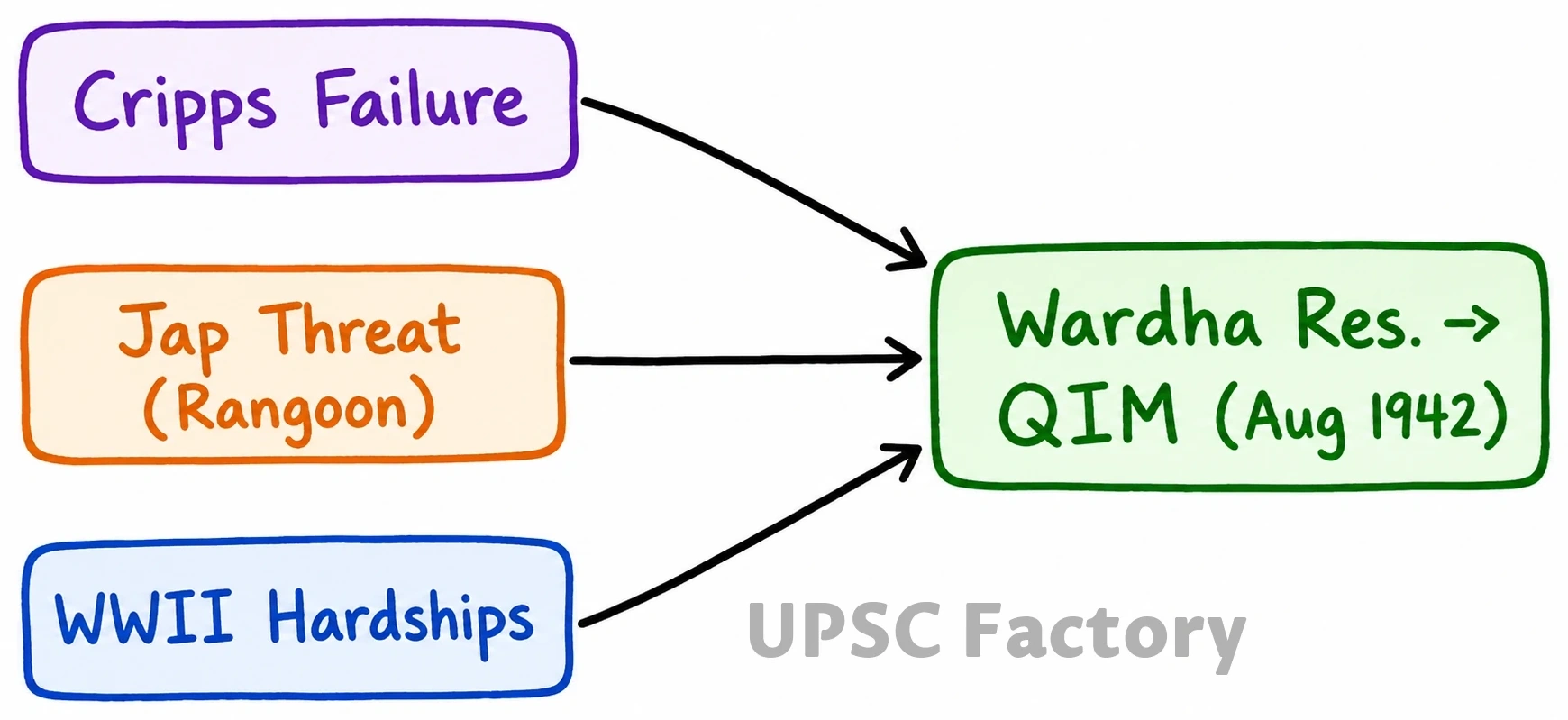
- Cripps Mission Failure (1942): The British offer of mere post-war dominion status was rejected as a “post-dated cheque”.
- Imminent Japanese Threat: The rapid fall of Rangoon triggered widespread panic regarding a Japanese invasion of India.
- Wartime Economic Hardships: India’s unilateral inclusion in WWII caused hyperinflation, wartime taxation, and severe commodity shortages.
- British ‘Denial Policy’: Scorched earth tactics in eastern India (confiscating boats and rice) caused immense public resentment.
- Wardha Resolution (July 1942): The Congress officially demanded immediate British withdrawal to allow Indians to defend themselves.
2. Results of the Movement
- Spontaneous Mass Uprising: The sudden arrest of top leadership (Operation Zero Hour) triggered a leaderless, nationwide rebellion.
- Parallel Governments: Independent administrative setups temporarily replaced British authority (Chittu Pandey in Ballia; Prati Sarkar in Satara).
- Underground Resistance: Secret networks sustained nationalist communication (Usha Mehta’s underground Congress Radio; Jayaprakash Narayan’s Azad Dasta).
- Severe State Repression: The colonial state utilized extreme military force, lathi charges, and arrested over 100,000 citizens.
- Shift in British Psyche: The massive civil disobedience shattered administrative loyalty, proving that holding India by force was unsustainable.
Although brutally suppressed in the short term, the movement completely eroded the colonial apparatus’s foundation, transforming immediate, complete independence into an inevitable reality.