Model Answer:
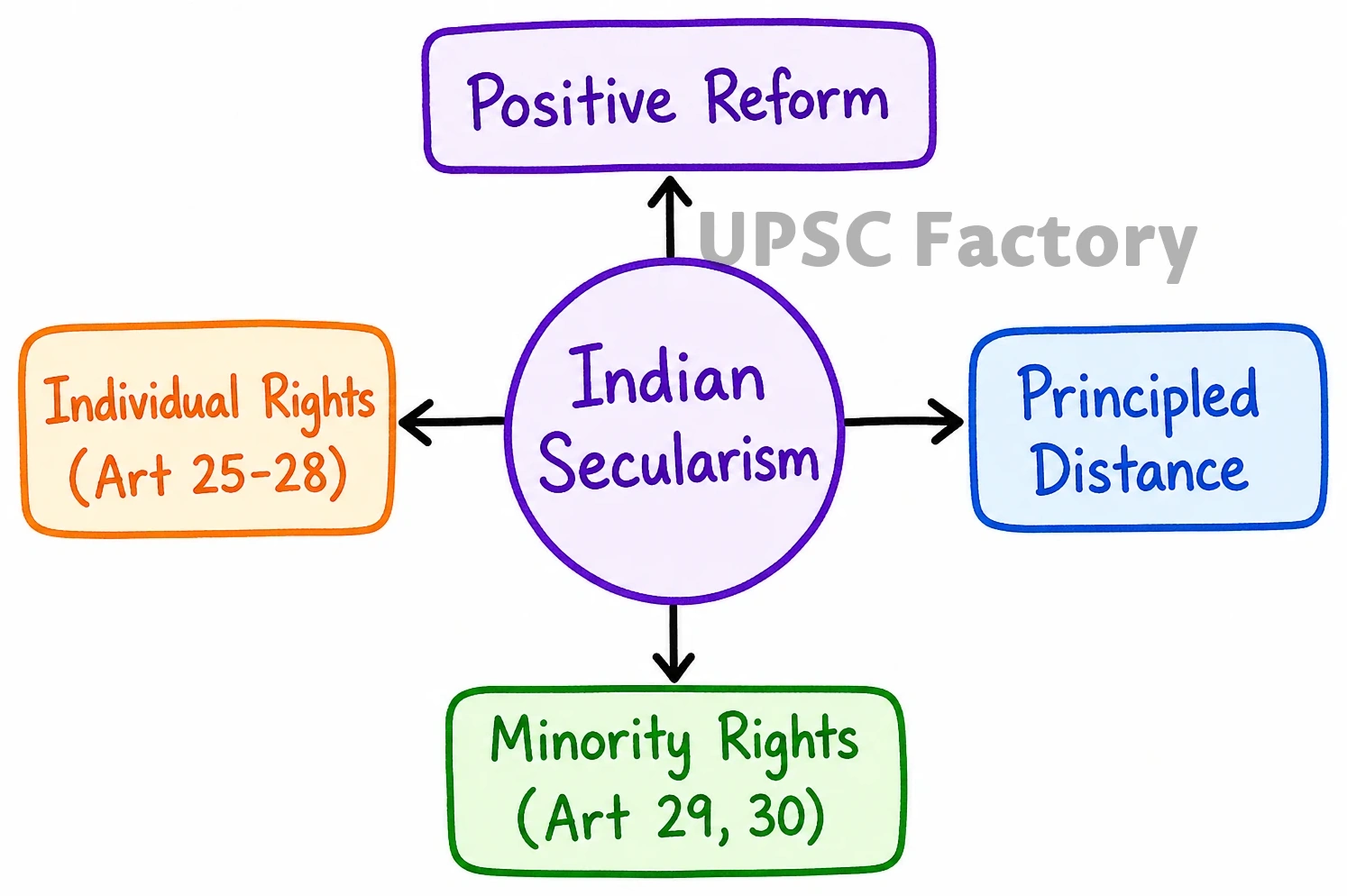
Indian secularism, explicitly embedded in the Preamble (42nd Amendment) and affirmed as a ‘Basic Structure’ (S.R. Bommai Case), promotes a unique, positive multi-religious harmony model.
India as a Secular State: Unique Features
- Sarva Dharma Sambhava: State ensures equal respect and protection for all religions, contrasting with strict anti-religious models.
- Principled Distance: The state maintains flexibility to constructively engage or disengage with religious institutions based on constitutional values.
- Positive Intervention: The state actively reforms regressive religious practices to uphold fundamental rights (e.g., banning Untouchability, Triple Talaq).
- Socio-Cultural Balancing: Protects individual religious freedom (Article 25) alongside collective minority educational and cultural rights (Articles 29, 30).
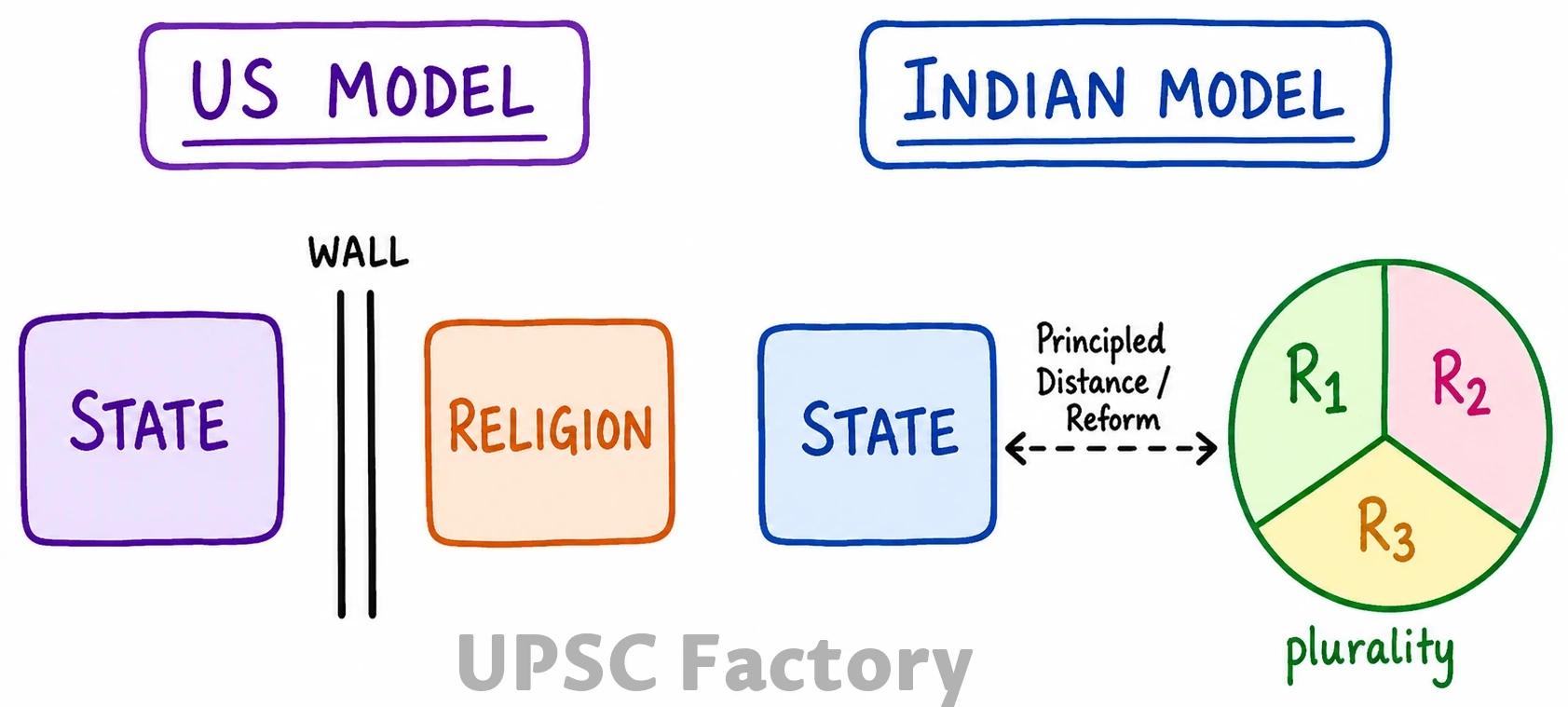
Comparative Analysis: Indian vs. US Secular Principles
- Core Philosophy: India follows “Positive Secularism” (state facilitates all faiths); the US enforces a strict “Wall of Separation” (mutual exclusion).
- Constitutional Mandate: The US relies on the First Amendment’s “Establishment Clause”; India integrates secularism comprehensively across Fundamental Rights (Articles 25-28).
- State Intervention: The Indian state regulates secular/economic activities associated with religion (Article 25(2)); the US absolutely forbids state interference in religious affairs.
- Financial Assistance: India permits state financial aid to religious minority educational institutions; the US strictly prohibits channeling public funds to religious bodies.
- Intra-religious Equality: Indian secularism combats internal socio-religious oppression (e.g., Temple entry for Dalits); the US model focuses purely on inter-religious neutrality.
- Reasonable Restrictions: US protects absolute individual religious liberty; India balances religious freedom against public order, morality, and health.
While the US prioritizes strict separation to maximize individual liberty, India’s dynamic “principled distance” model successfully accommodates and regulates its deeply complex pluralistic society.