Model Answer:
In K.S. Puttaswamy v. Union of India (2017), the Supreme Court declared the Right to Privacy an intrinsic part of human dignity and personal liberty, inherently protected under Article 21.
1. Constitutional Dimensions of Privacy (Article 21)
- Inherent to Human Dignity: Privacy is the bedrock of individual autonomy and liberty, shielding citizens from unwarranted intrusions.
- Bodily Integrity: Grants absolute control over physical boundaries, deeply protecting reproductive rights and medical choices (Suchita Srivastava case).
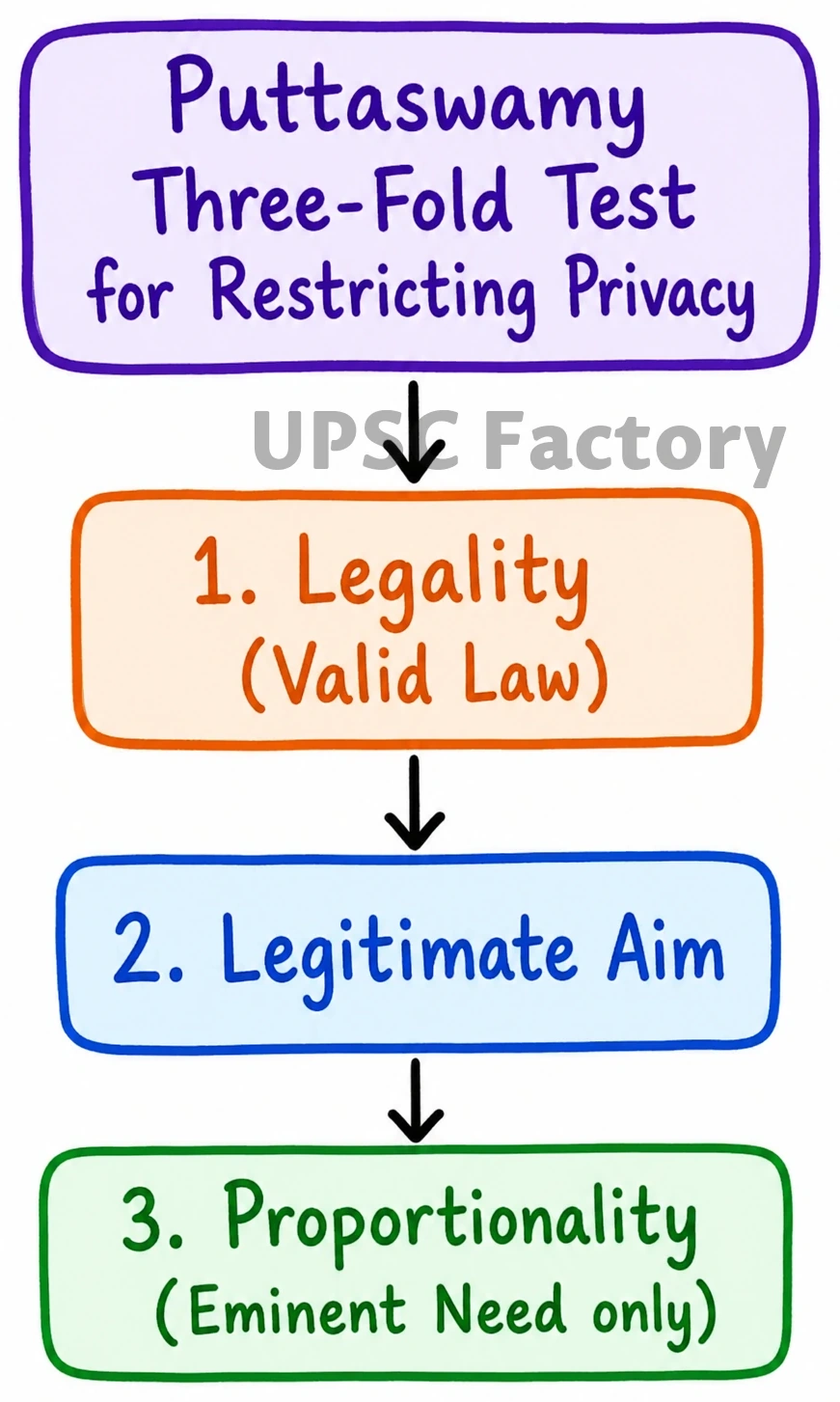
- Doctrine of Proportionality: Any privacy infringement must satisfy legality, legitimate state aim, and proportionality tests.
2. Legal Framework: DNA Testing of Unborn Child for Paternity
- Presumption of Legitimacy: Section 112 of the Indian Evidence Act conclusively presumes legitimacy for children conceived during wedlock; DNA tests cannot routinely bypass this.
- Mother’s Bodily Autonomy: Compelling a pregnant woman to undergo invasive in-utero DNA extraction directly violates her physical privacy under Article 21.
- Right Against Bastardization: A child has a fundamental right to dignity; they cannot be arbitrarily illegitimatized (Aparna Ajinkya Firodia v. Ajinkya Firodia, 2023).
- PCPNDT Act Restrictions: Invasive procedures like amniocentesis are strictly regulated to prevent fetal harm and illegal sex determination, limiting prenatal DNA tests.
- Eminent Need Doctrine: Courts mandate DNA testing only as a last resort (“eminent need”), never as a “fishing expedition” to prove infidelity.
- Burden of Proof: The spouse alleging infidelity must first establish a strong prima facie case of non-access before courts allow scientific testing.
- Fetal Right to Privacy: The unborn child holds implicit privacy rights, shielding it from being weaponized in parental matrimonial disputes.
- Best Interests of Child: Serves as the paramount guiding principle for family courts, heavily outweighing technical evidentiary claims of the parents.
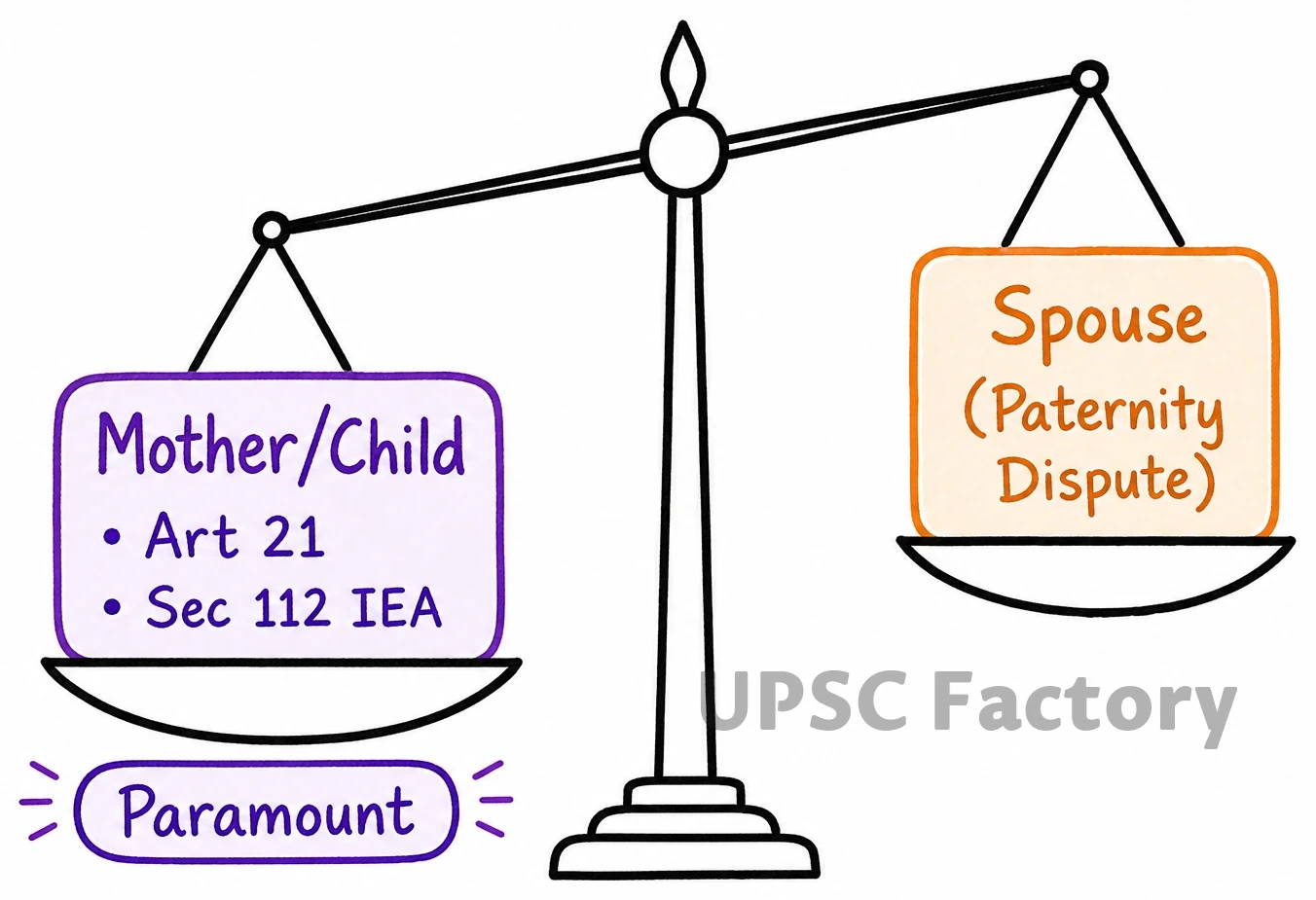
While scientific advancements enable precise paternity verification, constitutional courts rightfully subordinate matrimonial disputes to the paramount privacy, bodily autonomy, and dignity of the mother and unborn child.