Model Answer:
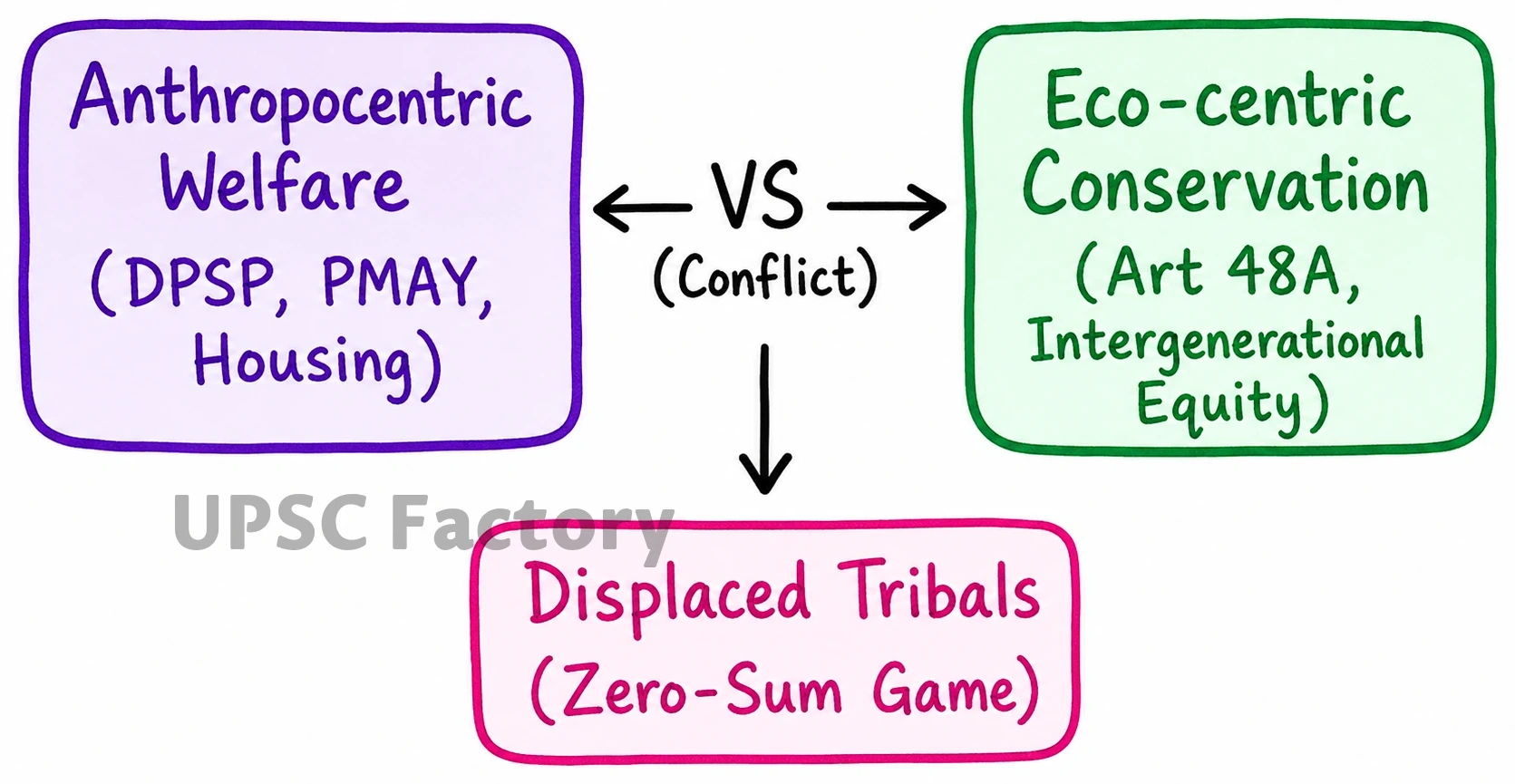
The case presents a classic “Development vs. Environment” dilemma, contrasting anthropocentric welfare (housing the poor) against eco-centric sustainability, intergenerational equity, and tribal livelihood preservation.
1. Ethical Justification & Balancing Challenges
a) Ethical Justification of Deforestation:
- Unjustified Utilitarianism: Short-term welfare (housing) cannot justify irreversible ecological destruction, violating long-term public interest (Right to healthy environment, Article 21).
- Violation of Eco-centrism: Forests hold intrinsic value beyond human utility; destroying them breaches the principle of intergenerational equity.
- Conflicting Rights: Deforestation displaces indigenous tribes, creating an unethical “marginalized vs. marginalized” zero-sum game between the homeless and forest-dwellers.
b) Challenges in Balancing Conservation and Development:
- Ethical: Reconciling constitutional welfare mandates (DPSP Articles 38/47) with strict environmental stewardship (Article 48A, Fundamental Duty 51A(g)).
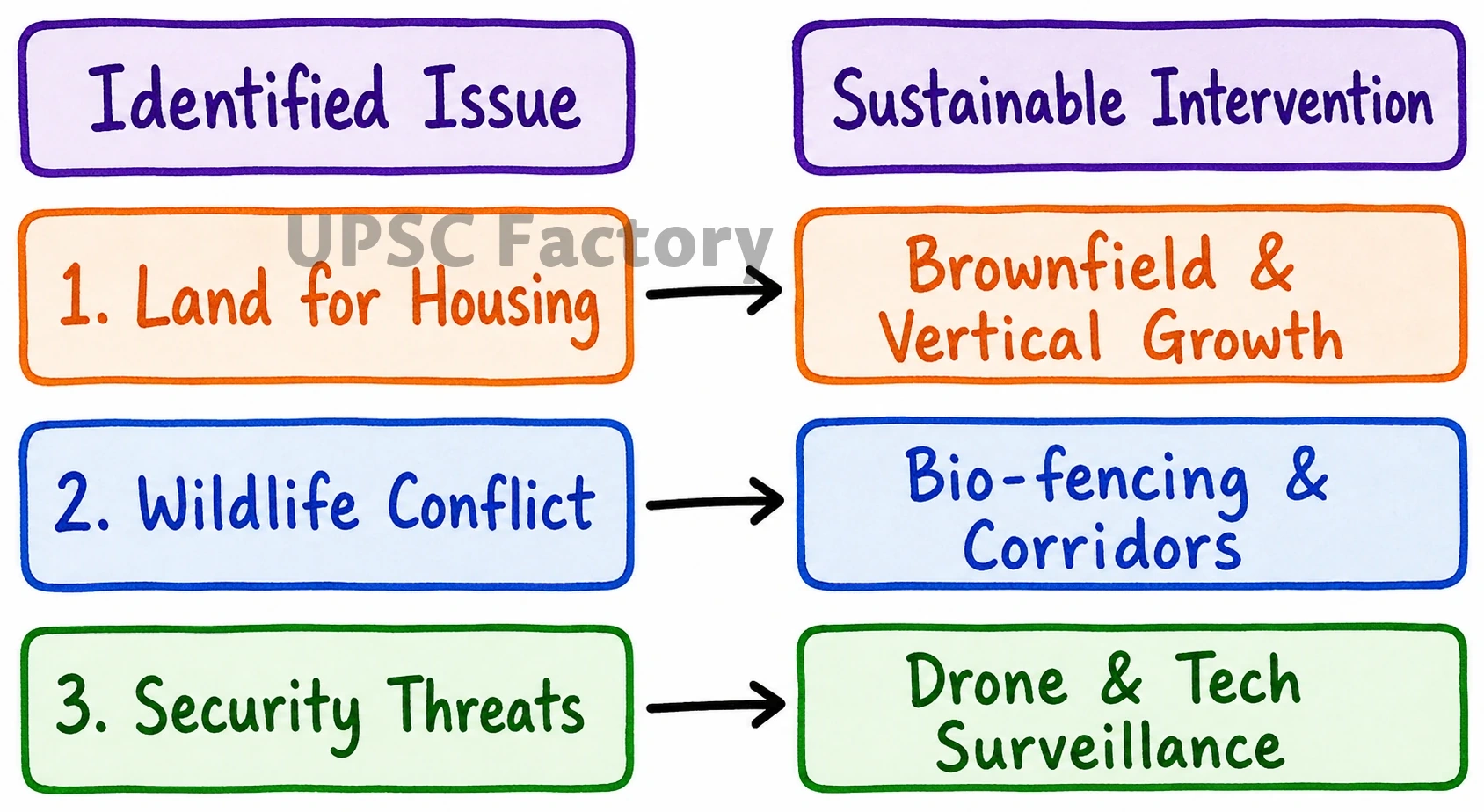
- Administrative: Achieving rigid housing targets (PMAY) while navigating strict Forest (Conservation) Act norms and managing human-wildlife conflicts.
- Socio-Economic: Bureaucracies often ignore the massive hidden economic costs of climate disruption (loss of rainfall/soil fertility) for the allure of “free” forest land.
- Security: Addressing law-and-order threats without resorting to the extreme, irreversible measure of ecological clearance.
2. Sustainable Alternatives & Policy Interventions
c) Proposed Interventions:
- Brownfield Redevelopment: Repurpose abandoned industrial zones, unutilized government land banks, and existing urban slums instead of pristine eco-zones.
- Vertical Housing Growth: Promote high-density, multi-story affordable housing to maximize shelter while minimizing the required land footprint.
- Non-Destructive Mitigation: Establish wildlife corridors, bio-fencing, and community-led monitoring to curb human-animal conflicts safely (Aarey Forest model).
- Technology-Driven Security: Deploy drone surveillance, thermal imaging, and intensive patrolling to curb anti-social hideouts rather than destroying habitats.
- Tribal Empowerment: Formalize forest rights (FRA, 2006) to make indigenous communities active partners in conservation and micro-climate regulation.
True human dignity cannot be built on ecological graves. Sustainable development requires harmonizing basic human needs with uncompromising ecological stewardship, ensuring “Housing for All” without compromising a sustainable future.