Model Answer:
The Fiscal Health Index (FHI) is a composite macroeconomic metric evaluating states on debt sustainability, revenue generation, and expenditure quality, serving as a barometer for sub-national financial stability.
FHI as a Tool for Assessing Fiscal Performance
Drawing from frameworks like RBI’s State Finances reports, FHI evaluates states across critical parameters:
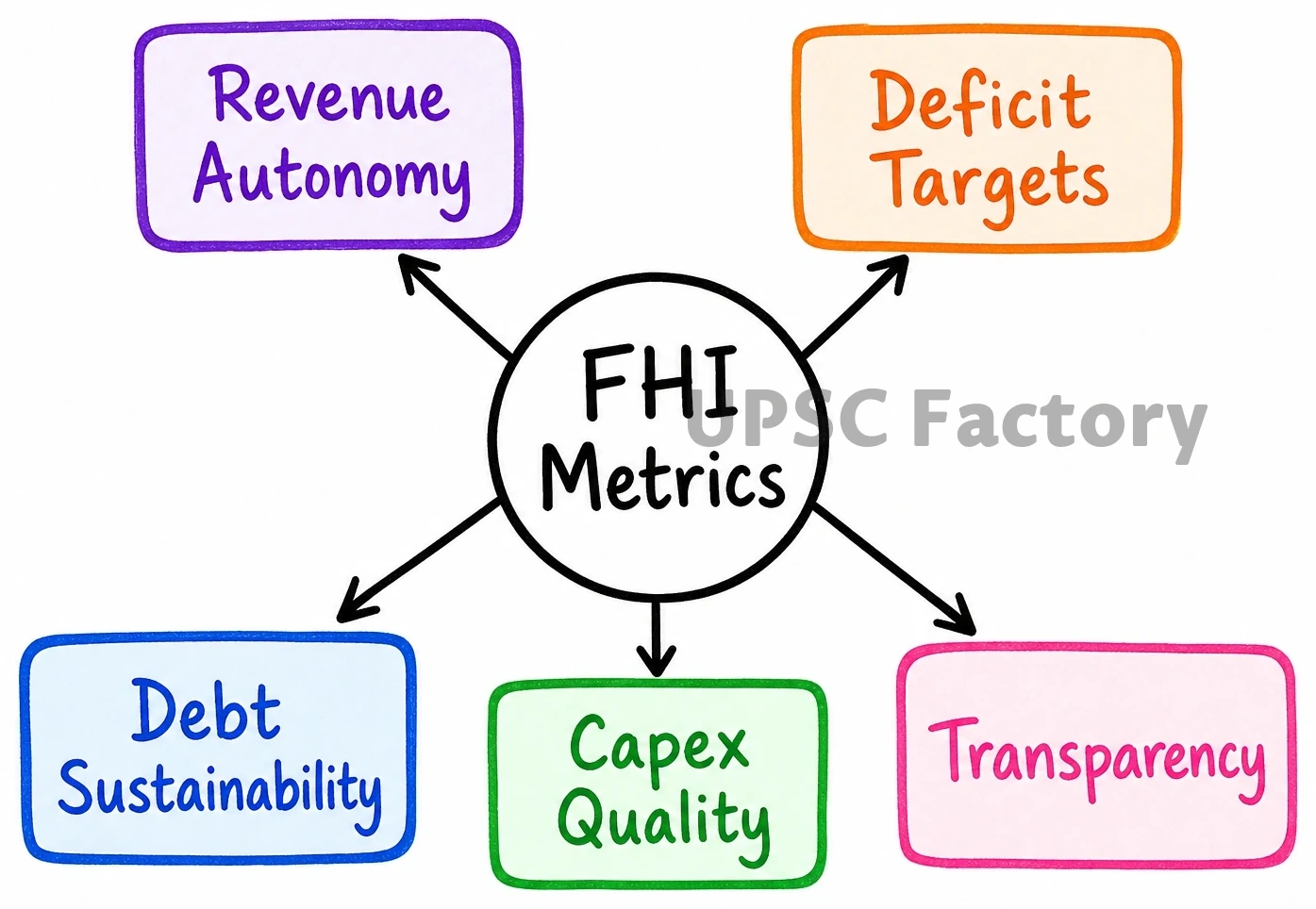
- Debt Sustainability: Tracks Debt-to-GSDP and interest-payment ratios to identify systemic vulnerabilities (highly indebted Punjab/Kerala vs. prudent Gujarat).
- Deficit Compliance: Monitors adherence of Gross Fiscal Deficit and Revenue Deficit to statutory State FRBM Act targets.
- Revenue Autonomy: Evaluates State’s Own Tax Revenue (OTR) buoyancy versus its reliance on central statutory devolutions.
- Expenditure Quality: Contrasts productive capital outlay against non-merit revenue expenditure and rising pension liabilities.
- Transparency Metrics: Assesses the extent of hidden liabilities, guarantees to state DISCOMs, and off-budget borrowings.
Encouraging Prudent and Sustainable Fiscal Policies
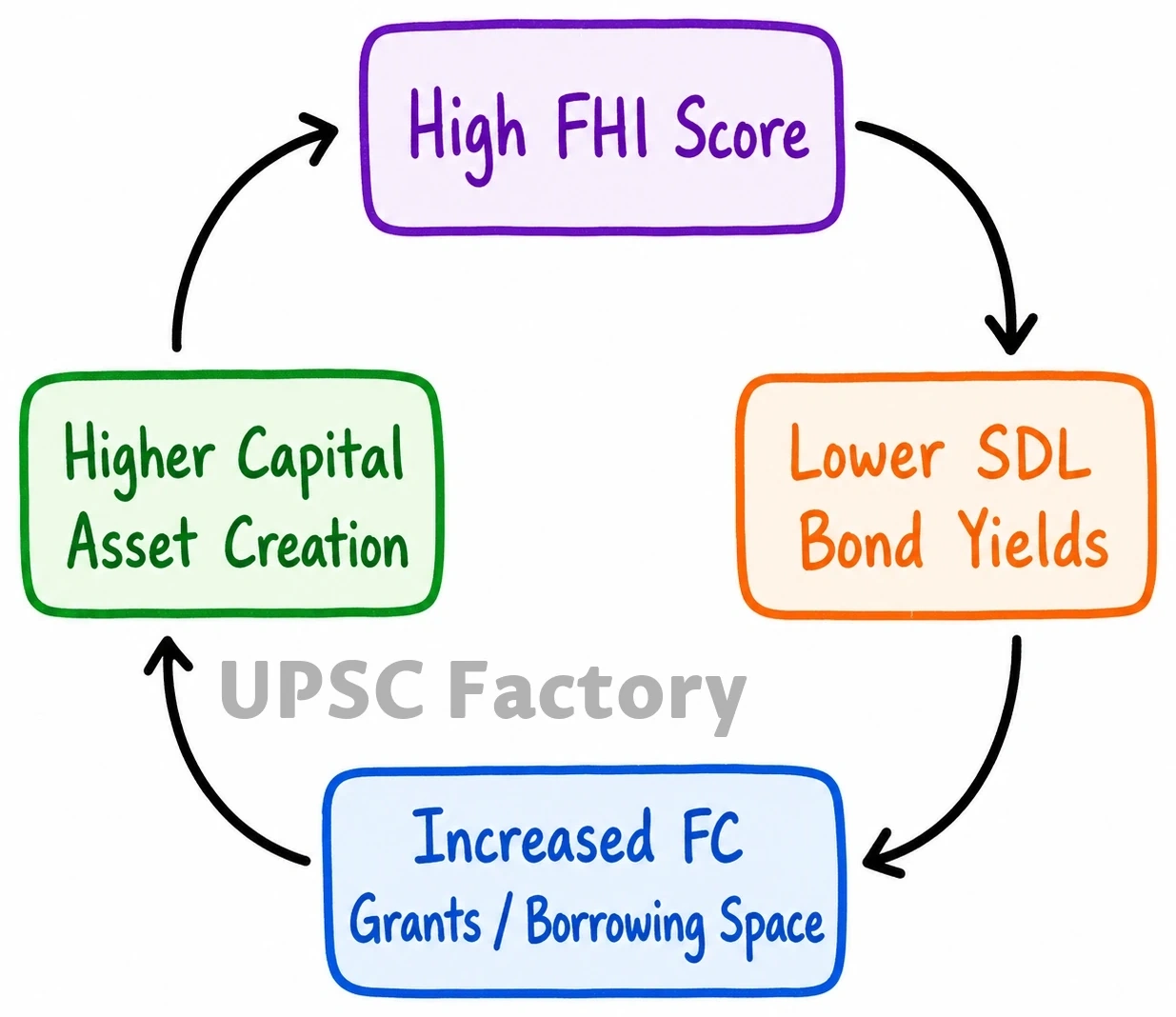
By institutionalizing data-driven evaluation, FHI drives positive fiscal behavior:
- Competitive Federalism: Public state rankings generate political peer pressure, driving systemic governance reforms (NITI Aayog indices model).
- Regulating Borrowing Limits: Serves as a quantitative basis for the Centre’s Article 293(3) approvals, linking additional borrowing space to FHI improvements.
- Performance-Linked Grants: Empowers Finance Commissions to allocate objective, reform-tied incentives (15th FC’s power-sector deficit reduction grants).
- Market Discipline via SDLs: Higher FHI scores boost market confidence, actively lowering bond yields on State Development Loans (SDLs).
- Curbing Populism: Penalizes unmerited subsidies (“freebie culture”), incentivizing a transition toward targeted welfare and sustainable capital asset creation.
Integrating the Fiscal Health Index into cooperative federalism frameworks transitions states from populist short-term spending toward structural fiscal discipline, ensuring India’s long-term macroeconomic resilience.