Model Answer:
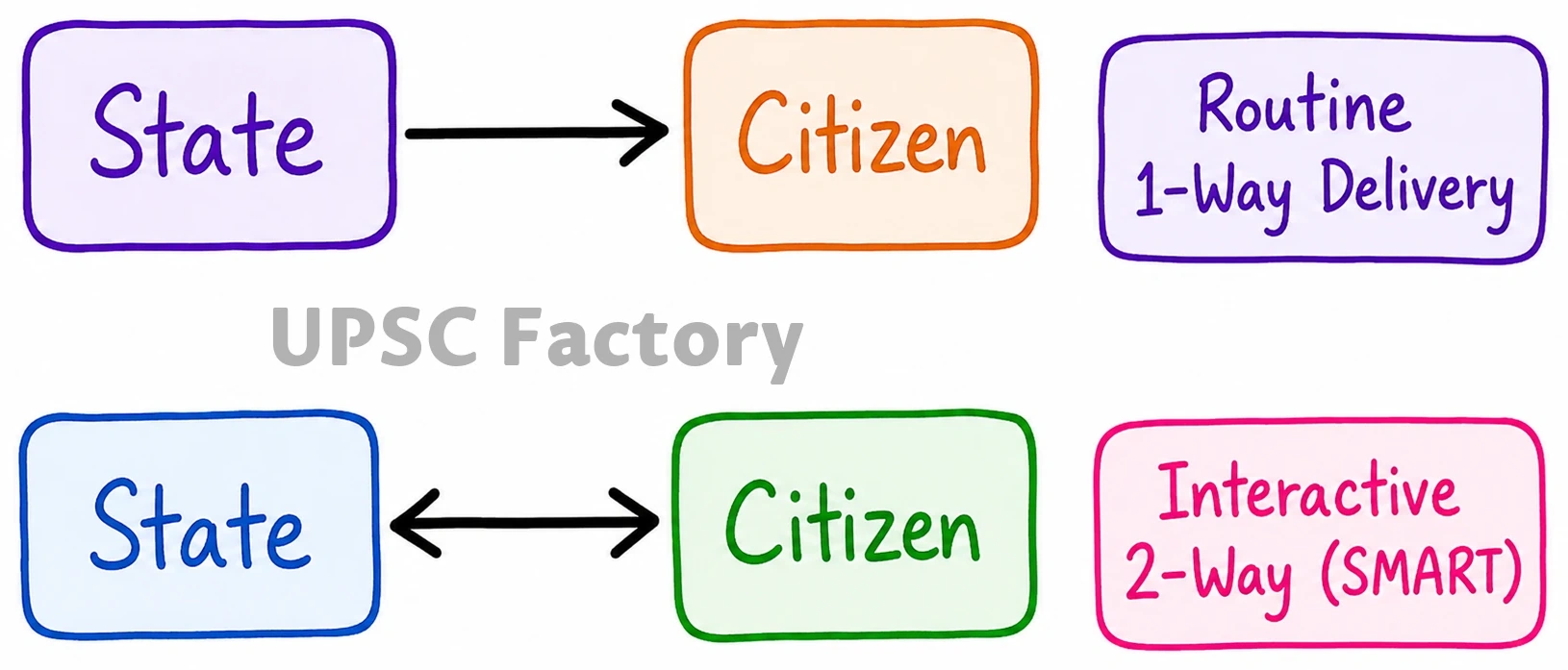
The Interactive Service Model transitions e-governance from one-way transactional service delivery to dynamic, two-way state-citizen engagement, fulfilling the mandate of SMART (Simple, Moral, Accountable, Responsive, Transparent) governance.
1. Role in Ensuring Transparency & Accountability
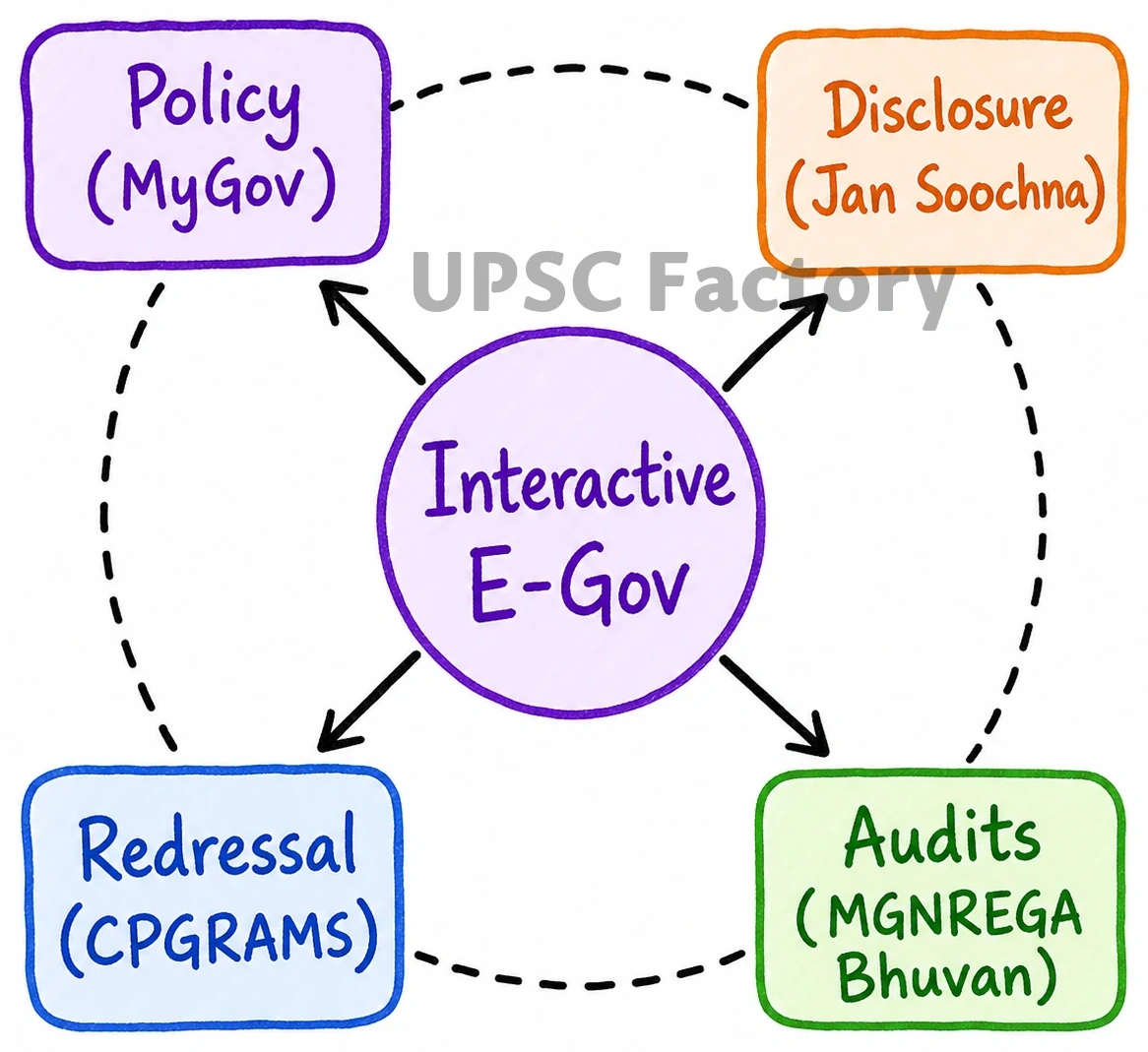
- Participatory Policy-Making: Direct citizen feedback mechanisms crowdsource ideas and shape legislation, democratizing decision-making (MyGov platform).
- Proactive Information Disclosure: Fulfills Section 4 of the RTI Act via open-data ecosystems, eliminating bureaucratic opacity and information asymmetry (Jan Soochna Portal).
- Real-Time Grievance Redressal: Institutionalizes tracking and time-bound resolution of complaints, enforcing direct administrative accountability (CPGRAMS, RailMadad).
- Digital Social Audits: Enables community-led monitoring, geo-tagging, and crowdsourced reporting of public assets to curb systemic leakages (MGNREGA Bhuvan).
- Service Quality Tracking: Integrates end-user ratings with departmental performance metrics, forcing responsive and citizen-centric administration (Meri Sadak app).
2. Limitations and Implementation Challenges
- The Digital Divide: Skewed broadband penetration and digital illiteracy disproportionately exclude marginalized rural and female demographics (Oxfam India Inequality Report).
- Institutional Apathy: Bureaucracy often limits e-governance to mere “computerization” rather than undertaking fundamental process re-engineering (2nd ARC, 11th Report).
- Linguistic Barriers: The historical dominance of English limits grassroots interactivity, though localized AI tools are bridging this gap (Project Bhashini).
- Data Privacy Risks: Continuous multi-nodal data collection raises profiling and cybersecurity concerns without strictly enforced safeguards (DPDP Act 2023).
- Tokenistic Engagement: Feedback loops frequently lack binding statutory action, reducing interactive platforms to mere digital suggestion boxes.
To truly leverage the Interactive Service Model, India must prioritize digital literacy, mandate administrative process re-engineering, and deploy localized AI—transforming e-governance into an inclusive enabler for Antyodaya.