Model Answer:
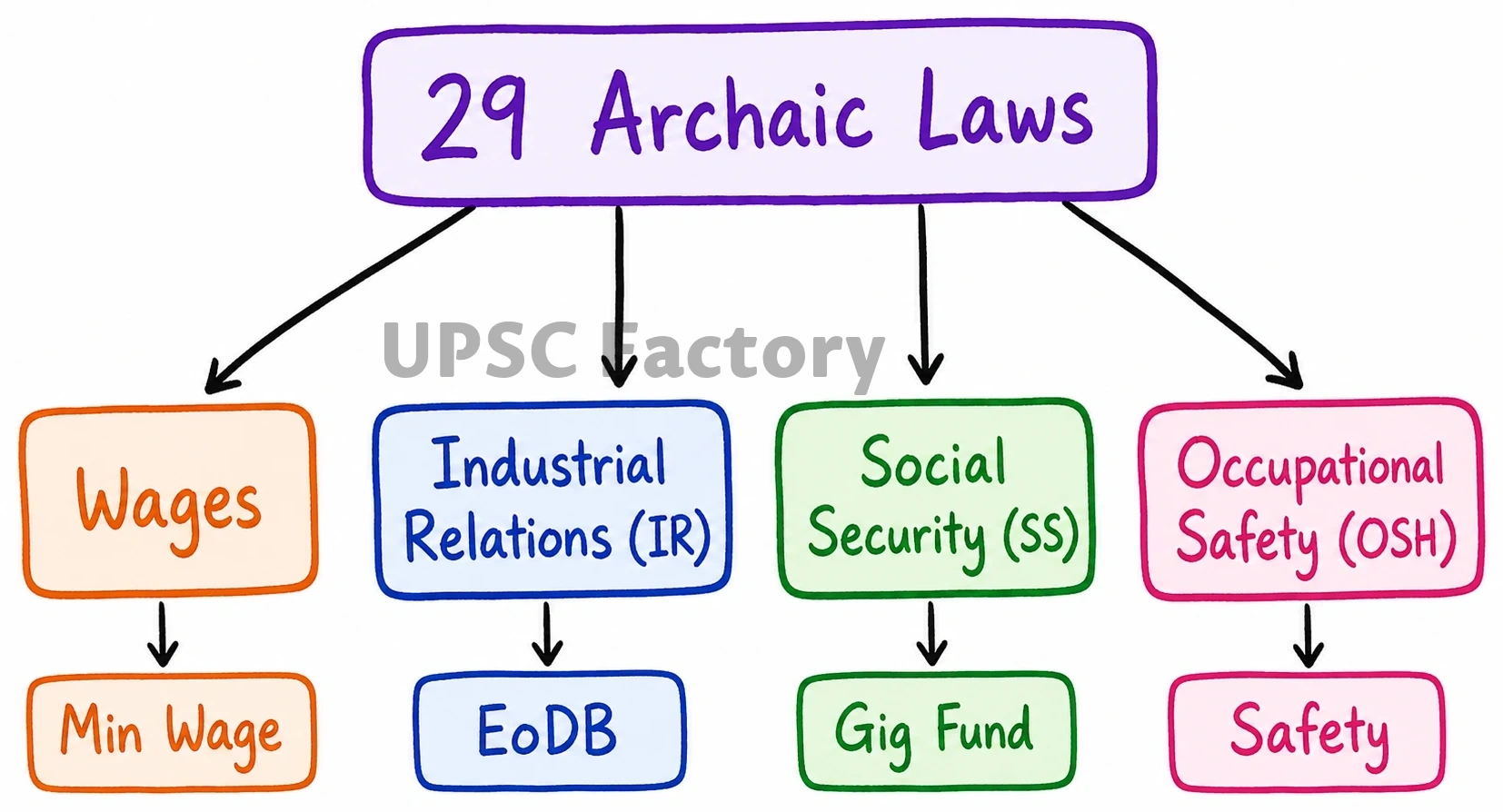
To streamline India’s complex regulatory regime, 29 archaic central laws were amalgamated into four Labour Codes (Wages, Industrial Relations, Social Security, and OSH) to balance worker welfare with industrial growth.
1. Merits of the Labour Codes
- Regulatory Simplification: Reduces overlapping compliance burdens, significantly boosting the Ease of Doing Business (EoDB).
- Universal Minimum Wage: Extends statutory minimum wage and timely payment guarantees to all sectors, including the unorganized workforce (Code on Wages).
- Gig Economy Integration: Introduces first-time statutory recognition and targeted social security funds for gig and platform workers.
- Formalization Push: Legalizes fixed-term employment, granting contract workers pro-rata statutory benefits identical to permanent employees.
- Gender Inclusivity: Permits women to work night shifts across all establishments with mandated safety protocols (OSH Code).
2. Demerits and Concerns
- Diluted Job Security: Allows establishments with up to 300 workers (previously 100) to retrench staff or close without prior government approval (IR Code).
- Restricted Right to Strike: Mandates a strict 14-day notice period for strikes across all sectors, weakening collective bargaining.
- Exclusionary Thresholds: OSH and welfare provisions largely apply only to firms with 10+ or 20+ workers, bypassing the massive micro-informal sector.
- Wage Definition Ambiguity: Capping allowances at 50% of total compensation complicates corporate structuring and provident fund calculations.
- Erosion of Tripartism: Trade unions allege inadequate prior consultation, undermining the ILO’s core principle of tripartite dialogue.
3. Progress So Far
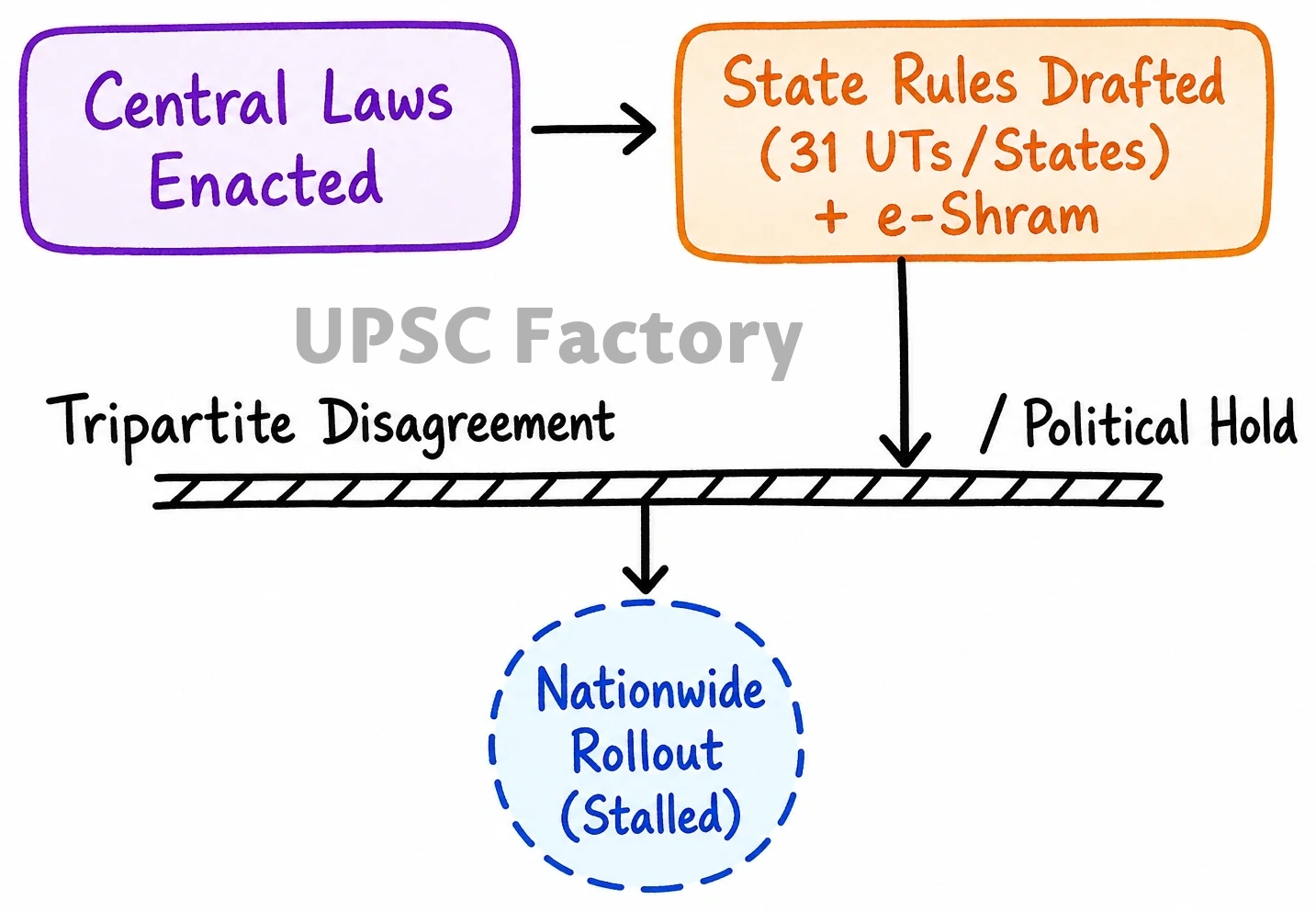
- State-Level Preparedness: Over 31 States/UTs have pre-published draft rules (Labour falls under the Concurrent List, requiring both Central and State notification).
- Data Integration: The e-Shram portal has registered ~30 crore unorganized workers, creating a foundational database for future social security delivery.
- Stalled Rollout: Nationwide enforcement remains indefinitely paused due to political hesitation and a lack of consensus among states, trade unions, and industries.
To sustainably harness India’s demographic dividend, the government must proactively revive tripartite dialogue, address localized union concerns, and ensure a synchronized, nationwide operationalization of the Codes.