Model Answer:
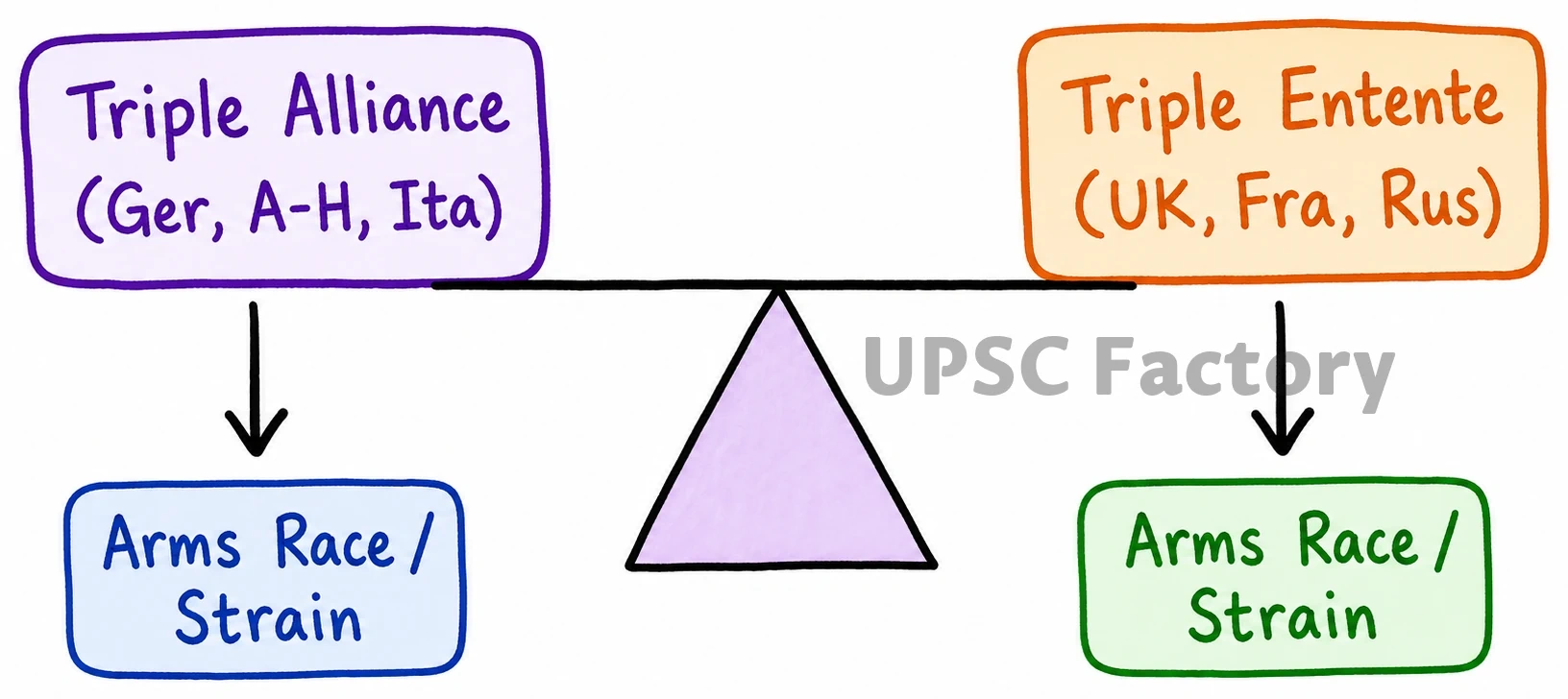
The First World War (1914-1918) was deeply rooted in Europe’s fragile diplomatic architecture, where preserving a precarious “balance of power” became a central, yet destructive, objective.
1. Balance of Power as the Primary Catalyst
- Rigid Alliance Systems: Bismarckian diplomacy divided Europe into mutually suspicious, inflexible blocs (Triple Alliance 1882 vs. Triple Entente 1907).
- British Strategic Pivot: Britain abandoned “splendid isolation” primarily to prevent German continental hegemony and maintain equilibrium (Anglo-Russian Entente 1907).
- The Domino Effect: Binding alliance obligations transformed a localized Balkan dispute into a continental war (Germany’s “Blank Check” to Austria-Hungary).
- The Security Dilemma: Nations equated their survival with preventing rivals from gaining disproportionate geopolitical leverage (Russian mobilization against Austrian expansion).
- Protecting Strategic Buffers: Britain’s immediate entry was explicitly justified to maintain regional equilibrium and protect vital buffer zones (Belgian Neutrality, 1839 Treaty of London).
2. Beyond Balance of Power: Intersecting Causes
- Imperial Scramble: Industrial capitalism fueled aggressive overseas colonial competition and intense economic friction (Moroccan Crises 1905/1911; Berlin-Baghdad Railway).
- Unchecked Militarism: Unprecedented arms buildups and rigid, inflexible offensive schedules forced pre-emptive pre-war mobilizations (Anglo-German Naval Race; Germany’s Schlieffen Plan).
- Radical Nationalism: Aggressive ethnic unification movements inherently destabilized Europe’s multi-ethnic empires (Pan-Slavism in the Balkans; Archduke’s assassination by the Black Hand).
- Territorial Revanchism: Intense national desires to avenge past humiliations and reclaim lost territories bred perpetual hostility (French fixation on recovering Alsace-Lorraine).
- Domestic Diversion: Conservative ruling elites intentionally stoked external conflicts to suppress rising internal socialist and labor unrest (Prussian domestic policies).
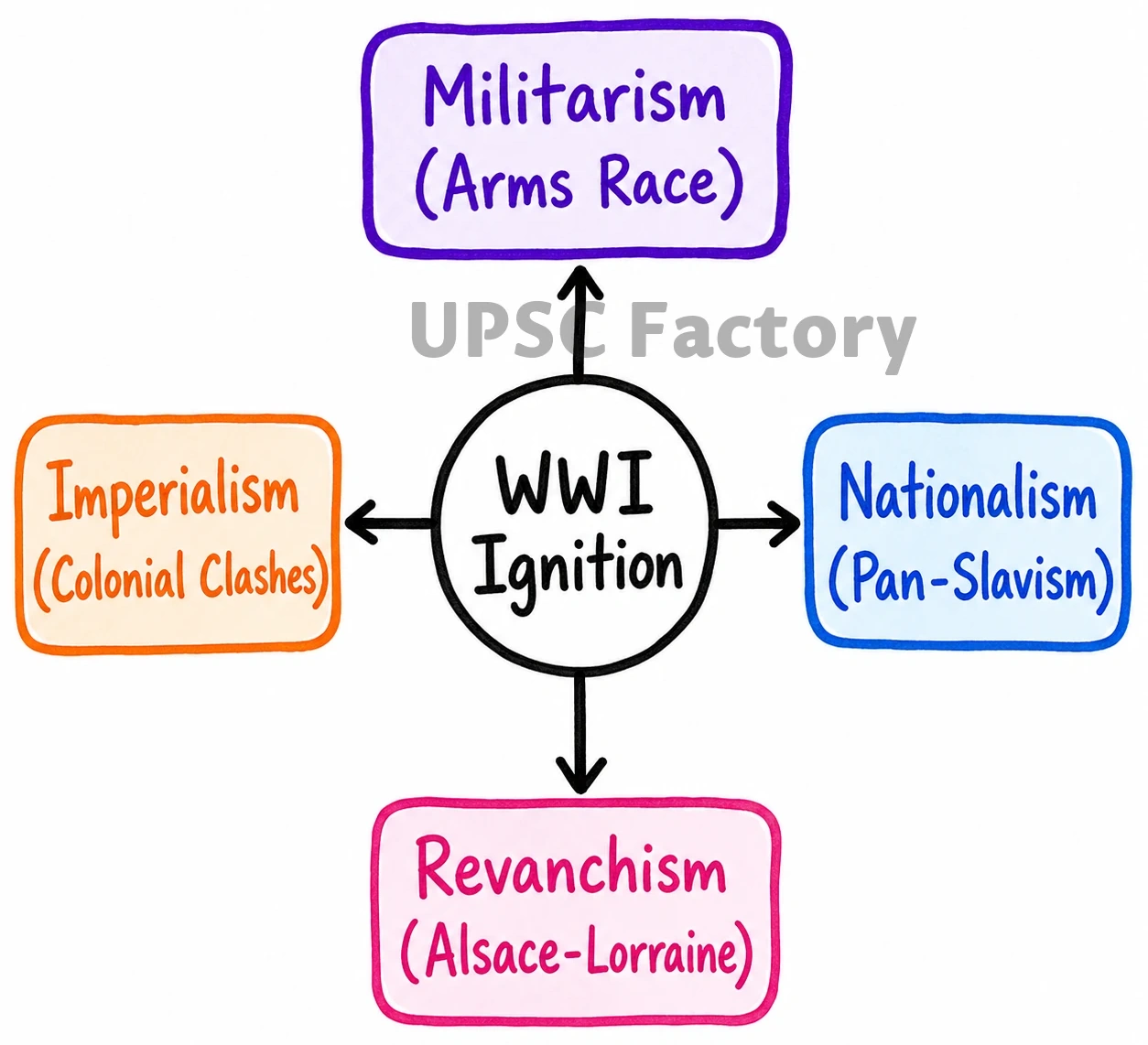
While the pursuit of a balance of power structurally divided Europe into armed camps, it was the explosive convergence of aggressive imperialism, hyper-nationalism, and irreversible militarism that ultimately ignited the global conflagration.