Model Answer:
The Imperial Cholas (9th–13th century CE) represent the golden age of South Indian history, remembered eternally for elevating Dravidian art and architecture to its unprecedented climax.
1. Architectural Zenith: Climax of Dravidian Style
- Monumental Vimanas: Shifted structural emphasis from Gopurams to towering, pyramidal Vimanas (Brihadeeswara Temple’s 66-meter Vimana).
- Engineering Marvels: Employed interlocking stone techniques without mortar, crowned by massive monolithic Shikharas (80-ton granite cupola at Thanjavur).
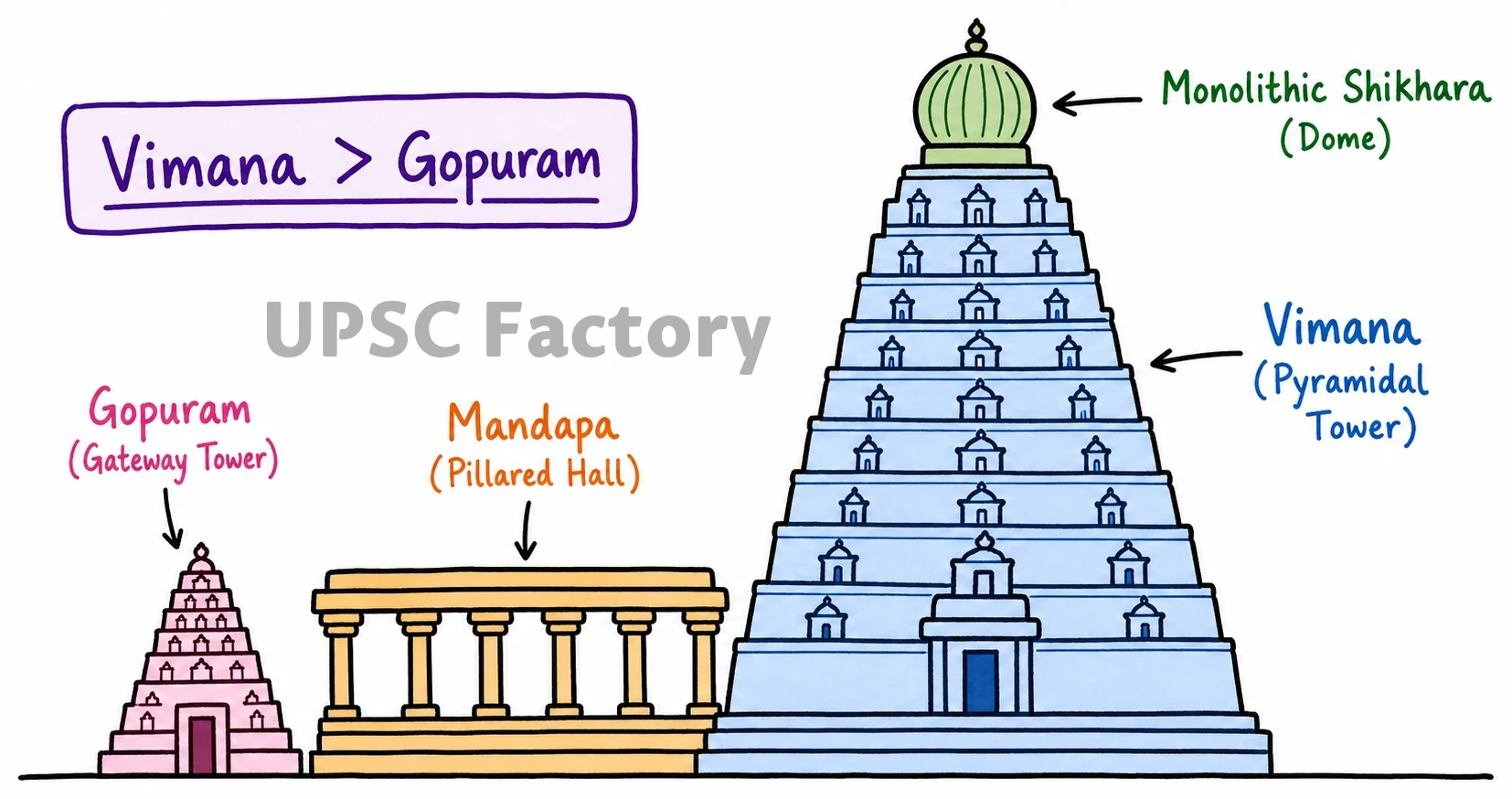
- Complex Spatial Layouts: Introduced sprawling, multi-tiered pillared halls (Mandapas) and expansive enclosed courtyards (Airavatesvara Temple, Darasuram).
- Temple as a Socio-Economic Hub: Temples functioned as banks, schools, and cultural centers, documented via meticulous wall inscriptions.
- Integrated Water Systems: Engineered enormous temple tanks (Teppakulams) for both ritualistic use and practical regional water management (Gangaikonda Cholapuram).
2. Excellence in Chola Art: Sculptures and Frescoes
- Mastery in Bronze (Cire Perdue): Perfected the ‘lost-wax’ casting technique, creating lightweight, anatomically exquisite, and highly proportioned metal sculptures.
- The Nataraja Iconography: The cosmic dance of Shiva in bronze emerged as the ultimate global symbol of Indian philosophical and artistic depth.

- Vibrant Frescoes: Advanced the Pallava painting tradition using rich, natural dyes to depict secular and puranic themes (Brihadeeswara inner ambulatory murals).
- Exquisite Stone Carvings: High-relief sculptures characterized by dynamic postures (Tribhanga), elaborate ornamentation, and expressive mudras (Ardhanarishvara and Dakshinamurthy figures).
The designation of the “Great Living Chola Temples” as a UNESCO World Heritage Site cements their immortal legacy, showcasing an era where imperial ambition perfectly synchronized with artistic and architectural grandeur.