Model Answer:
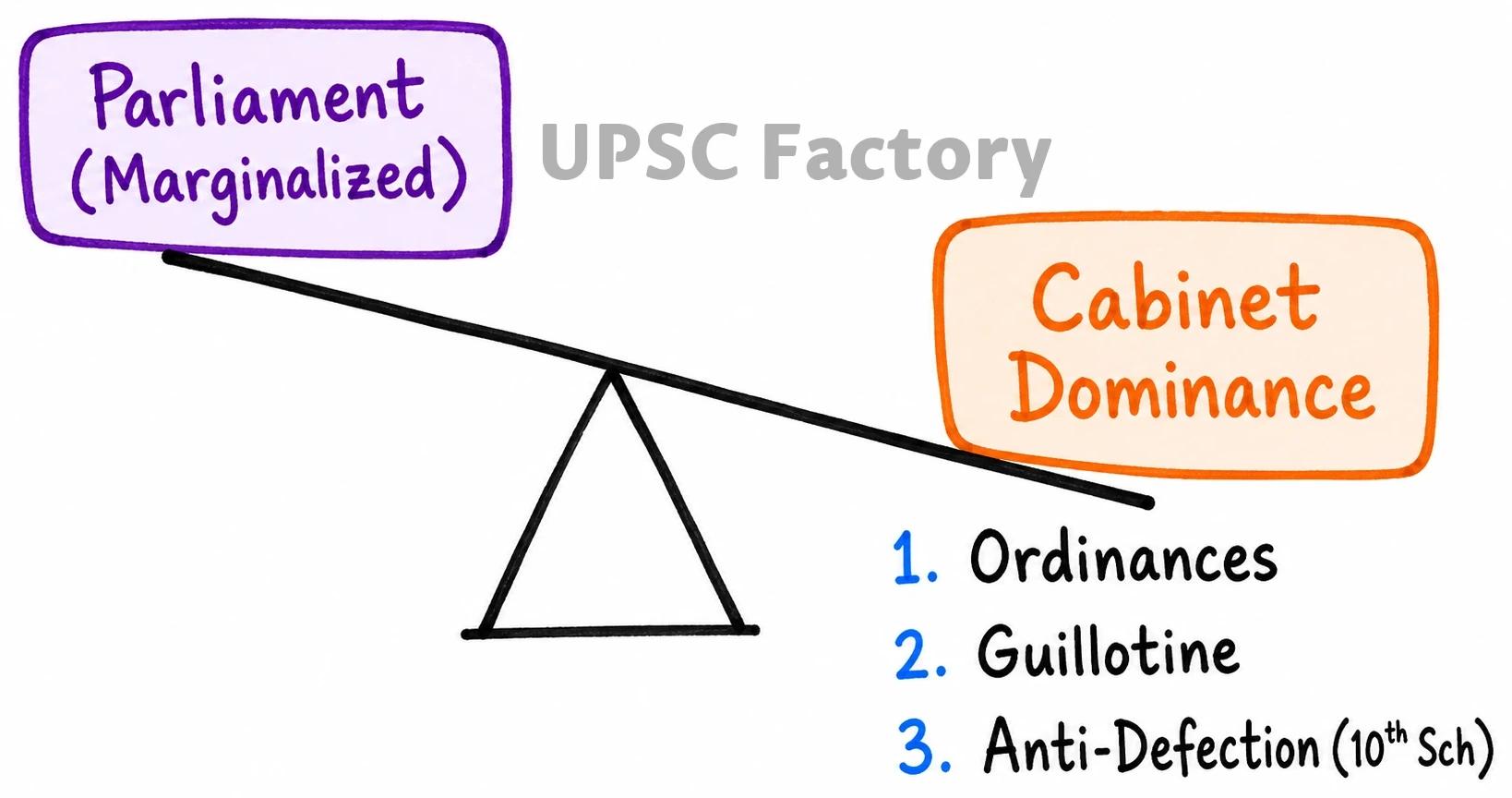
The Westminster model rests on parliamentary supremacy. However, the expanding influence of the Cabinet has progressively shifted the balance of power toward the executive, prompting concerns of a “Cabinet Dictatorship.”
1. Mechanisms of Cabinet Dominance
- Legislative Monopoly: The Cabinet dominates law-making, while the 10th Schedule (Anti-Defection Law) stifles independent voting by MPs.
- Bypassing Scrutiny: Frequent reliance on ordinances (Ramachandrappa case) and bypassing Parliamentary Standing Committees (e.g., Farm Laws) undermines legislative debate.
- Financial Dominance: Excessive use of the “Guillotine” allows massive budgets to pass without adequate parliamentary discussion on Demands for Grants.
- Delegated Legislation: Parliament increasingly drafts skeleton laws, leaving substantive rule-making powers entirely to the executive.
2. Sustaining Parliamentary Supremacy
- Constitutional Accountability: Under Article 75(3), the Cabinet remains collectively responsible to the Lok Sabha and can be ousted (No-Confidence Motion).
- Procedural Checks: Tools like Question Hour, Zero Hour, and Adjournment Motions continuously force the Cabinet to defend its policies.
- Post-Mortem Scrutiny: Parliamentary bodies like the Public Accounts Committee, leveraging CAG reports, enforce strict financial accountability.
While the modern Cabinet necessarily drives governance, strengthening the mandate of Parliamentary Committees and easing anti-defection rigidities is vital to restore the constitutional balance of executive accountability.