Model Answer:
Section 123 of the Representation of the People Act (RPA), 1951 defines “corrupt practices” that can void an election, safeguarding democratic integrity.
1. Corrupt Practices under RPA 1951 (Section 123)
- Bribery: Offering or accepting gratification to influence voting or contesting.
- Undue Influence: Direct/indirect interference with the free exercise of electoral rights (Section 123(2)).
- Identity Appeals: Soliciting votes on grounds of religion, race, caste, or language.
- Malpractices: Publishing false statements, booth capturing, or exceeding prescribed campaign expenditure limits.
2. Disproportionate Assets (DA) as ‘Undue Influence’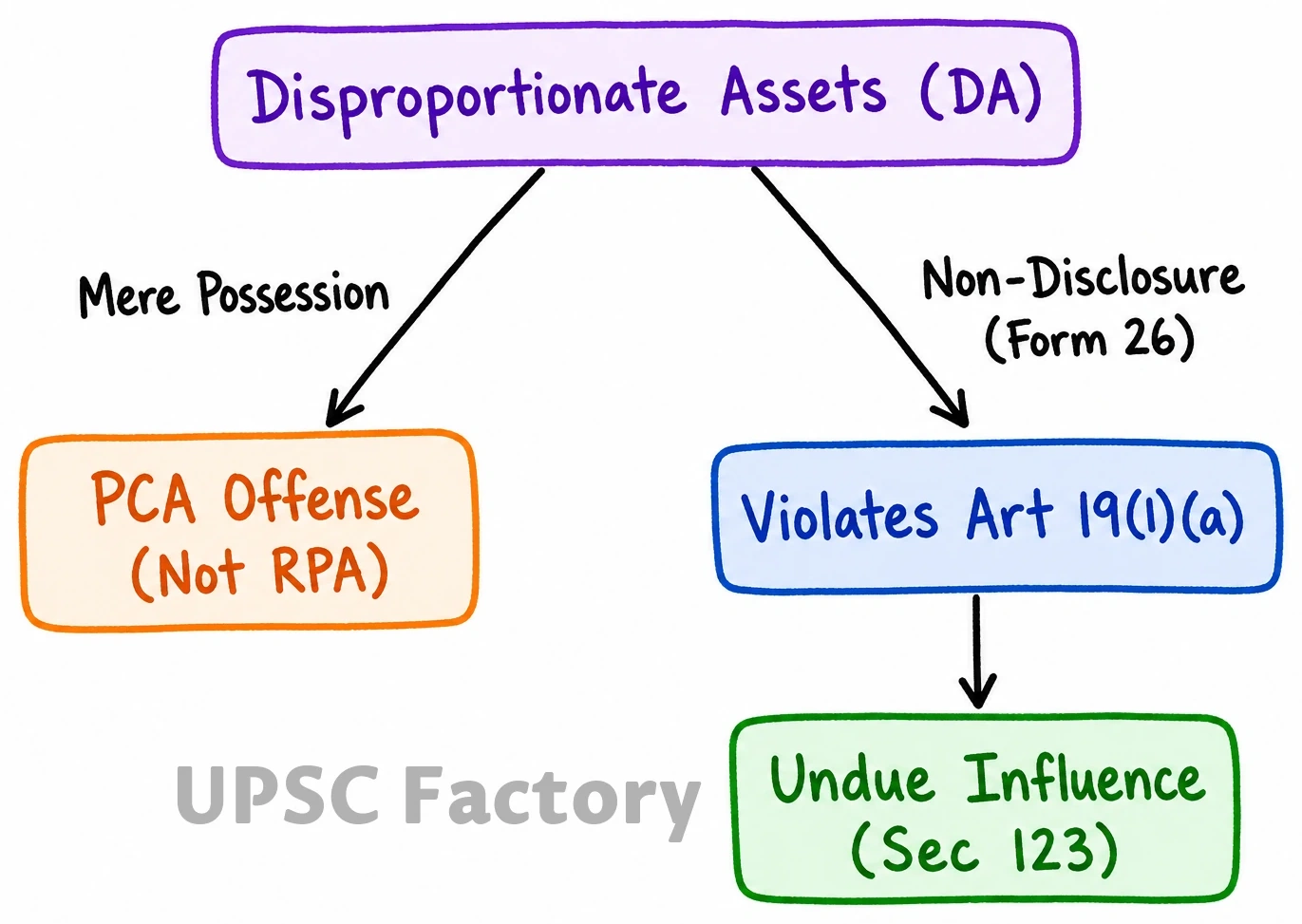
- Distinct Statutory Offense: Mere possession of DA is penalized under the Prevention of Corruption Act, but is not inherently “undue influence” under RPA.
- The Lok Prahari Ruling (2018): The Supreme Court clarified that the non-disclosure of DA sources, rather than mere possession, constitutes undue influence.
- Infringing Voter Rights: Concealing DA in Form 26 (Conduct of Election Rules) violates voters’ Right to Know (Article 19(1)(a)), impeding informed choice.
- Electoral Nullification: Failure to disclose income sources for candidates or dependents is a corrupt practice under Section 123(2), rendering the election liable to be voided.
Classifying asset non-disclosure as undue influence strengthens electoral probity, necessitating proactive verification of candidate affidavits by the Election Commission to ensure transparency.