Model Answer:
Lok Adalats and Arbitration Tribunals are Alternate Dispute Resolution (ADR) mechanisms ensuring speedy, cost-effective justice, albeit differing fundamentally in process and jurisdiction.
1. Key Differences
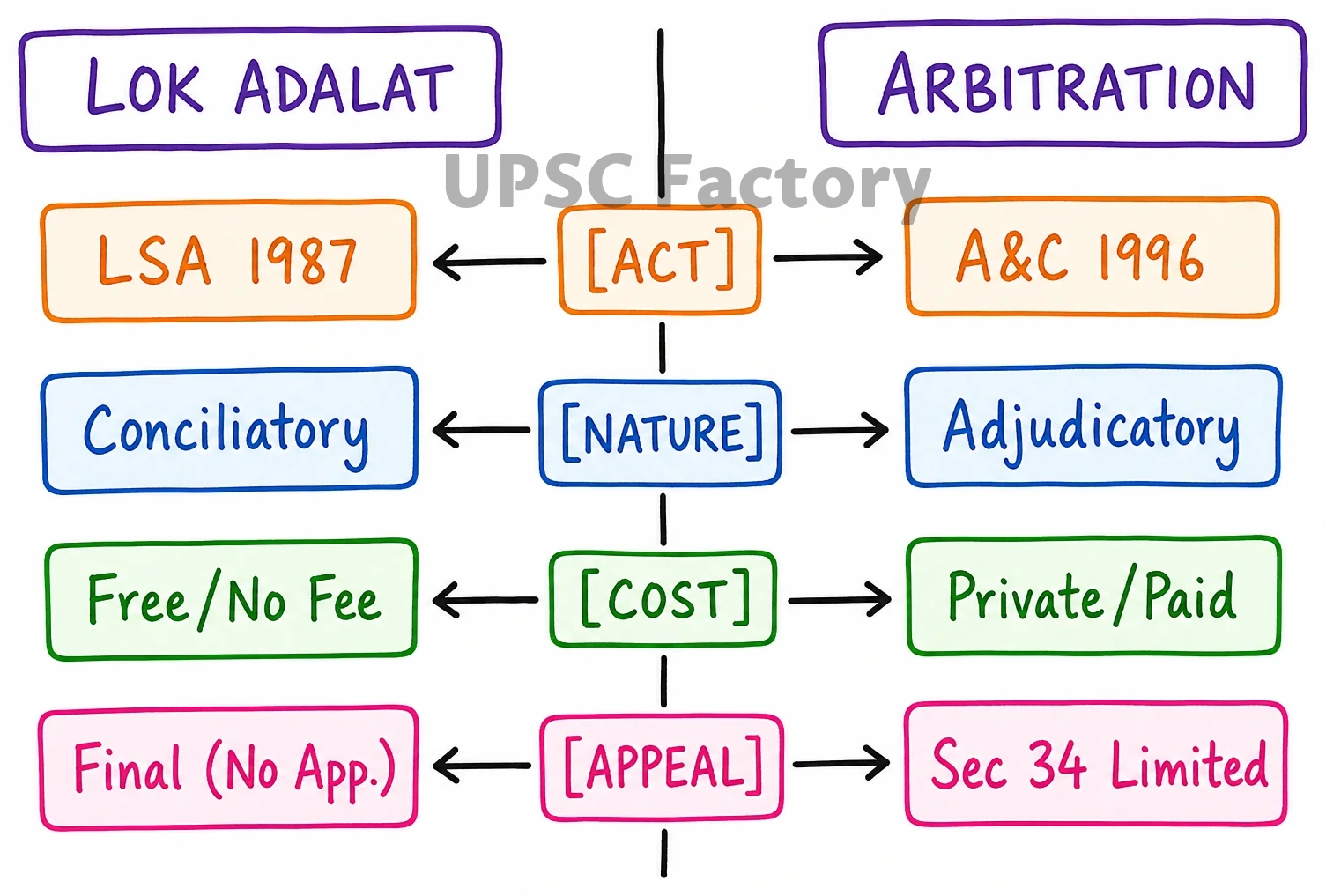
- Statutory Basis: Lok Adalats operate under Legal Services Authorities Act, 1987; Arbitration under Arbitration & Conciliation Act, 1996.
- Nature: Lok Adalats rely on conciliation and mutual compromise; Arbitration is quasi-judicial and adjudicatory.
- Cost: Lok Adalats are completely free (court fee refunded); Arbitration involves private, often expensive arbitrator fees.
- Appeal: Lok Adalat awards are final (no appeal); Arbitral awards face limited challenge (Sec 34 A&C Act).
2. Civil and Criminal Jurisdiction
- Civil Cases: Both mechanisms widely entertain civil, commercial, and financial disputes (Afcons Infrastructure vs Cherian Varkey).
- Criminal Cases (Lok Adalat): Entertains strictly compoundable criminal offences where mutual compromise is legally permissible (Sec 320 CrPC).
- Criminal Cases (Arbitration): Strictly barred from entertaining any criminal matters, as crimes are non-arbitrable public wrongs against the State.
While Arbitration promotes commercial efficiency and ease of doing business, Lok Adalats fulfill the constitutional mandate of free, accessible legal aid (Article 39A).