Model Answer:
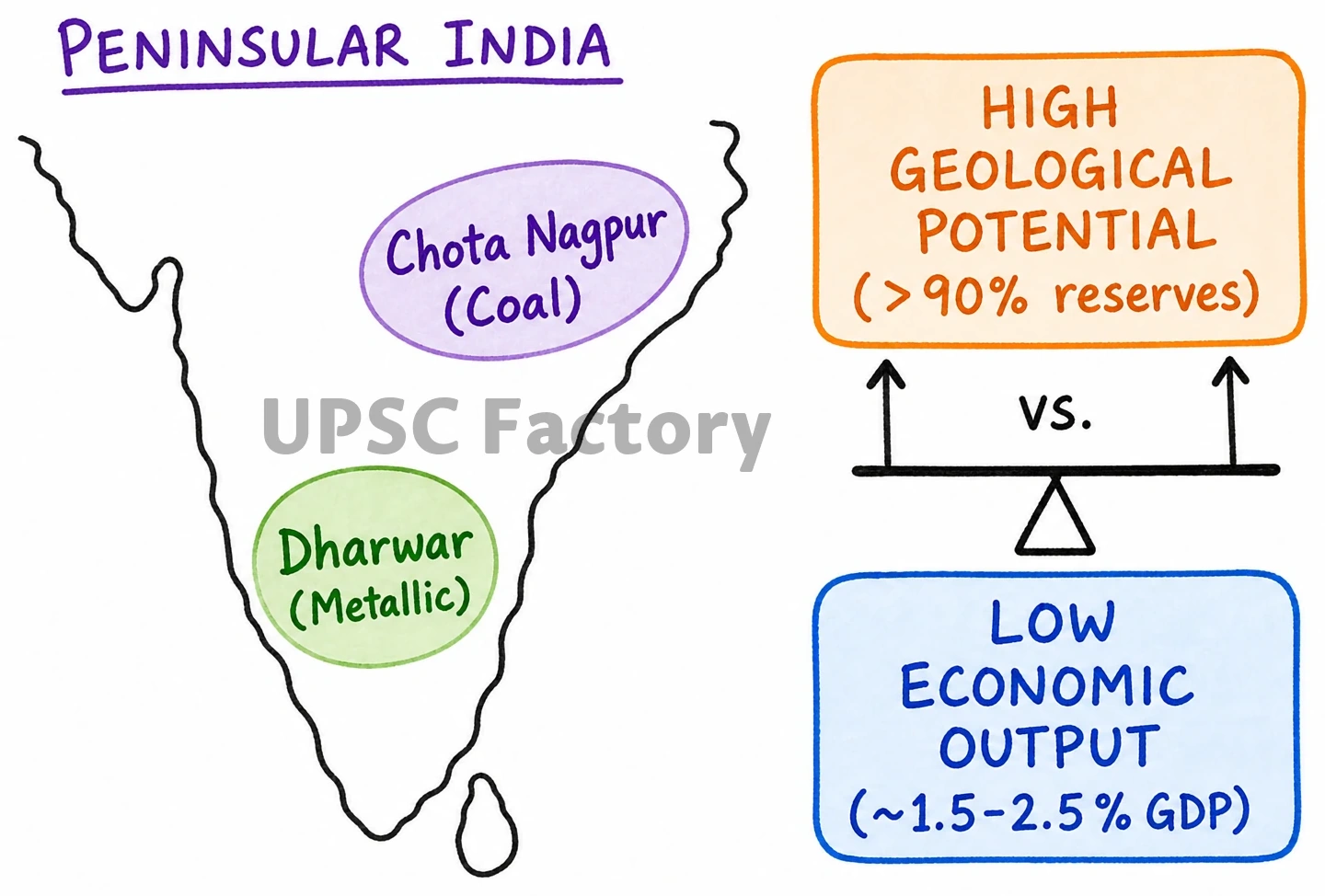
Despite inheriting rich metallogenic reserves (coal, iron) from the ancient Gondwanaland supercontinent, India’s mining sector contributes a mere ~1.5-2.5% to its GDP.
1. The Gondwana Paradox
- Geological Wealth: Peninsular India holds over 90% of domestic coal and immense metallic ores (Dharwar rock systems).
2. Bottlenecks Hindering GDP Contribution
- Regulatory Hurdles: Complex, multi-window environmental and forest clearances drastically delay project operationalization.
- Suboptimal Exploration: Barely 10% of India’s Obvious Geological Potential (OGP) is explored due to limited deep-seam technological capacity.
- Socio-Ecological Conflicts: Mineral belts heavily overlap with sensitive ecosystems and tribal habitats, sparking resistance (e.g., Niyamgiri hills protests).
- Judicial Interventions: Supreme Court bans curbing illegal extraction and environmental degradation disrupted output significantly (e.g., Goa iron ore ban).
- Infrastructural Deficits: Poor evacuation logistics (railward/port connectivity) elevate freight costs, making domestic minerals globally uncompetitive.
- Fiscal Burden: High Effective Tax Rates (ETR) and royalties deter private capital and Foreign Direct Investment.
Effective implementation of the National Mineral Policy 2019 and MMDR (Amendment) Act 2021 is vital to streamline clearances, attract private exploration, and boost the sector’s GDP share sustainably.