Model Answer:
The pandemic-induced ‘Work From Home’ (WFH) model fundamentally restructured Indian family dynamics, presenting a paradox of enhanced emotional bonding alongside emerging domestic stressors.
Positive Impacts on Family Relationships
- Strengthened Bonding: Increased geographical proximity and elimination of commute times fostered greater emotional intimacy between spouses and children.
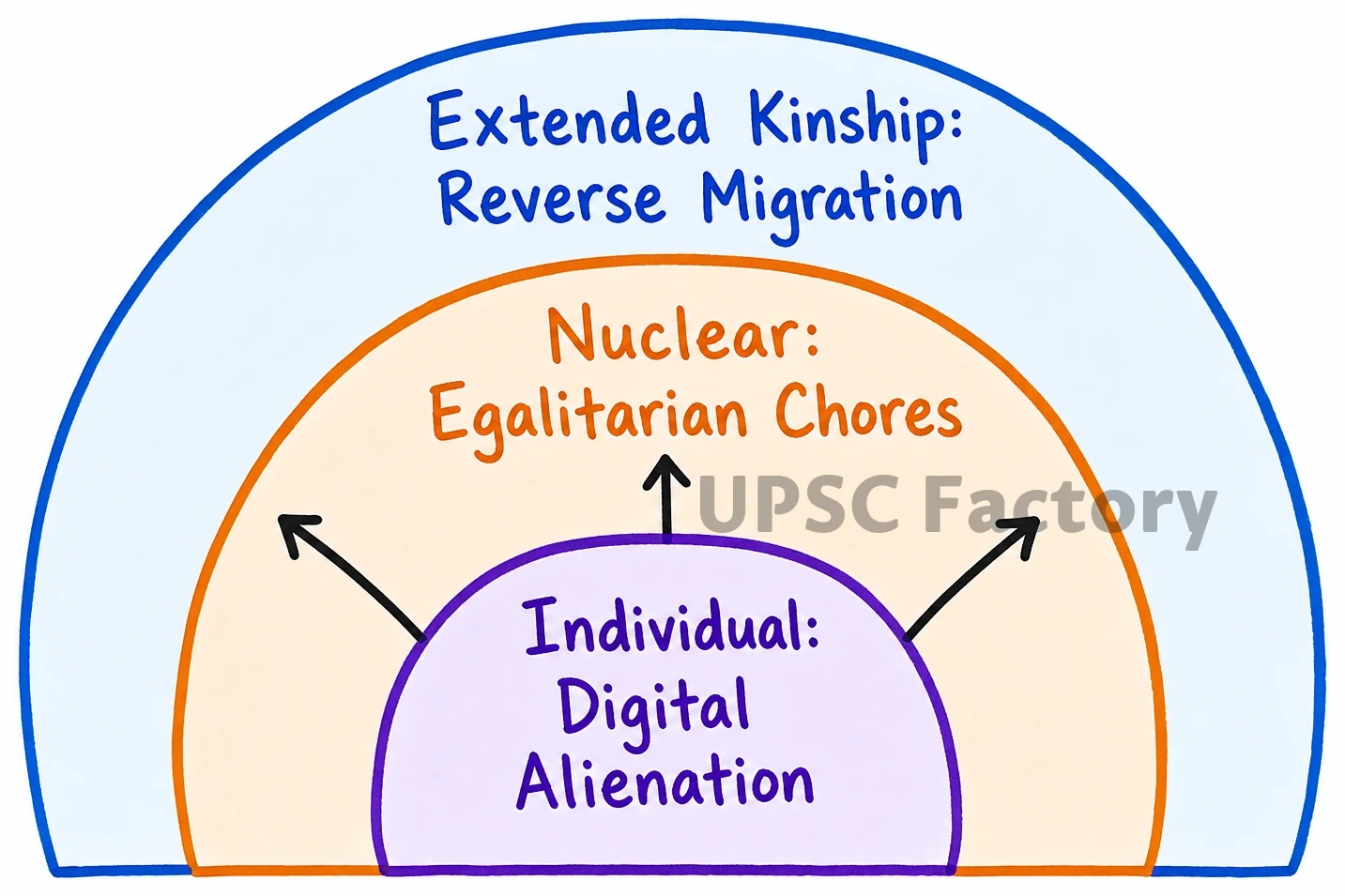
- Egalitarian Shifts: Urban nuclear families witnessed men increasingly participating in domestic chores, subtly challenging traditional patriarchal gender roles.
- Enhanced Caregiving: Flexible schedules allowed better direct care for the elderly and infants, reducing reliance on external creches.
- Revival of Kinship: Reverse migration of IT professionals to Tier-2/3 hometowns rejuvenated extended joint-family ties and intergenerational connectivity.
Negative Impacts and Challenges
- The ‘Double Burden’: Working women faced the compounded exhaustion of professional targets and disproportionate unpaid care work (UN Women Report).
- Blurred Boundaries: The loss of spatial separation between office and home led to burnout and friction, degrading the quality of family interactions.
- ‘Shadow Pandemic’: Prolonged confinement exacerbated underlying household disputes, leading to a sharp spike in domestic violence (NCW data).
- Digital Alienation: High screen times and constant digital availability isolated family members from one another within the same household.
While WFH catalyzed a gradual democratization of domestic roles, mitigating its adverse gendered and psychological impacts requires formal ‘Right to Disconnect’ policies and robust institutional care infrastructure.