Model Answer:
Social movements are sustained, organized collective efforts toward social change or resistance, conceptualized through diverse sociological paradigms that explain how structural contradictions, identities, and resources shape collective action.
Theoretical Explanations of Social Dimensions
- Structural Strain and Systemic Equilibrium: Neil Smelser (Value-Added Theory) views movements as responses to structural strains and institutional breakdowns, where generalized beliefs emerge to restore societal equilibrium.
- Subjective Injustice and Relative Deprivation: Ted Gurr argues that collective mobilization stems from relative deprivation—the perceived gap between social expectations and value capabilities—rather than absolute deprivation.
- Organizational and Network Capital: John McCarthy and Mayer Zald’s Resource Mobilization Theory shifts focus from grievances to social infrastructure, arguing movements depend on mobilizing elite resources, professional leadership, and preexisting networks.
- Post-Materialism and Identity Politics: Alain Touraine and Alberto Melucci (New Social Movement Theory) locate movements in post-industrial society, emphasizing struggles over symbolic codes, lifestyle autonomy, and cultural identity rather than class-based economic redistribution.
- Cognitive Framing and Moral Shocks: Doug McAdam and David Snow highlight cognitive liberation, demonstrating that movements require shared interpretive frames to transform individual fatalism into collective moral agency.
- Class Consciousness and Counter-Hegemony: Marxist perspectives, particularly Antonio Gramsci, explain social movements as counter-hegemonic struggles, where subaltern groups forge an alternative historic bloc against ruling-class hegemony.
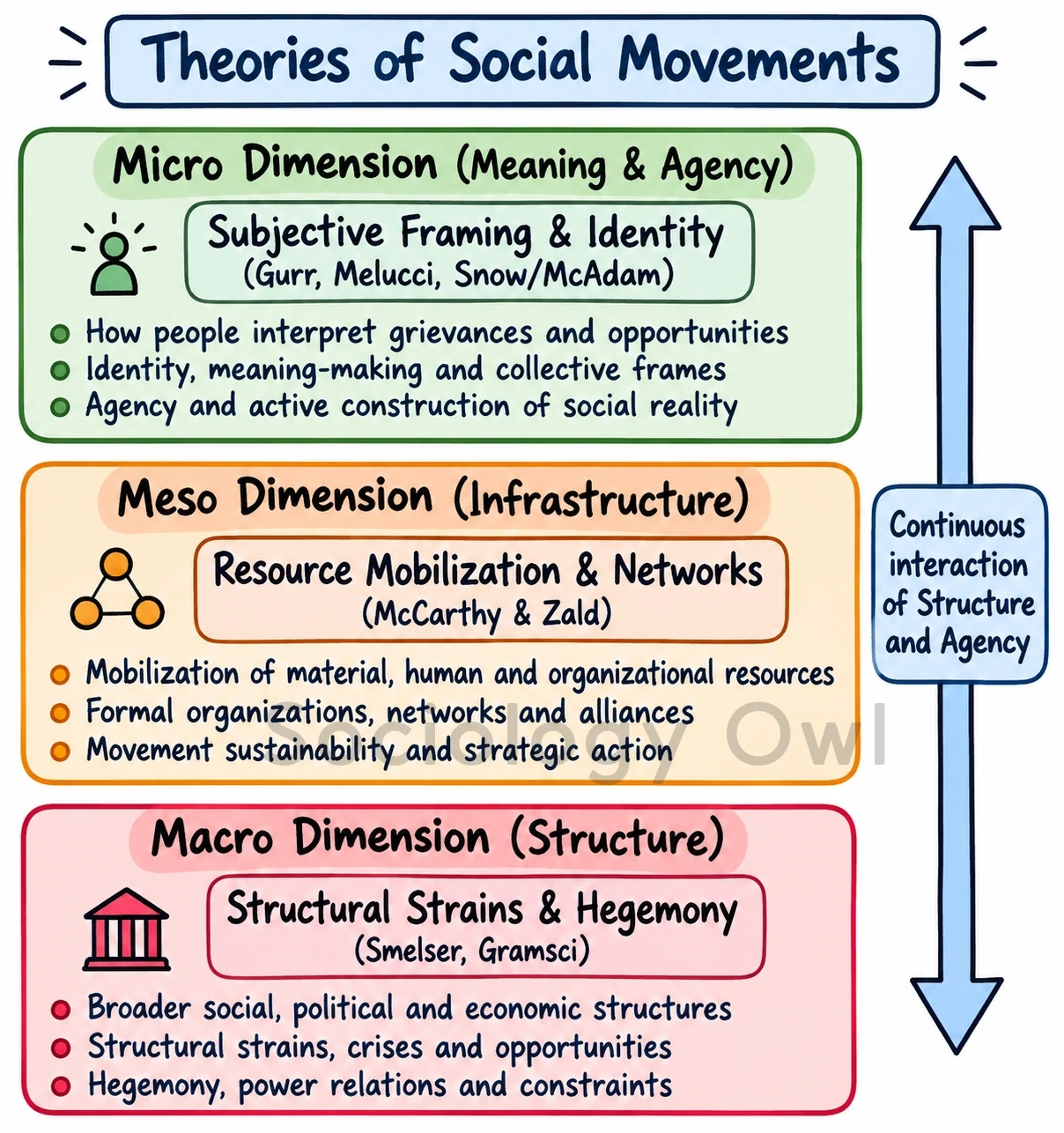
Modern movement theories synthesize structural strains, resource networks, and cultural meanings, demonstrating that collective action operates across multiple social dimensions.