Model Answer:
The quote emphasizes the “Purity of Means”. It asserts that true success is measured by the ethical costs and moral trade-offs incurred during a pursuit, not merely the final material achievement.
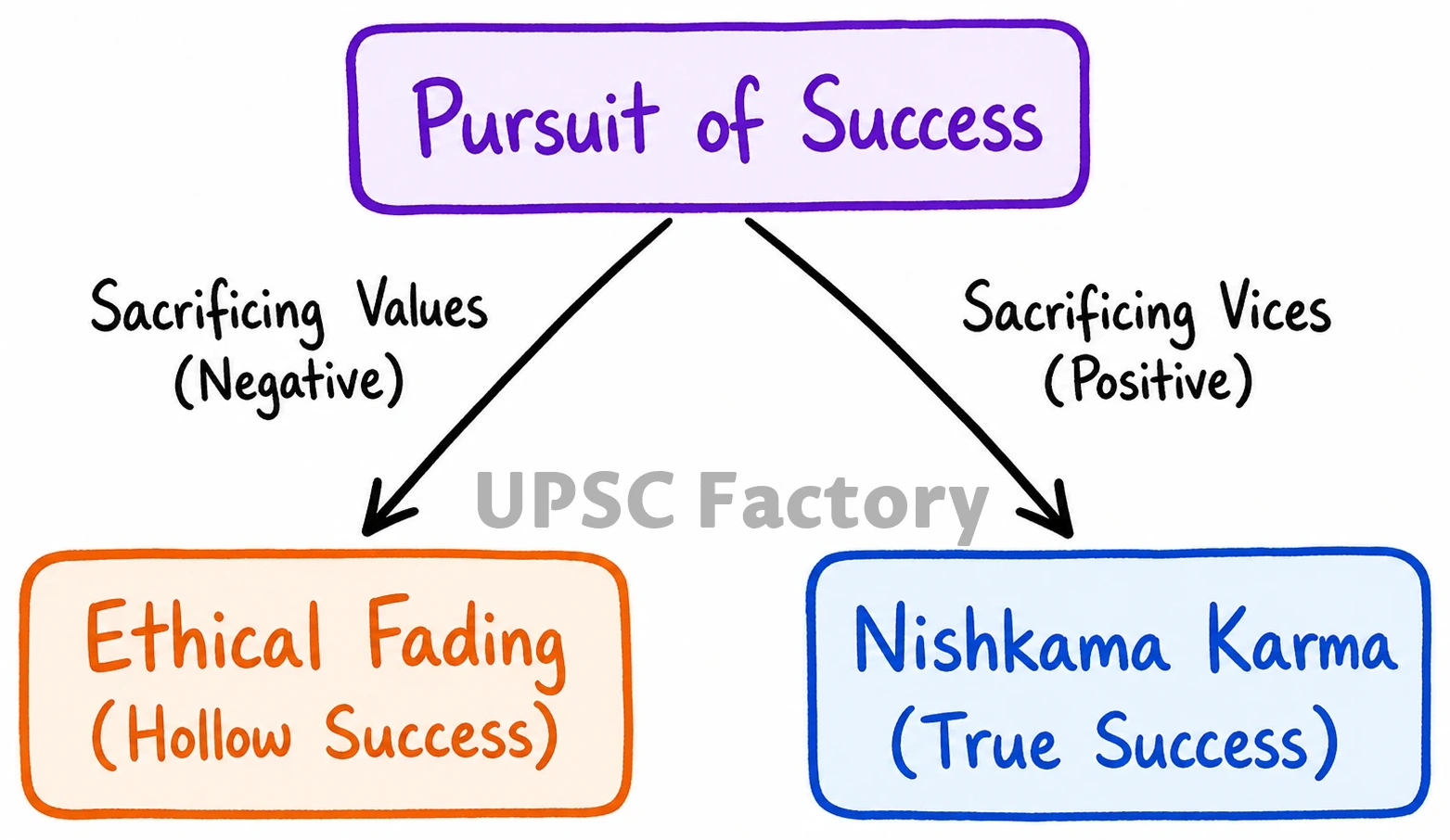
1. Negative Sacrifices (Compromising Ethics for Goals)
- Ethical Fading: Sacrificing moral integrity for rapid wealth creates a hollow illusion of success (e.g., Satyam/Enron corporate frauds).
- Purity of Means: Unjust means inevitably corrupt the end result, leading to spiritual bankruptcy (Gandhian philosophy).
- Deontological Failure: Ignoring moral duty and human dignity for utilitarian gains violates core ethical principles (Kantian ethics).
- Holistic Toll: Giving up family, health, or inner peace for blind career progression reflects misplaced life priorities.
2. Positive Sacrifices (Giving up Vices for Noble Ends)
- Selfless Duty: Sacrificing personal greed and comfort for citizen welfare defines true administrative success (Nishkama Karma).
- Overcoming Ego: Giving up the desire for conquest and vengeance for peace marks supreme moral triumph (e.g., Ashoka embracing Dhamma).
- Delayed Gratification: Sacrificing immediate, reckless economic growth to ensure long-term environmental sustainability (e.g., global climate action).
Ultimately, success devoid of moral grounding is a failure of character. True triumph lies in achieving noble ends while steadfastly preserving one’s foundational integrity and human values.