Model Answer:
Post-independence land reforms (J.C. Kumarappa Committee) aimed to restructure agrarian relations to ensure socio-economic justice (Article 39b & c) and boost productivity.
Objectives and Measures of Land Reforms
- Objectives: Ensure distributive equity, eliminate historical exploitation, and incentivize actual tillers to maximize agrarian efficiency.
- Key Measures:
- Abolishing Intermediaries: Eradicating Zamindari systems to directly empower cultivators.
- Tenancy Reforms: Enforcing rent regulation and security of tenure (Operation Barga, West Bengal).
- Land Ceilings: Fixing maximum permissible holdings and redistributing surplus land (Kerala Land Reforms Act).
- Consolidation of Holdings: Grouping fragmented plots to facilitate mechanization.
Economic Effectiveness of Land Ceiling Policy
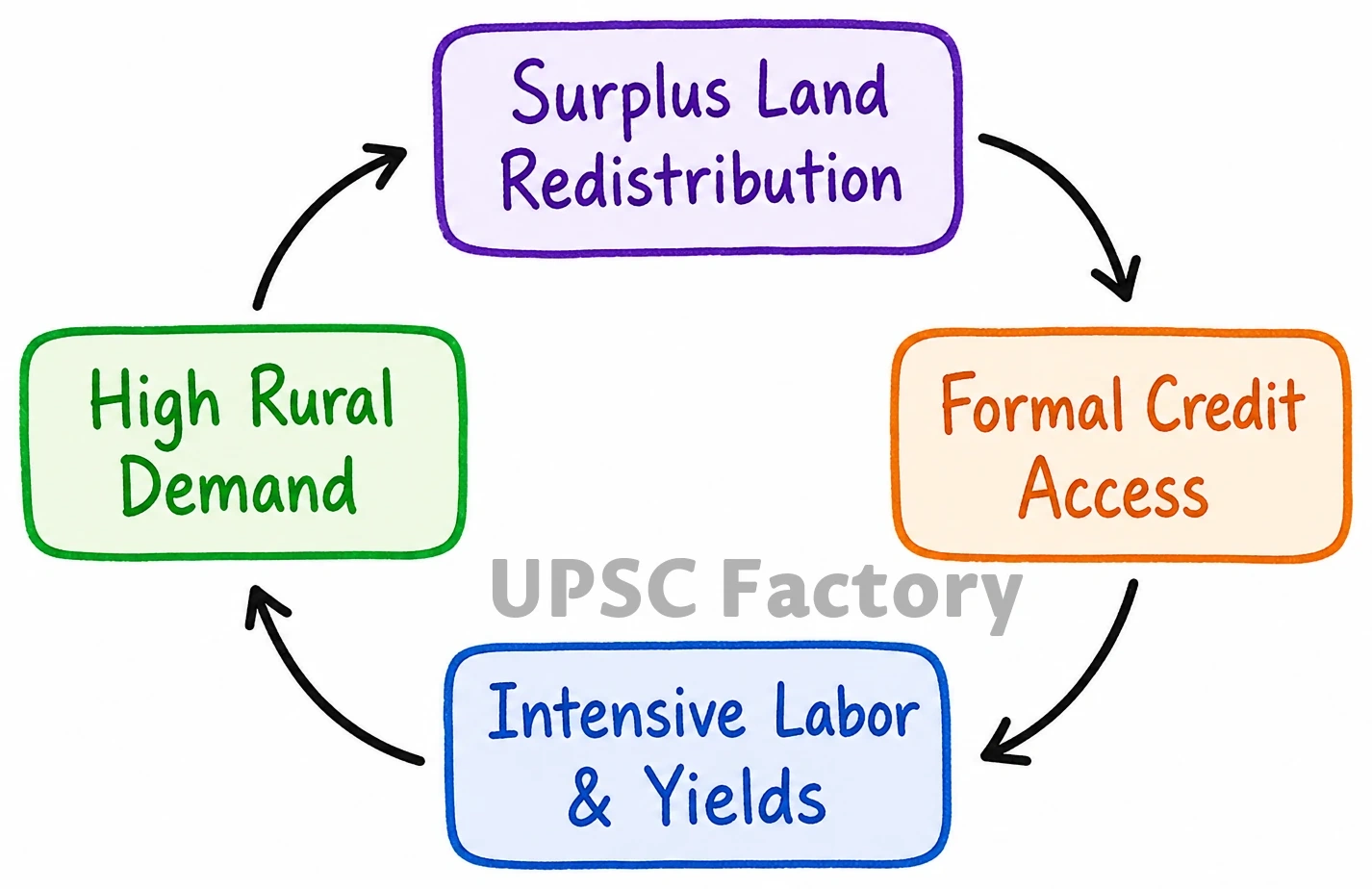
- Inverse Size-Productivity Ratio: Small family-owned farms often yield higher output per hectare through highly intensive labor application.
- Capital Formation: Formal ownership of redistributed surplus land unlocks institutional credit, enabling micro-level farm investments.
- Macroeconomic Demand: Wealth redistribution enhances rural purchasing power, thereby stimulating structural demand for industrial and consumer goods.
- Labor Absorption: Intensive cultivation by new landowners absorbs surplus rural labor, mitigating disguised agrarian unemployment.
While land ceilings successfully laid the foundation for agrarian equity, next-generation agricultural efficiency requires rapid land record digitization (SVAMITVA Scheme) and the scaling of Farmer Producer Organizations (FPOs).