Model Answer:
The 2020 farmers’ movement against three agricultural laws was a collective response to India’s capitalist agrarian crisis and the perceived “corporate squeeze” (Utsa Patnaik) on traditional agriculture.
Sociological Assessment of the Movement
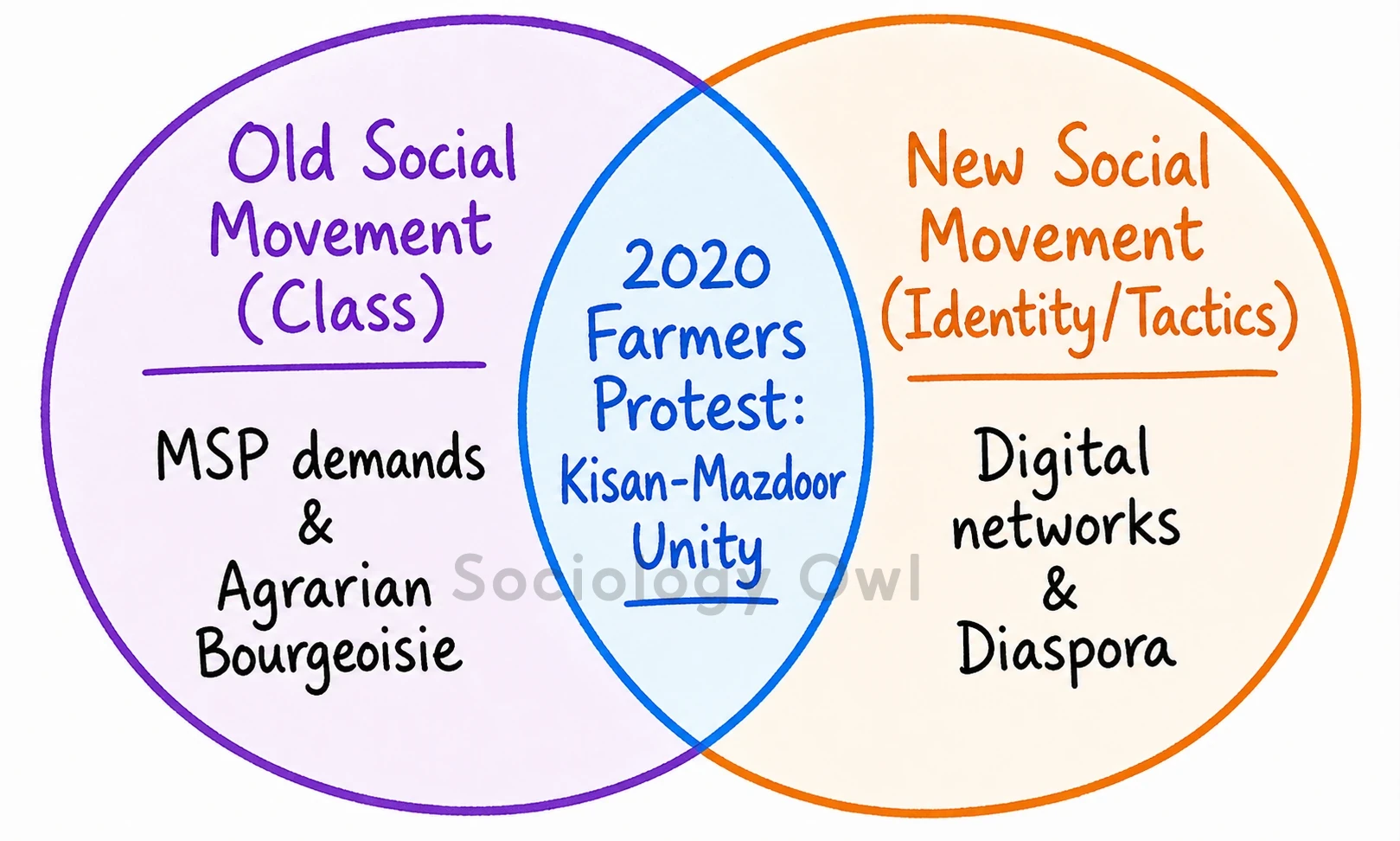
Hybrid Character: Merging “Old” economic class interests (MSP protection) with New Social Movement tactics (digital mobilization, diaspora networks), it revived Dipankar Gupta’s “Bharat vs. India” binary (rural-agrarian versus urban-corporate elites).
Caste-Class Nexus: Led primarily by traditional Dominant Castes (M.N. Srinivas) like Jats and Jat Sikhs. Surinder Jodhka notes that while spearheaded by the “agrarian bourgeoisie” (rich farmers), it temporarily bridged deep-seated caste-class divides via Kisan-Mazdoor (farmer-laborer) unity.
Effective Resource Mobilization was visible through langars (community kitchens), establishing casteless commensality and civic solidarity. However, its primary structural limitation was its geographical concentration within the Green Revolution belt, largely bypassing marginal farmers of Eastern India.
Conclusion
Despite regional and class limitations, the movement successfully demonstrated the enduring political agency of the Indian peasantry against neoliberal state interventions, forcefully reasserting agrarian identity.