Model Answer:
Introduction
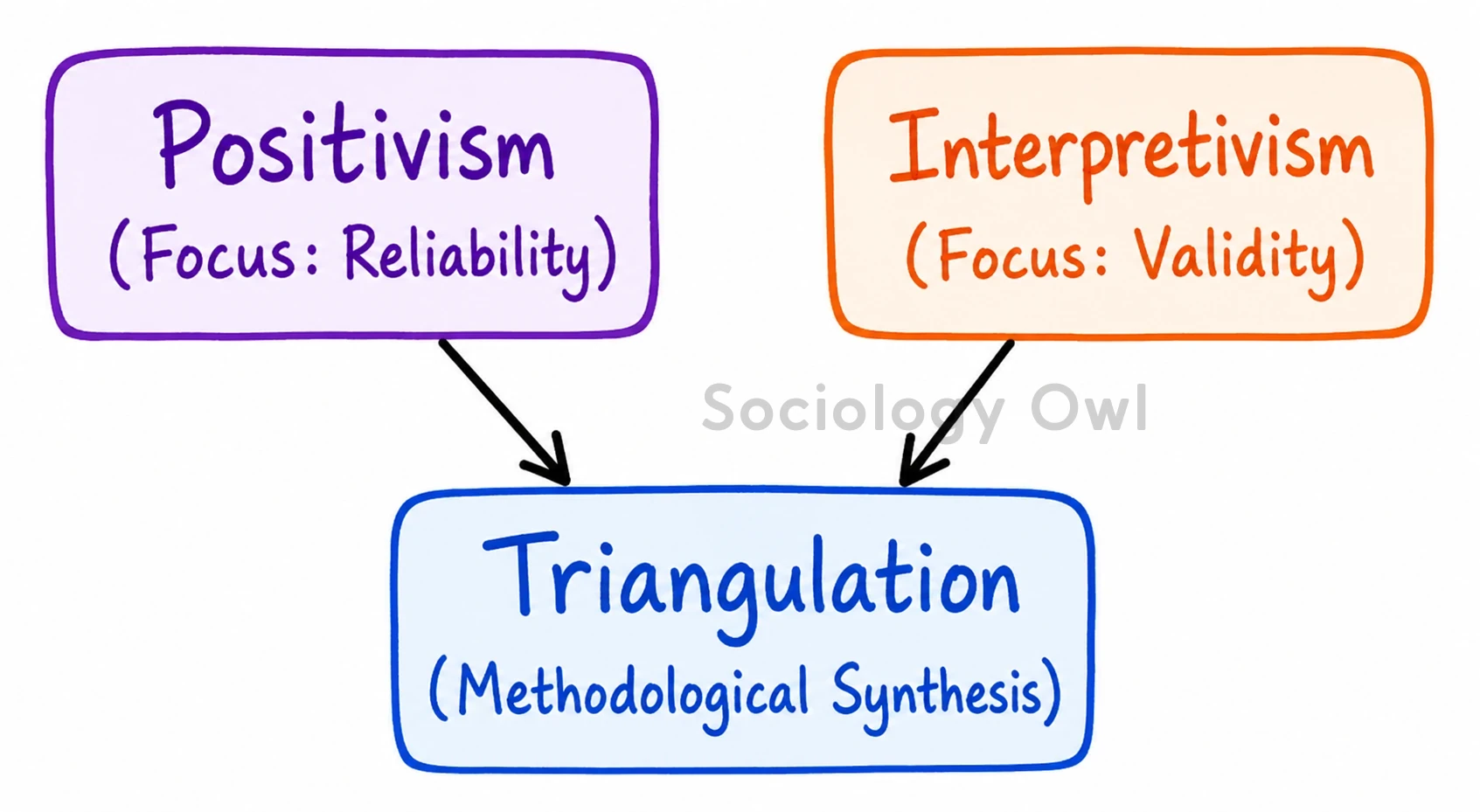
According to Alan Bryman, Reliability refers to the degree to which a measure of a concept is stable and consistent. It is a core methodological concern for Positivists like Emile Durkheim, who sought to establish objective, replicable Social Facts mirroring natural sciences.
Tests to Establish Reliability
Social science researchers use specific tests to ensure measurement consistency:
- Test-Retest Reliability: Administering the same research instrument (e.g., a survey) to the same group at two different times.
- Parallel Forms Reliability: Using two different but equivalent versions of a tool on the same group to measure the same construct.
- Split-Half Method: Dividing a single questionnaire into two parts to verify internal consistency.
- Inter-Rater Reliability: Ensuring different researchers observing the same social phenomenon independently yield identical data.
Large-scale macro-sociological exercises like the Census of India or National Crime Records Bureau (NCRB) data rely heavily on standardized questionnaires to guarantee high Inter-Rater Reliability among thousands of diverse enumerators.
Conclusion
While crucial for quantitative research, Interpretivists like Max Weber and Aaron Cicourel argue that an over-reliance on reliability often compromises Validity (capturing deeper subjective meanings). Consequently, modern sociologists utilize Triangulation (Norman Denzin) to balance both metrics effectively.