Model Answer:
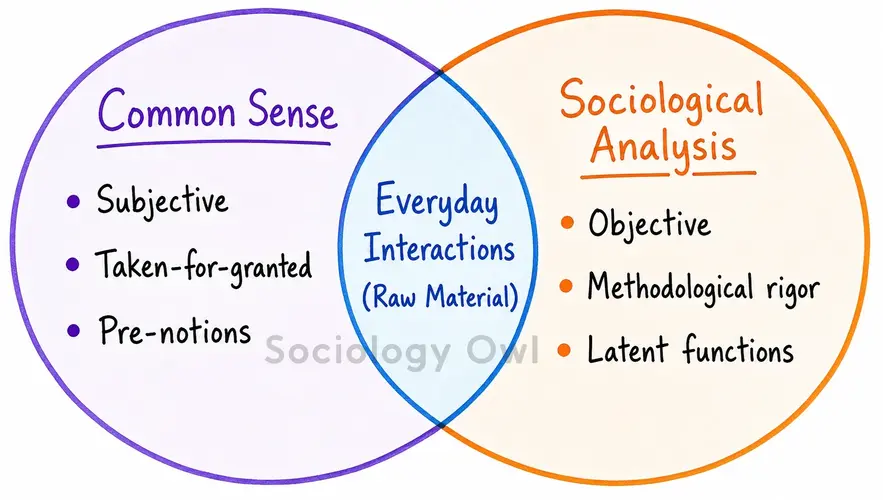
Qualitative research emerged as an anti-positivist stance rooted in Interpretivism and Phenomenology. Pioneered by Max Weber’s concept of Verstehen (empathetic understanding), it captures the subjective meanings actors attach to their actions, moving beyond statistical generalizations.
Dimensions of Qualitative Method
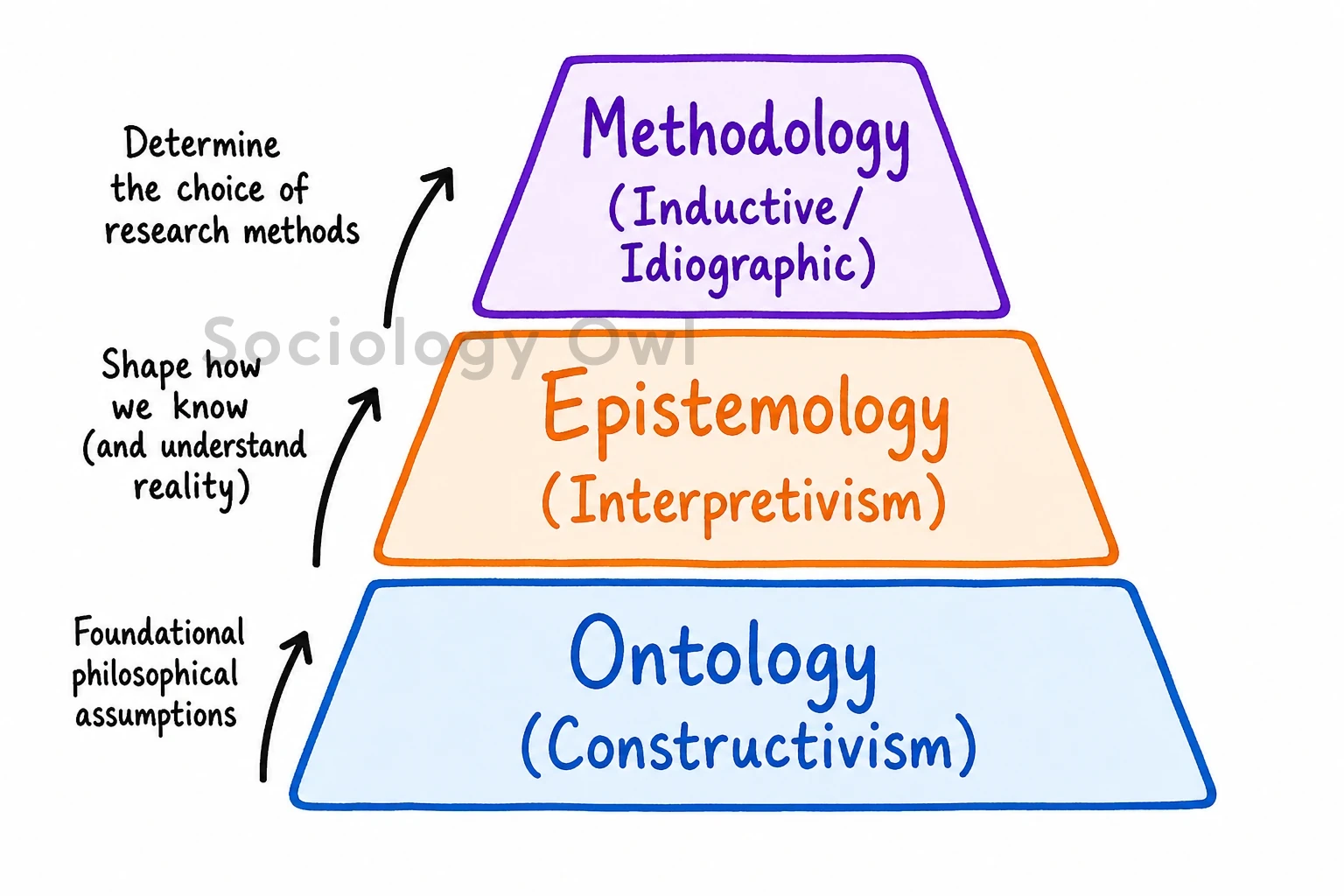
As per sociologist Alan Bryman, the core dimensions of qualitative methodology are theoretical frameworks rather than mere data collection steps:
- Ontological Dimension: Adopts Constructivism, viewing social reality as a fluid creation of participants, contrasting with positivism’s external, objective reality.
- Epistemological Dimension: Grounded in Interpretivism, asserting that valid knowledge is generated by understanding the world through the subjects’ eyes.
- Methodological Dimension: It is primarily Inductive (building theory upwards from raw data) and Idiographic (focusing on specific, unique contexts).
Role in Gaining Deeper Sociological Insight
- Decoding Complexity: Clifford Geertz’s concept of “Thick Description” highlights how qualitative methods explain the deep cultural context behind human actions.
- Uncovering Everyday Realities: Ethnomethodology (Harold Garfinkel) reveals taken-for-granted social rules. Similarly, M.N. Srinivas’s participant observation in The Remembered Village uncovered the nuanced reality of Sanskritization that quantitative surveys completely missed.
- Empowering Marginalized Voices: Feminist Methodology, advocated by Ann Oakley, breaks down researcher-subject hierarchies through unstructured interviews, giving voice to oppressed groups.
- Positivist Critique: However, thinkers like Emile Durkheim argue that qualitative methods lack macro-level generalizability, suffer from researcher bias, and fail tests of strict reliability.
Globally, ethnographies like Matthew Desmond’s Evicted utilize qualitative methods to expose the hidden survival mechanisms of the urban poor, capturing realities that quantitative poverty metrics overlook.
Conclusion
While qualitative methods provide unparalleled subjective depth, contemporary sociology increasingly favors Methodological Pluralism. By employing Triangulation (Norman Denzin), researchers integrate qualitative depth with quantitative breadth to achieve both validity and reliability in social inquiry.