Model Answer:
Bhakti literature emerged between the 7th and 17th centuries as a powerful socio-religious literary movement emphasizing intense personal devotion over orthodoxy.
Nature of Bhakti Literature
- Vernacular Medium: Composed in local tongues to directly connect with the masses, rejecting elite Sanskrit (Awadhi, Braj, Tamil).
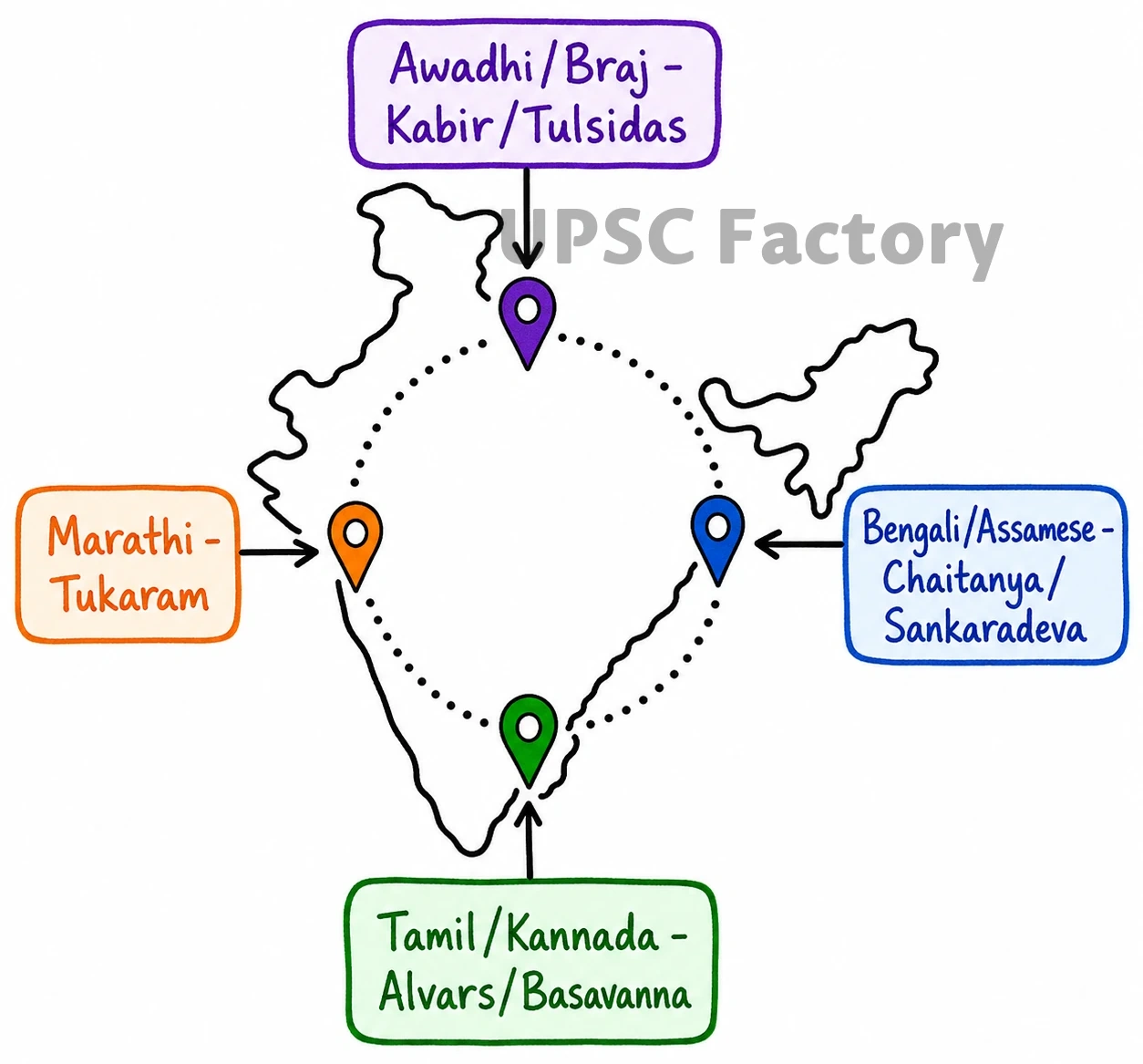
- Philosophical Duality: Embraced both Saguna (devotion to physical form) and Nirguna (formless divine) traditions (Tulsidas’ Ramcharitmanas vs. Kabir’s Bijak).
- Egalitarian Ethos: Fiercely rejected caste hierarchies, untouchability, and rigid, exclusionary rituals (Basavanna’s Vachanas).
- Lyrical & Musical: Structured as emotive, easily recitable poetry suited for oral transmission (Dohas, Abhangs, Vakhs).
Contribution to Indian Culture
- Linguistic Renaissance: Catalyzed the institutional growth and grammar of regional languages (Tukaram/Marathi, Lal Ded/Kashmiri).
- Social Reformation: Championed gender equality, marginalized voices, and Hindu-Muslim syncretism (Mirabai’s feminist undertones, Guru Nanak’s teachings).
- Enrichment of Arts: Deeply inspired classical dances, Hindustani/Carnatic music, and Rajput/Pahari miniature paintings (Jayadeva’s Ashtapadis in Odissi).
- Democratization of Religion: Simplified complex Vedantic philosophy, making spiritual salvation accessible to the common people.
Ultimately, Bhakti literature remains the bedrock of India’s syncretic cultural ethos, having permanently democratized religion while shaping modern regional identities.