Model Answer:
The transition from the Rig Vedic (1500–1000 BCE) to the Later Vedic period (1000–600 BCE) witnessed profound socio-economic transformations, primarily driven by eastward expansion and the discovery of iron (Krishna Ayas).
1. Changes in the Field of Society
- Varna System: Shifted from a flexible, occupational categorization to a rigid, birth-based hierarchical system (Brahmanas, Kshatriyas, Vaishyas, Shudras).
- Status of Women: Suffered a steep decline. Women lost access to political assemblies (Sabha/Samiti) and the right to education (Upanayana).
- Institution of Gotra: Emerged during this period to institutionalize patrilineal descent and strictly prohibit endogamy.
- Life Stages: The Ashrama system was formalized to regulate individual life into four distinct stages (e.g., Brahmacharya, Grihastha).
2. Changes in the Field of Economy
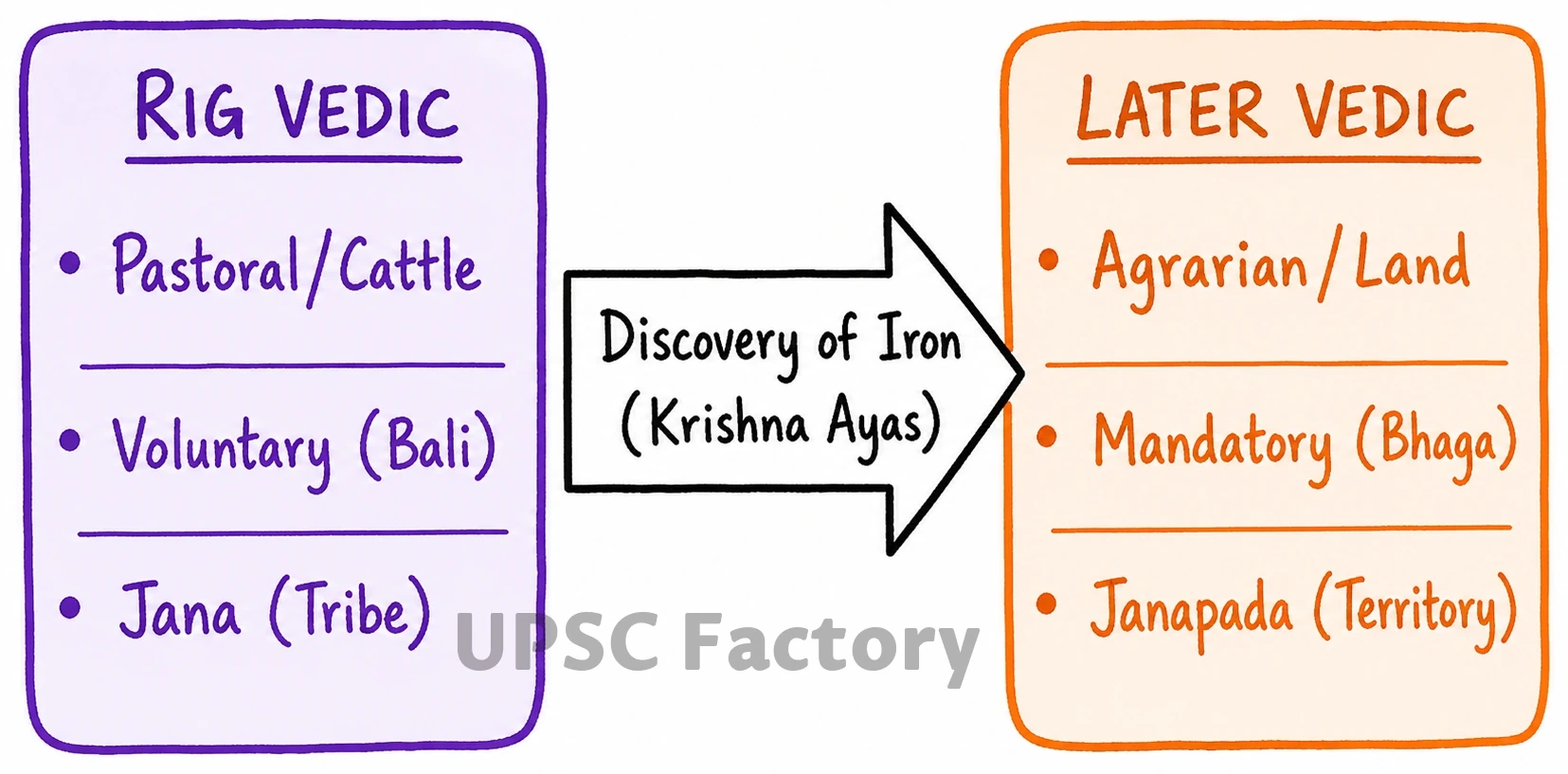
- Economic Base: Transformed from semi-nomadic pastoralism (where cattle was primary wealth) to settled, iron-plough agriculture.
- Taxation System: Customary and voluntary offerings (Bali) evolved into mandatory, regular taxes (Bhaga and Shulka) collected by royal officers (Sangrahitri).
- Craft Specialization: Increased agricultural surplus led to diverse crafts (Painted Grey Ware pottery) and the rise of merchant guilds (Sreshthins).
- Territorial Identity: Land replaced cattle as the primary marker of wealth, shifting political units from Jana (tribe) to Janapada (territory).
These systemic shifts replaced an egalitarian, tribal pastoral society with a complex, stratified agrarian state, ultimately laying the foundation for the Mahajanapadas and India’s Second Urbanization.