Model Answer:
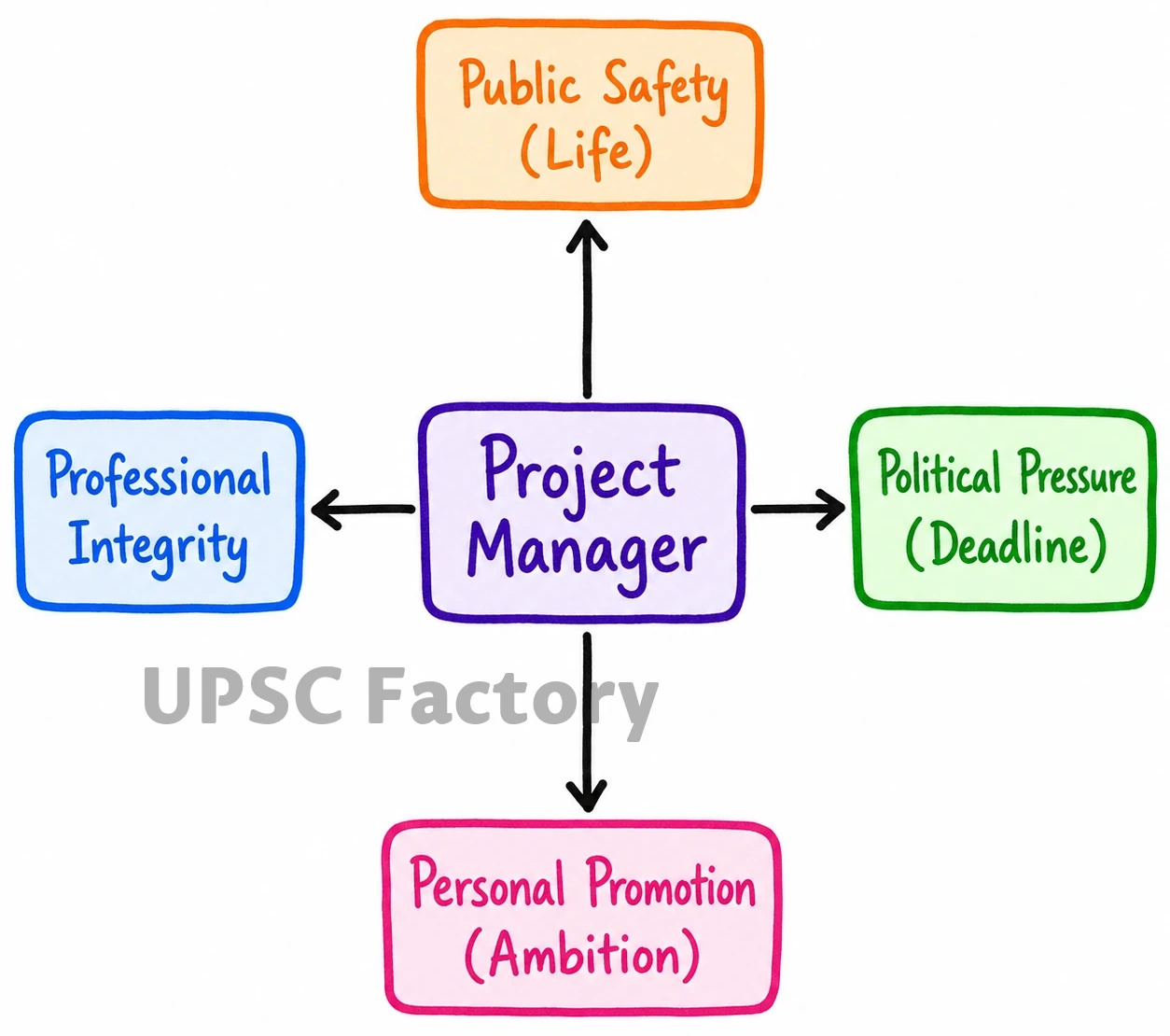
The case highlights a severe conflict between public safety, professional integrity, and political expediency, testing the Nolan Principles of objectivity, accountability, and honesty.
Options and Ethical Dilemmas
- Comply with superiors: Ignore the crack for timely completion. Ensures promotion but risks public safety and compromises integrity.
- Resign from the post: Avoids direct conflict but demonstrates escapism from duty and abandons public interest.
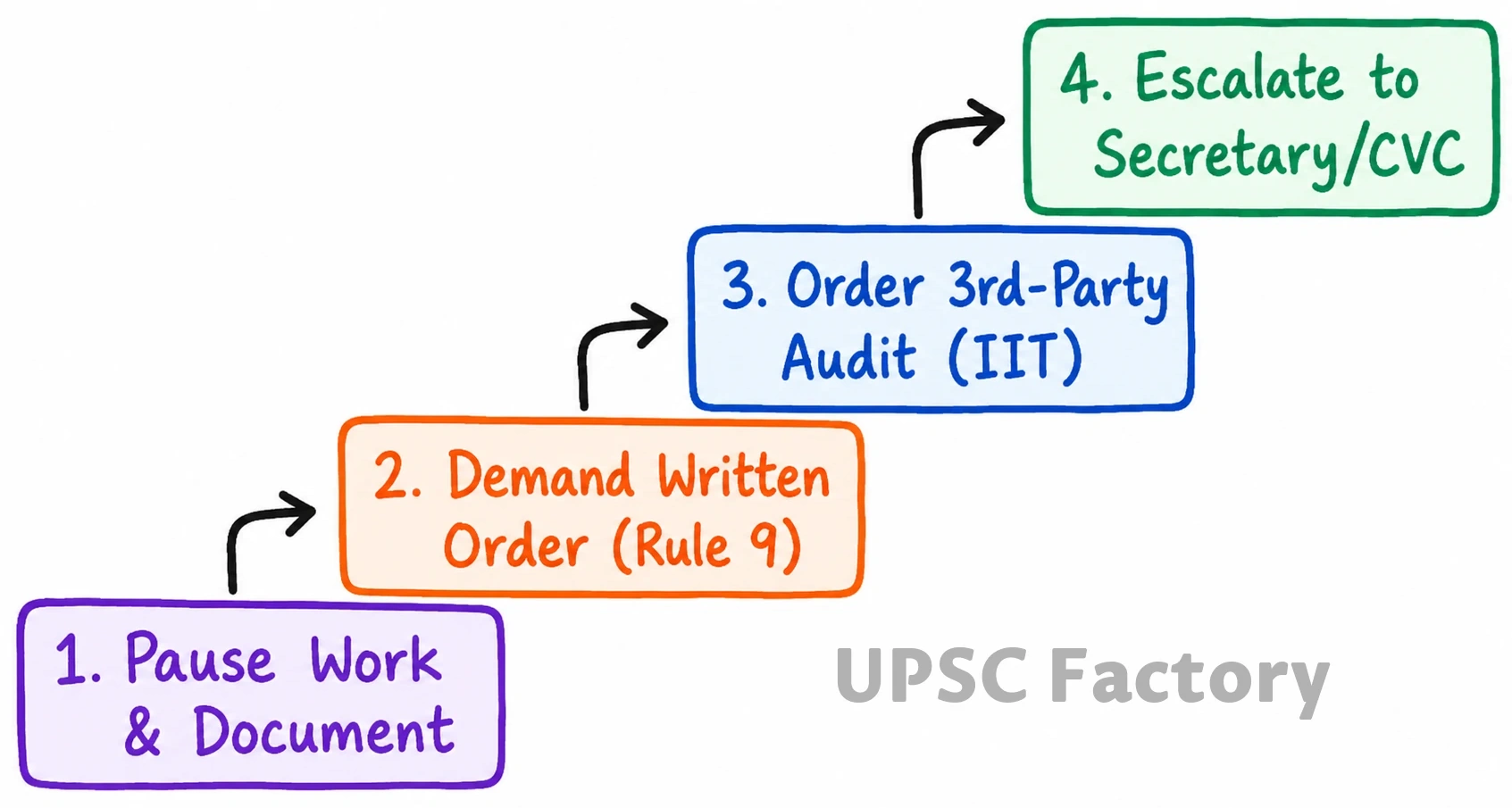
- Persuade, document, and escalate (Optimal Option): Pause construction, demand written orders, and escalate to higher authorities to ensure structural safety.
- Public Safety vs. Political Expediency: Safeguarding citizen lives versus meeting arbitrary pre-election deadlines.
- Hierarchical Obedience vs. Professional Integrity: Following the Chief Engineer’s directives versus adhering strictly to engineering ethics.
- Personal Ambition vs. Conscience: Yielding to promotion incentives versus upholding the constitutional duty of care (Article 21).
- Means vs. Ends: Tolerating substandard contractor materials to achieve the ‘end’ of timely project inauguration.
Professional Challenges and Response
Challenges:
- Navigating hierarchical coercion and defying a direct superior.
- Facing political backlash or transfer due to the contractor’s ministerial links.
- Risking career progression and the promised promotion.
Optimal Response:
- Demand Written Orders: Request the Chief Engineer’s directives in writing (Rule 9, AIS Conduct Rules).
- Third-Party Assessment: Commission an independent structural audit (e.g., from an IIT or NIT).
- Institutional Escalation: Document findings officially and escalate to the Departmental Secretary or Vigilance Officer if ignored.
Consequences of Overlooking the Observation
- Catastrophic Loss of Life: Eventual structural failure causing mass casualties (e.g., Morbi Bridge collapse).
- Criminal Liability: Future prosecution for criminal negligence and collusion (Prevention of Corruption Act).
- Financial Ruin: Massive loss to the public exchequer due to eventual collapse and mandatory reconstruction.
- Erosion of Public Trust: Severe damage to the credibility of the administration and the engineering profession.
A project manager must emulate E. Sreedharan’s benchmark of absolute professional accountability, ensuring that temporary political pressures never compromise permanent public safety and welfare.