Model Answer:
Indian secularism embodies Sarva Dharma Sambhava (equal respect for all religions). Unlike the Western model of strict state-religion separation, it is organically built upon India’s civilizational pillars of tolerance, assimilation, and pluralism.
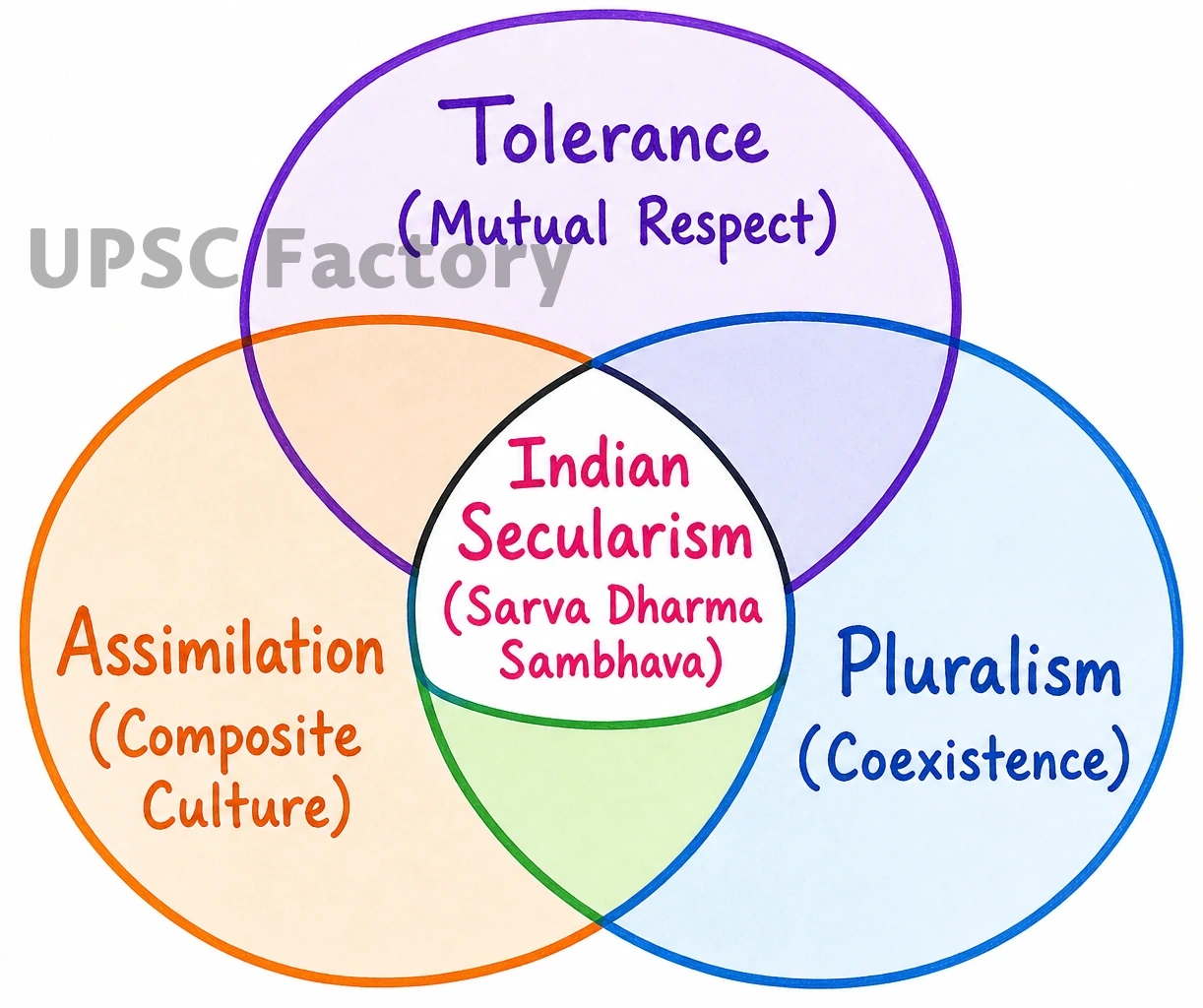
1. Tolerance: Acceptance of Diversity
- Historical Ethos: Rooted in ancient principles of mutual respect and non-persecution (Ashoka’s 12th Rock Edict, Akbar’s Sulh-i-Kul).
- Philosophical Depth: Epistemological tolerance acknowledging multiple truths (Jainism’s Anekantavada).
- Constitutional Embodiment: Explicitly guarantees individual freedom of conscience and the right to freely profess and practice religion (Article 25).
2. Assimilation: Syncretic Evolution
- Cultural Synthesis: Continuous, peaceful blending of diverse traditions into a singular “composite culture” (Bhakti-Sufi movement).
- Artistic Integration: Fusion of styles reflecting shared heritage without erasing core identities (Indo-Islamic architecture, evolution of Urdu).
- State Accommodation: Seamless state integration with religious institutions where necessary (Article 290A for Devaswom Funds, statutory Waqf Boards).
3. Pluralism: Coexistence of Identities
- Demographic Reality: Historic safe haven for persecuted faiths (Parsis, Jews) and the birthplace of four major global religions.
- Institutional Protection: Constitutional autonomy granted to denominations to manage their own religious affairs and institutions (Article 26).
- Minority Safeguards: Explicit fundamental rights protecting the culture and educational institutions of religious minorities (Articles 29 and 30).
4. The Unique Indian Secular Model (Justification)
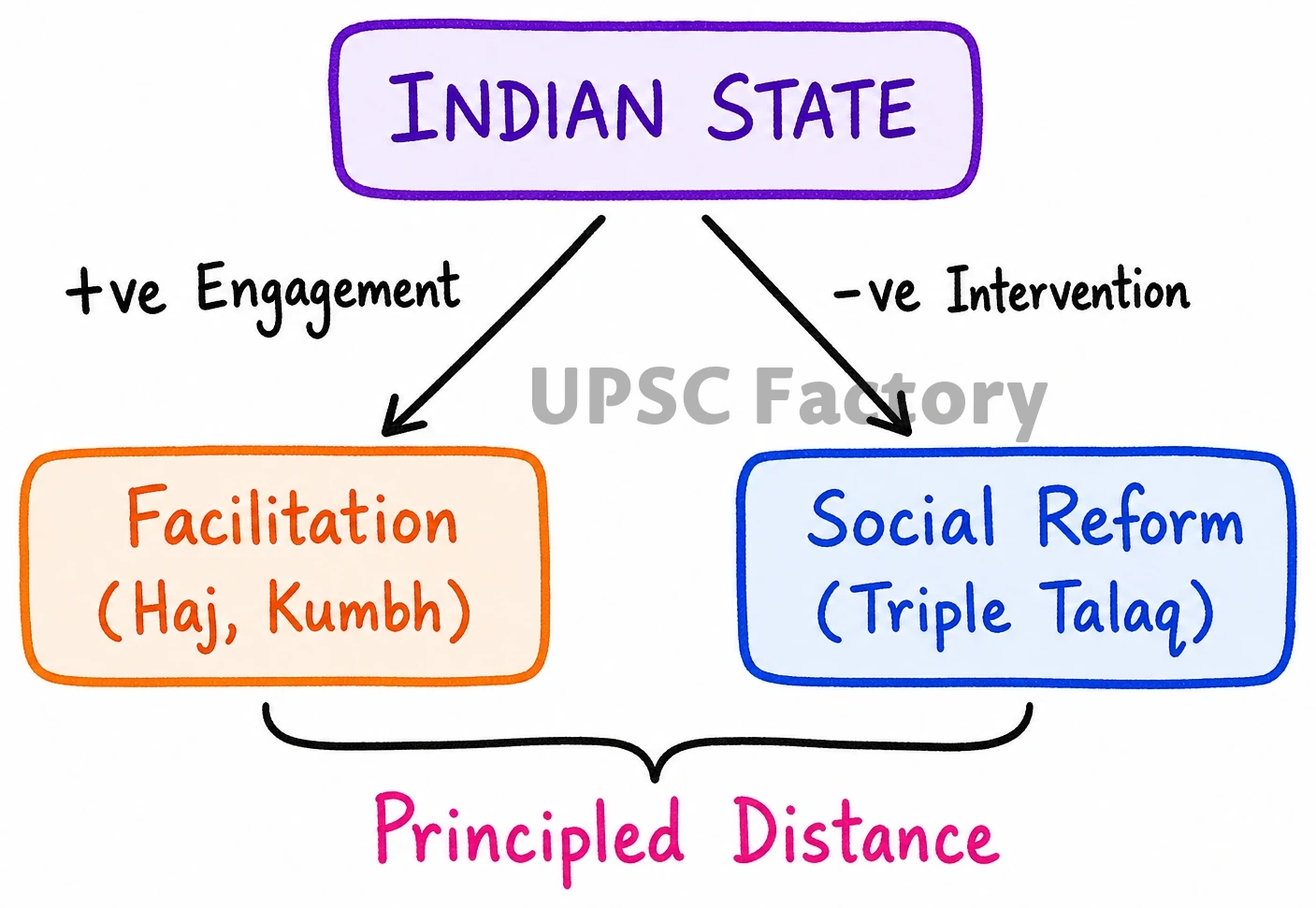
- Principled Distance: The State maintains flexible engagement rather than rigid separation, intervening only for social reform (Rajeev Bhargava).
- Positive Secularism: State actively facilitates religious practices equitably across all faiths (Kumbh Mela infrastructure, Haj subsidies).
- Transformative Nature: Pluralism does not mean blind acceptance; the state actively curtails oppressive religious traditions (Abolition of Untouchability – Art 17, Triple Talaq ban).
Thus, Indian secularism is not a rigid constitutional transplant but a dynamic, organic framework where tolerance, assimilation, and pluralism synergize to sustain national unity amidst profound diversity.