Model Answer:
Achieving SDG 5 demands conceptual clarity to shift policies from passive welfare to structural transformation.
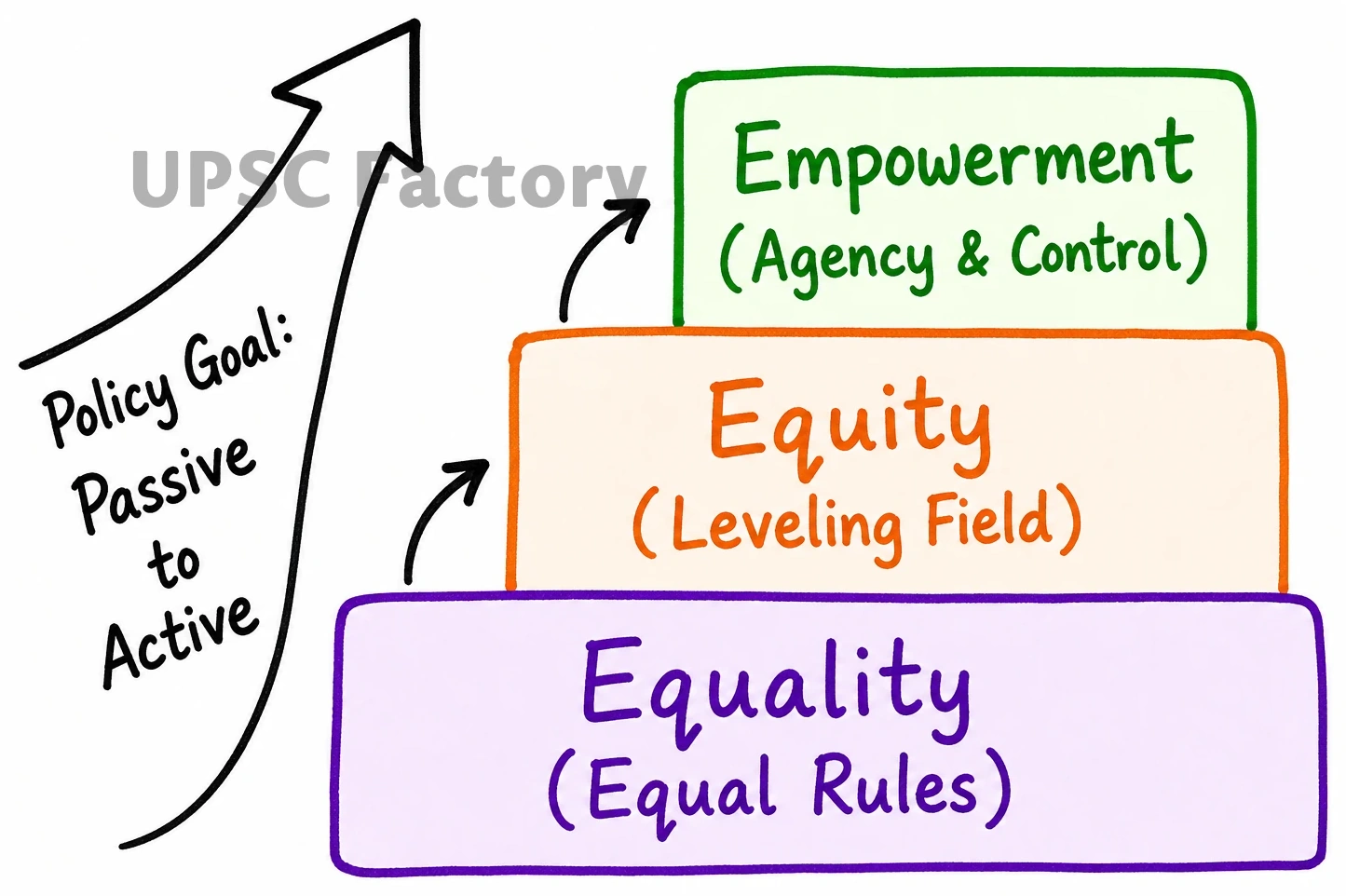
1. Distinguishing Equality, Equity, and Empowerment
- Gender Equality: Equal rights, responsibilities, and opportunities regardless of gender (e.g., Equal Remuneration Act).
- Gender Equity: Fair treatment acknowledging historical or biological disadvantages to ensure level outcomes (e.g., Maternity Benefit Act, Women’s Reservation Act).
- Women’s Empowerment: The active process of gaining agency, decision-making power, and control over resources (e.g., SHGs, Lakhpati Didi).
2. Need for Gender Concerns in Programme Design & Implementation
- Mitigating ‘Male-Default’ Biases: Prevents blanket policies that ignore women’s unique physiological and social realities (e.g., gender-responsive urban transport).
- Addressing Time Poverty: Design must account for the disproportionate unpaid care burden (e.g., PM Ujjwala saving fuel-gathering time).
- Ensuring Safe Accessibility: Implementation must factor in mobility constraints and physical safety (e.g., mandated crèches at MGNREGA worksites).
- Socio-Economic Multiplier Effect: Gender-targeted financial inclusion directly elevates household nutrition and child education (e.g., cash transfers directly to female heads).
- Fostering True Agency: Shifts women from passive beneficiaries to active governance stakeholders (e.g., Gender Budgeting mandates).
Mainstreaming gender across the entire policy lifecycle ensures a transition from nominal equality of opportunity to substantive equity, truly realizing Nari Shakti in India’s development trajectory.