Model Answer:
Animal motifs like the lion and bull transcend mere decoration in Indian heritage, acting as profound, continuous symbols of cosmic power, Dharma, and royal authority across millennia.
1. Significance of the Lion Motif
In Mythology:
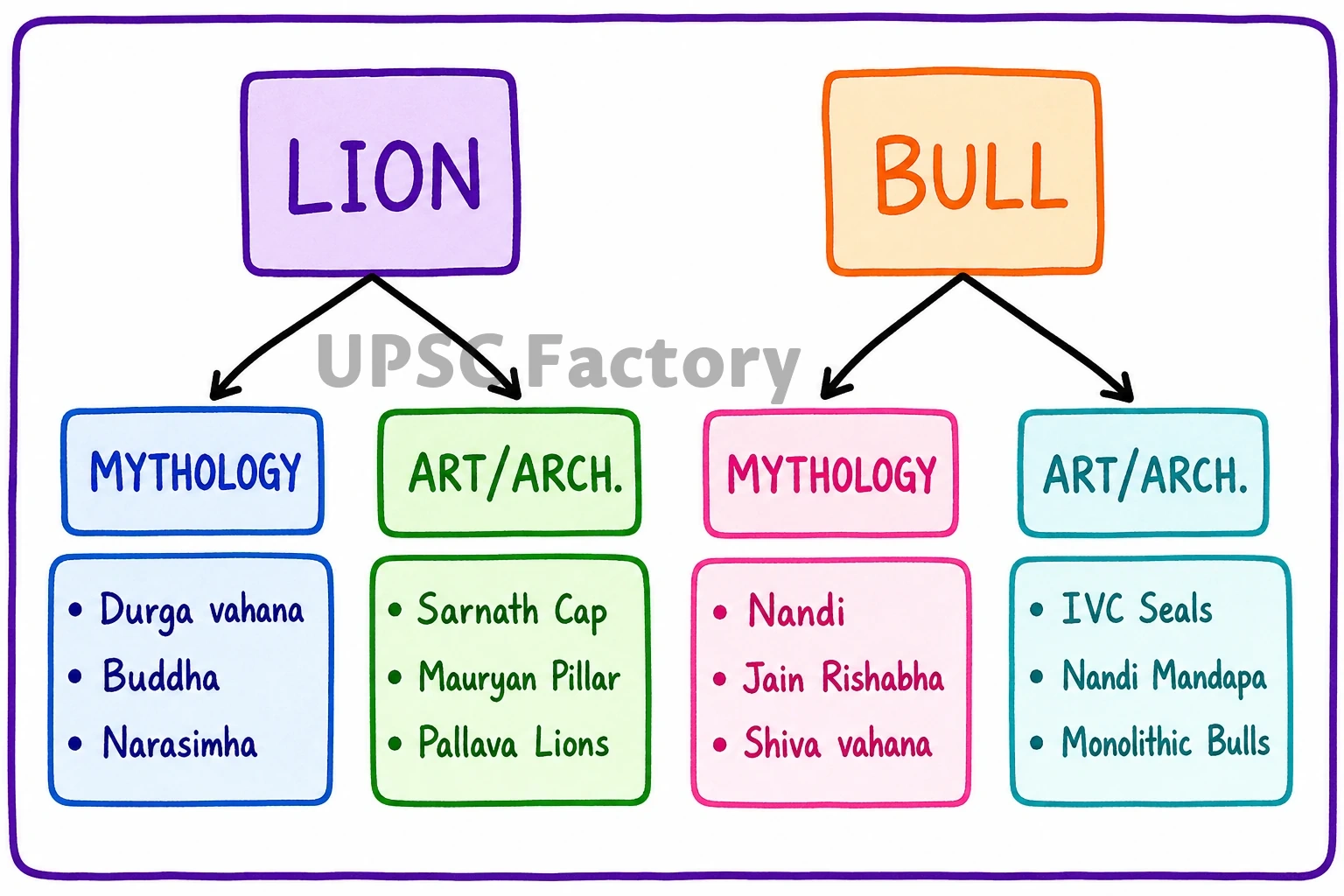
- Divine Mount: Serves as Goddess Durga’s vahana (Dawon), symbolizing supreme cosmic energy and triumph over evil forces.
- Vaishnavite Protector: The Narasimha (half-lion) avatar of Vishnu represents divine fury incarnated to protect the righteous.
- Buddhist Metaphor: Buddha is revered as Shakyasimha (Lion of the Shakyas), denoting spiritual sovereignty and the roaring dissemination of truth.
In Art and Architecture:
- Mauryan Majesty: The Sarnath Lion Capital projects temporal power and Dharmachakra Pravartana (adopted as India’s State Emblem).
- Pallava Pillars: Rock-cut shrines prominently feature Simha-stambhas (lion-based pillars at Mamallapuram) signifying structural and imperial strength.
- Temple Guardians: Mythical lion-like creatures (Yalis) flank Dravidian temple entrances to ward off evil and project grandeur.
2. Significance of the Bull Motif
In Mythology:
- Shaivite Core: Nandi, Lord Shiva’s vahana, epitomizes absolute devotion, cosmic virility, and the embodiment of Dharma.
- Jain Iconography: The bull serves as the sacred lanchhana (emblem) of Rishabhanatha, the first Jain Tirthankara.
- Vedic Symbolism: Frequently associated with fertility, agriculture, and the rain god Indra in ancient texts.
In Art and Architecture:
- Harappan Origins: Prominent on Indus Valley steatite seals (Zebu bull), representing early urbanization and agrarian surplus.
- Classical Sculpture: The Mauryan Rampurva Bull Capital showcases exquisite naturalism and indigenous sculptural mastery.
- Colossal Monoliths: Gigantic monolithic Nandi sculptures grace major Shaivite complexes (Lepakshi, Brihadeeswarar Temple).
- Numismatics: Bull motifs were extensively minted on Kushana and Skandagupta coins, linking kingship with divine sanction.
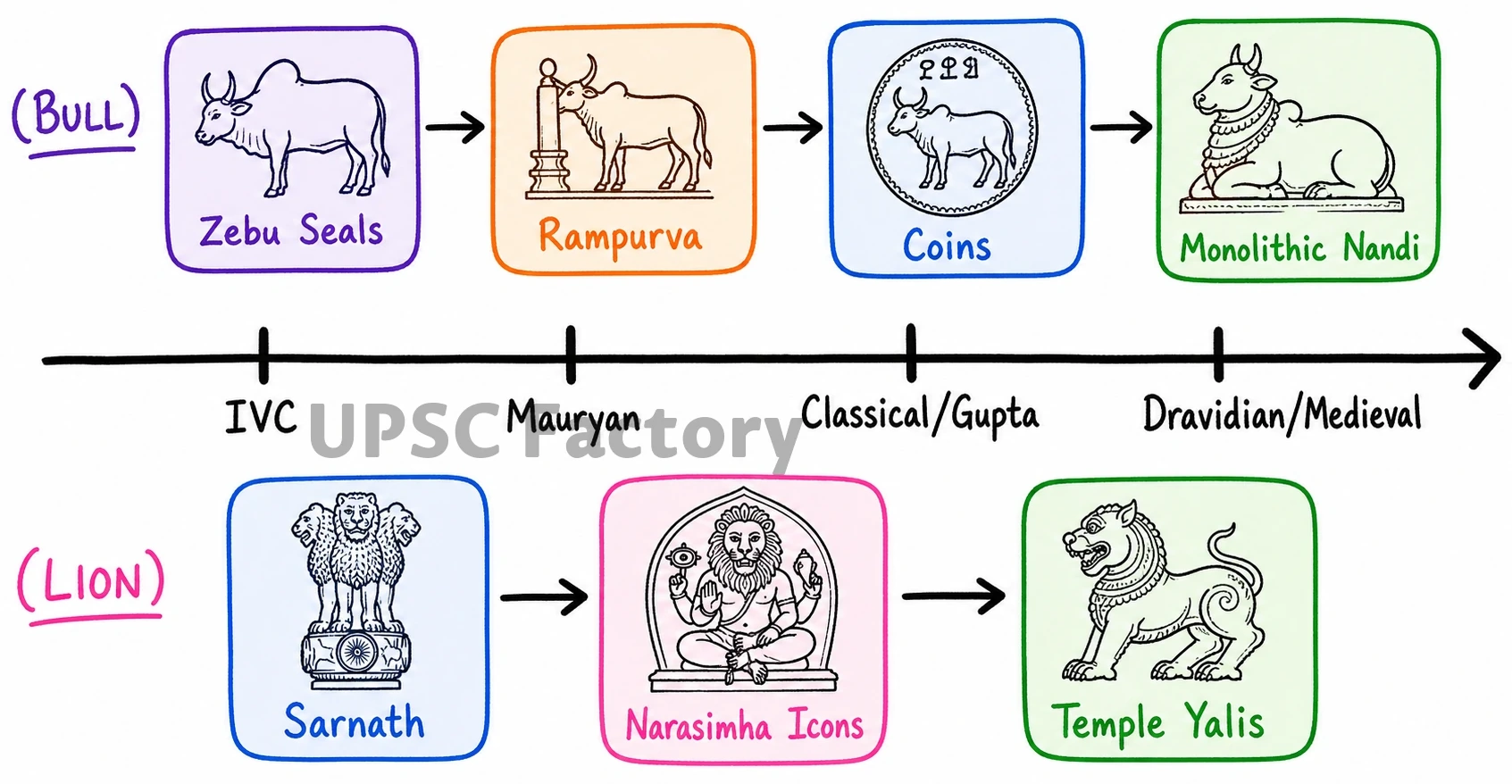
Ultimately, the lion and bull weave a continuous narrative from Harappan antiquity to the modern Republic, seamlessly synthesizing spiritual devotion with sovereign majesty in India’s cultural tapestry.