Model Answer:
Tropical countries face disproportionate food security risks from climate change due to their high climate sensitivity and agrarian economies (IPCC AR6).
1. Impacts on Food Availability
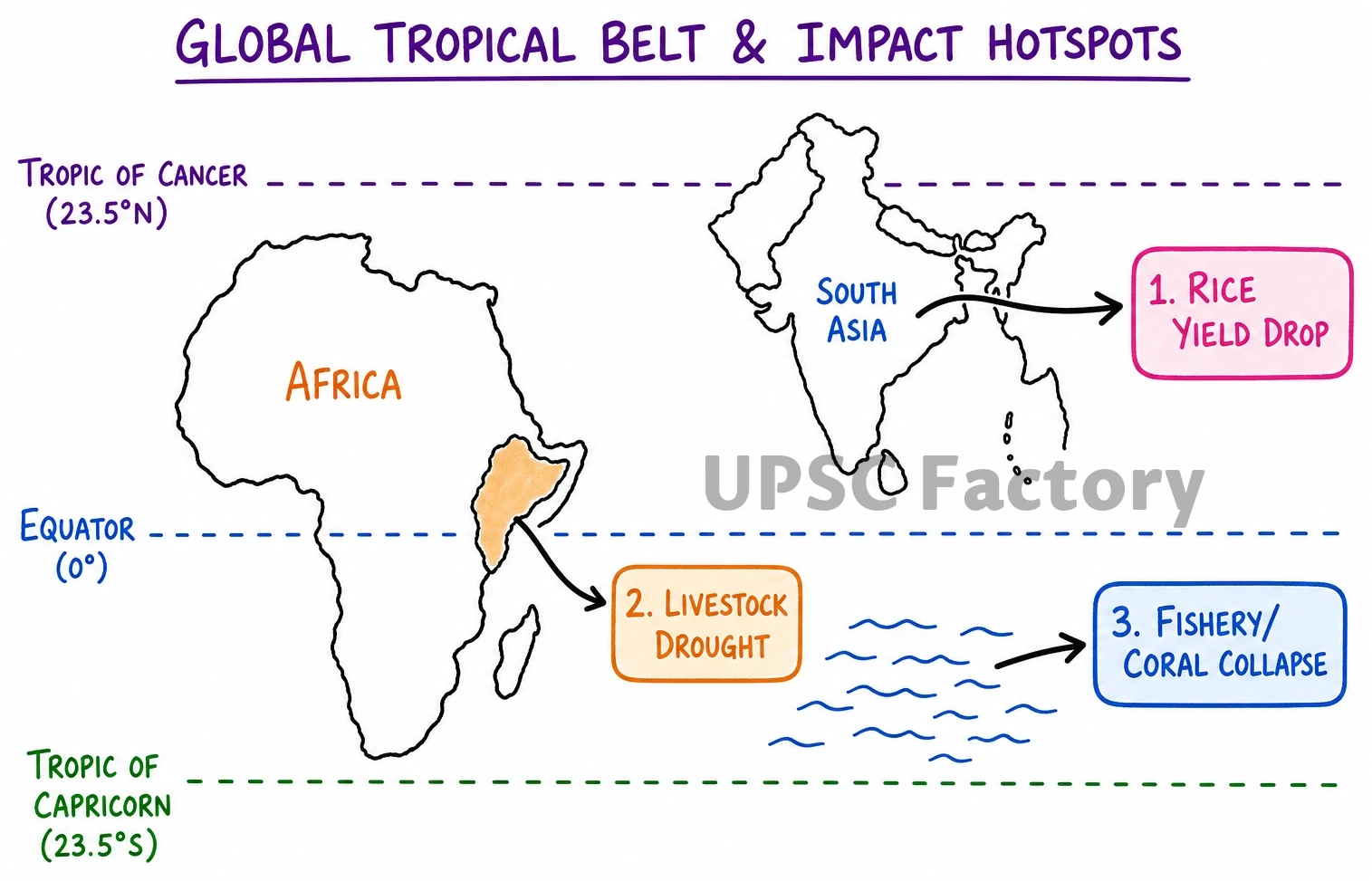
- Yield Reduction: Rising temperatures and erratic monsoons severely depress staple yields (10-20% projected drop in South Asian rice).
- Livestock Depletion: Heat stress and water scarcity increase herd mortality and lower productivity (El Niño droughts in Horn of Africa).
- Marine Crisis: Ocean warming and acidification decimate tropical coral fisheries, a primary protein source for coastal nations.
2. Impacts on Access, Stability, and Utilization
- Economic Access: Frequent crop failures trigger agrarian income collapse and severe food inflation, crippling affordability.
- Supply Stability: Extreme weather (cyclones, floods) destroys agricultural storage and disrupts distribution logistics, causing sudden supply shortages.
- Nutritional Dilution: Elevated atmospheric CO2 reduces iron, zinc, and protein in crops, worsening “Hidden Hunger” (FAO SOFI).
Securing tropical food systems demands urgent investment in climate-smart agriculture, biofortified drought-resistant seeds, and robust early warning systems (SDG 2: Zero Hunger).