Model Answer:
According to the UN World Water Report, over 2 billion people experience high water stress, driven by systemic deficits in both physical availability and socioeconomic access.
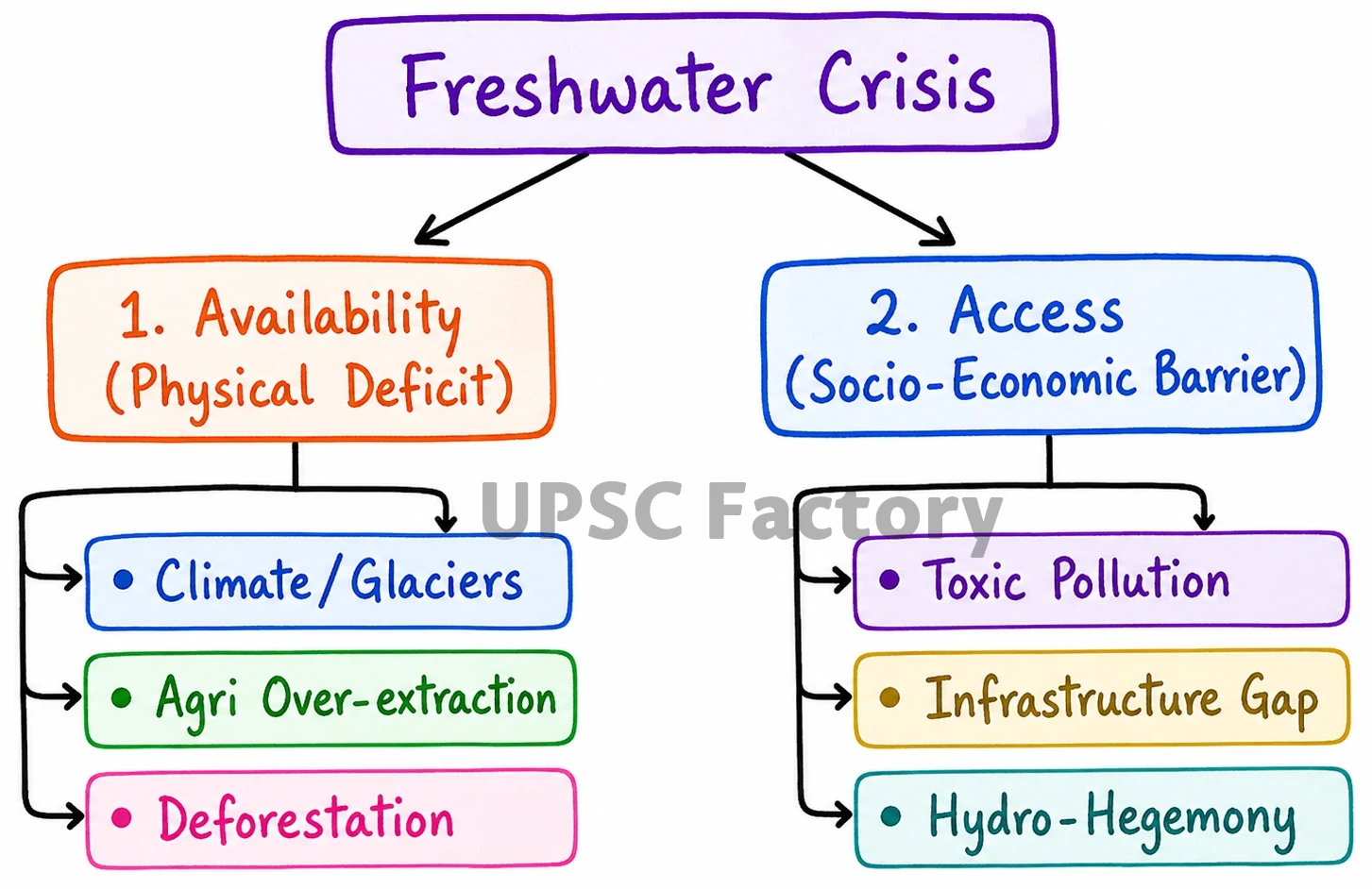
1. Drivers of the Availability Crisis (Physical Scarcity)
- Climate Change: Altered precipitation patterns, prolonged droughts, and receding glaciers severely diminish freshwater replenishment (Himalayan retreat).
- Over-extraction: Unsustainable groundwater mining, primarily driven by water-intensive agriculture, outpaces natural aquifer recharge (Punjab, US High Plains).
- Ecological Degradation: Deforestation and the destruction of critical wetlands reduce nature’s capacity for water retention (Aral Sea, Lake Chad depletion).
2. Barriers to Access (Economic and Geopolitical Scarcity)
- Severe Pollution: Industrial effluents and agricultural runoff render existing water resources toxic and unpotable (Flint water crisis, Yamuna frothing).
- Infrastructure Deficit: Inadequate capital for distribution pipelines and treatment networks limits access in developing regions (Sub-Saharan Africa).
- Transboundary Conflicts: Hydro-hegemony and geopolitical disputes over shared river basins restrict equitable downstream allocation (Nile/GERD, Jordan River).
- Commercialization: Water privatization drives up tariffs, making clean water unaffordable for the urban and rural poor (Cochabamba Water War).
Achieving SDG 6 (Clean Water and Sanitation) demands a global transition toward circular water economies, integrated river basin management, and robust hydro-diplomacy.