Model Answer:
AI promises data-driven rationality in public administration, but its dependability is debated due to inherent conflicts between algorithmic efficiency and foundational administrative ethics.
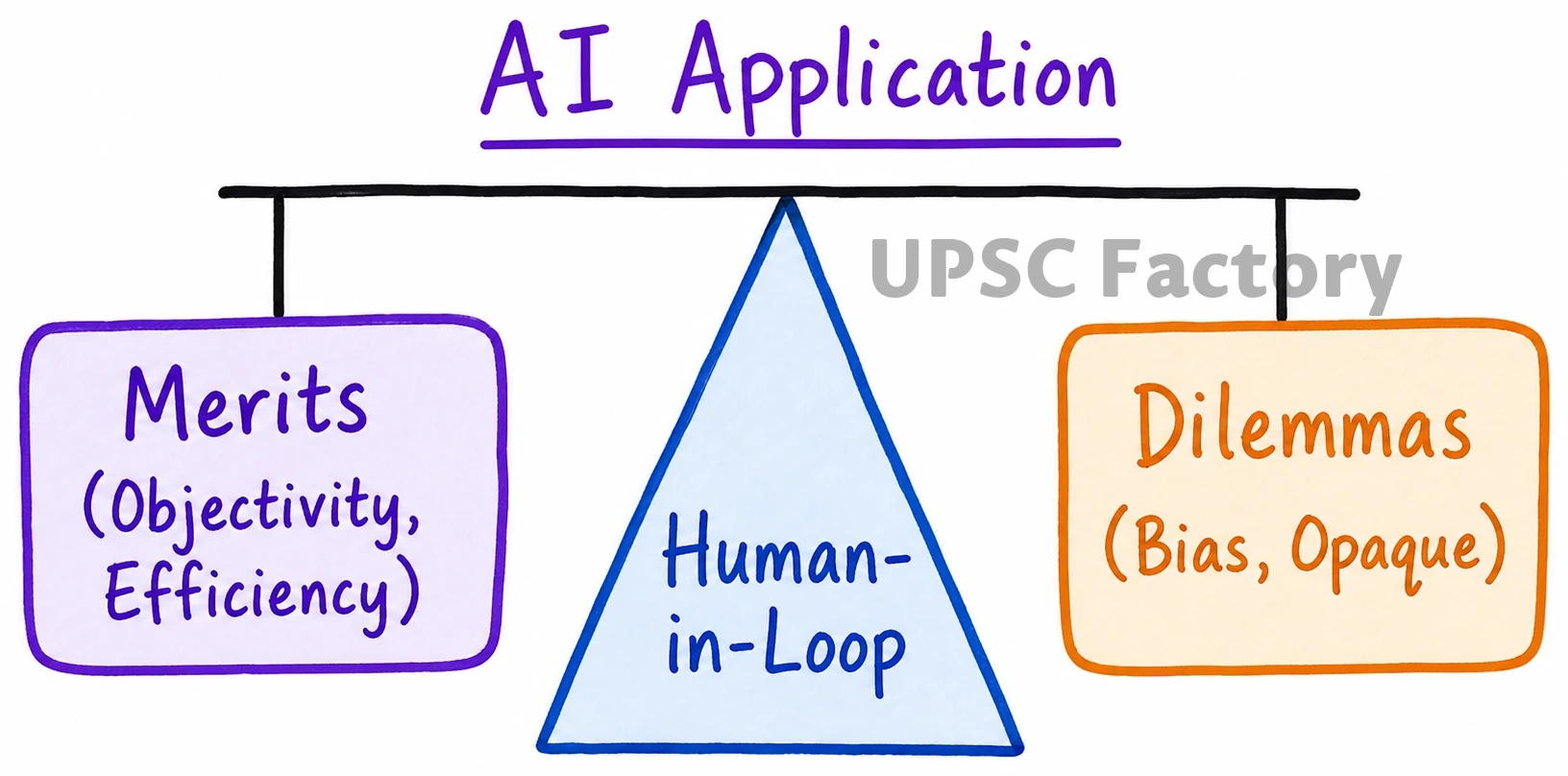
1. Ethical Merits of AI Inputs
- Procedural Fairness: Minimizes cognitive human prejudices, promoting objective and impartial administrative actions.
- Utilitarian Welfare: Maximizes resource allocation efficiency for the greater good (e.g., precise beneficiary targeting in PDS).
- Transparency: Digitally traceable AI inputs reduce opaque bureaucratic discretion and rent-seeking behavior.
- Proactive Governance: Predictive analytics enable anticipatory public service delivery, fulfilling the administrative duty of care (e.g., disaster forecasting).
2. Ethical Dilemmas & Debatability
- Algorithmic Bias: AI learns from historical data, potentially perpetuating systemic discrimination (e.g., racial/caste bias in COMPAS sentencing).
- ‘Black-Box’ Accountability: Opaque machine learning logic obscures decision rationales, violating the core principle of administrative answerability.
- Empathy Deficit: AI lacks compassion, applying rules rigidly without contextual understanding for vulnerable populations.
- Privacy Intrusions: Aggressive data harvesting compromises informed consent and fundamental human dignity (Puttaswamy Judgement).
AI must be an enabler, not an arbiter. Upholding NITI Aayog’s ‘AI for All’ strategy requires strict “Human-in-the-Loop” governance to balance rational efficiency with ethical compassion and justice.