Model Answer:
Constitutional morality refers to strict adherence to the core principles and philosophy of the Constitution, functioning as a safeguard against arbitrary power (NCT of Delhi v. UoI, 2018).
1. Concept and Elements of Constitutional Morality
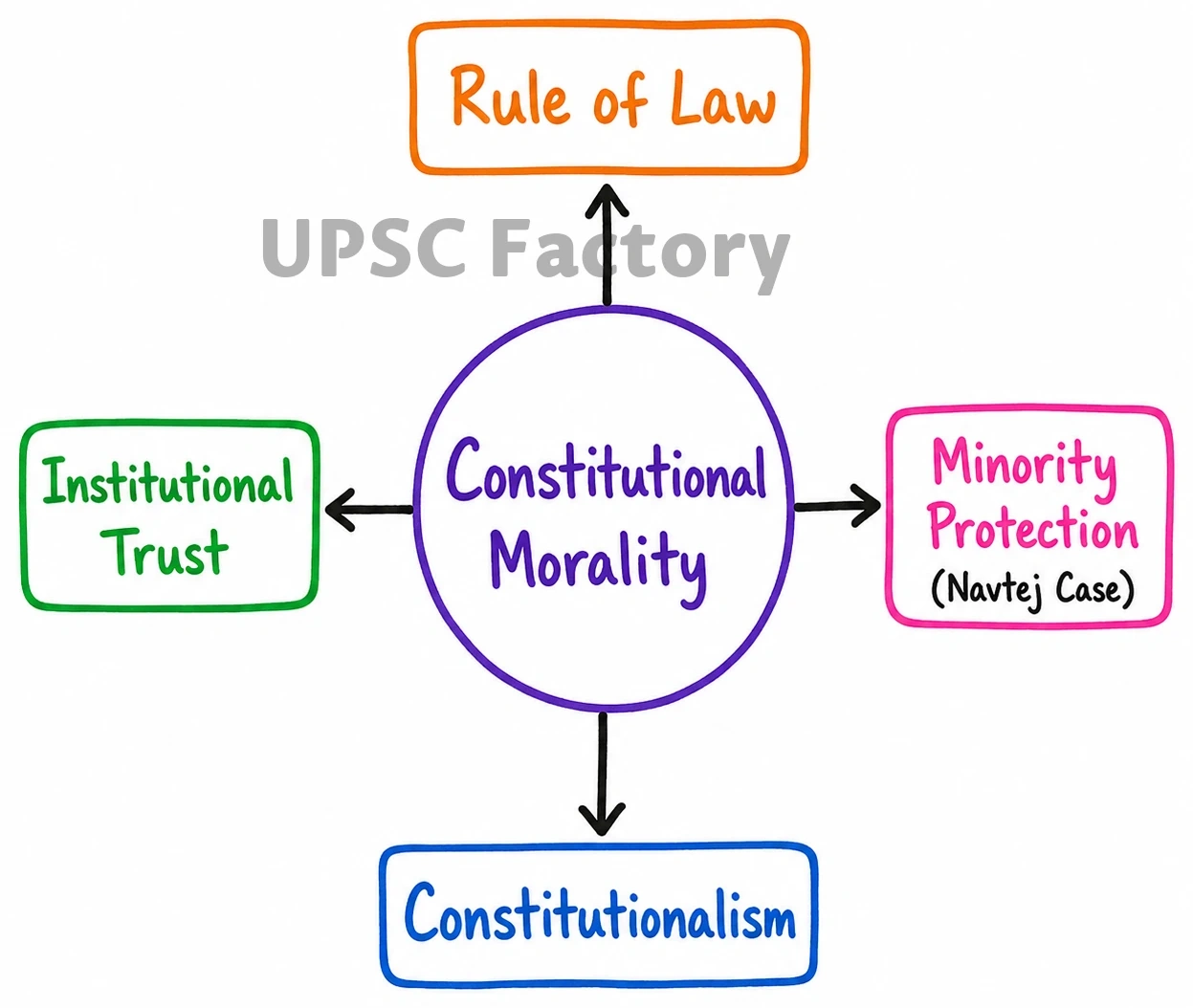
It ensures democratic ideals transcend mere majoritarianism through:
- Constitutionalism: Enforcing limited government via structural checks and balances.
- Rule of Law: Upholding the supremacy of constitutional text over individual or political whims.
- Institutional Trust: High functionaries acting as fiduciaries of constitutional values.
- Minoritarian Protection: Defending individual dignity and fundamental rights against popular morality (Navtej Singh Johar Case).
2. Application: Balancing Judicial Independence & Accountability
Constitutional morality acts as a bridge, ensuring courts remain autonomous yet democratically responsible:
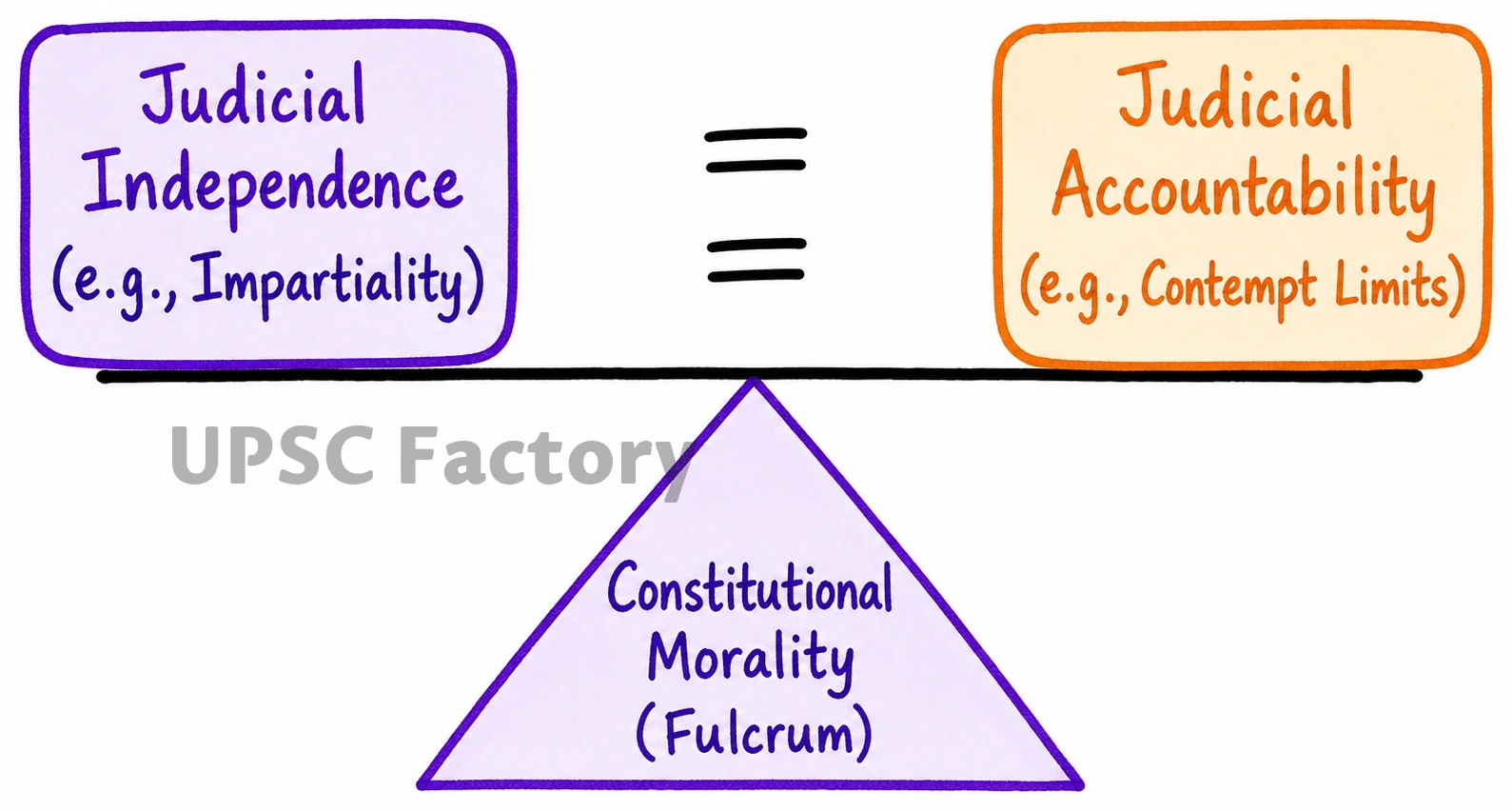
- Restraining Judicial Overreach: It guides courts to respect the separation of powers, preventing intrusion into the executive’s policy domain.
- Regulating Contempt Power: Dictates that powers under Article 129 be used solely to protect institutional dignity, not the personal ego of judges.
- Internal Accountability: Drives adherence to the Restatement of Values of Judicial Life (1999), fostering self-regulation without executive interference.
- Transparent Appointments: Mandates that judicial independence must coexist with transparency, framing the ongoing debate around the collegium system (NJAC Case).
- Impartial Adjudication: Fortifies judicial independence by immunizing judges from societal, majoritarian, or political pressures.
- Strict Removal Criteria: Ensures removal (Article 124(4)) is strictly limited to “proved misbehaviour,” preventing political weaponization while securing ultimate accountability.
By anchoring the judiciary to constitutional ethos, constitutional morality ensures that judicial independence does not morph into judicial despotism, maintaining the delicate equilibrium essential for a vibrant democracy.