Model Answer:
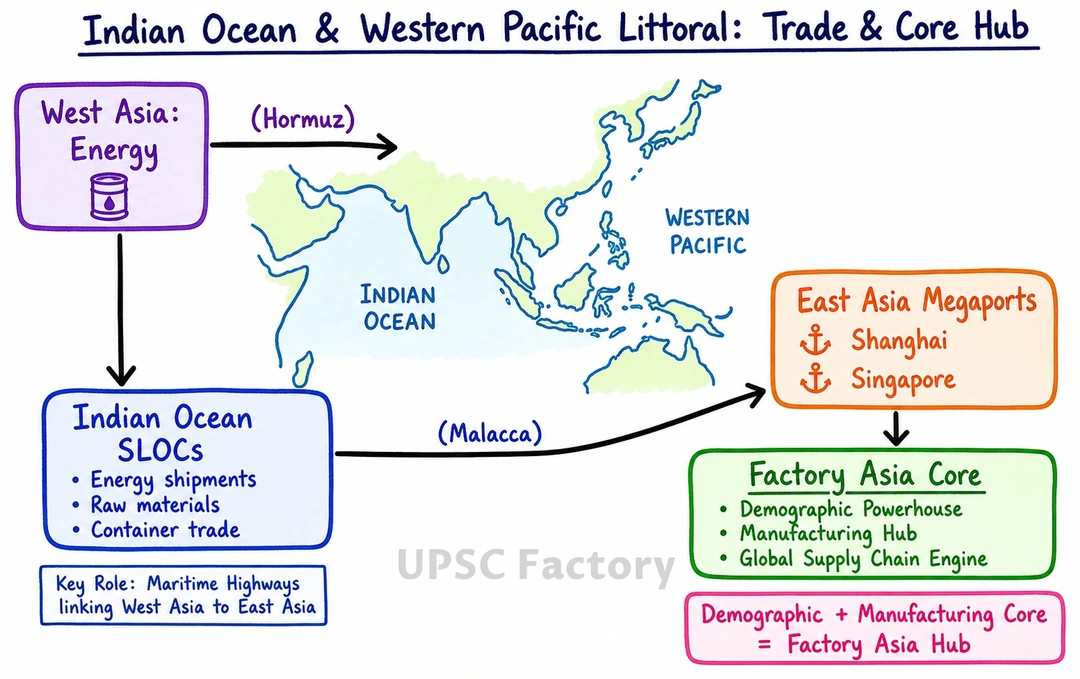
Global economic geography is experiencing a structural pivot as the historical Transatlantic trade axis yields volume and growth primacy to the Indo-Pacific maritime realm.
1. Spatial Drivers of the Indo-Pacific Trade Pivot
- Shift in Demographic Gravity: Rapid urbanisation and expanding middle-class consumption in Developing Asia drive global import demand (India, ASEAN).
- Manufacturing & Value-Chain Clustering: “Factory Asia” benefits from intermediate-goods trade and mega-regional trade agreements (RCEP, CPTPP).
- Maritime Freight Dominance: The region hosts over 60% of global maritime trade and 9 of the world’s 10 busiest container ports (Shanghai, Singapore, Ningbo-Zhoushan — UNCTAD).
- Energy Sea Lines of Communication (SLOCs): Primary hydrocarbon transit routes connect West Asian suppliers to East Asian industrial nodes (Straits of Hormuz and Malacca).
- Infrastructure Connectivity: Outward infrastructure expansion integrates Eurasian and littoral hinterlands (Belt and Road Initiative, IMEC, SAGAR).
2. Bottlenecks and Enduring Atlantic Primacy
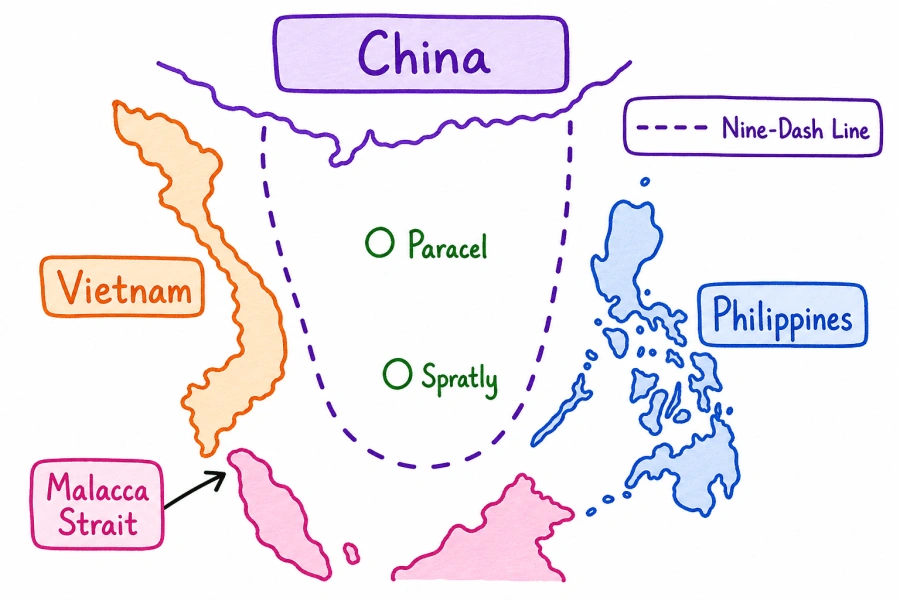
- Maritime Chokepoint Vulnerability: Extreme geographical concentration creates acute systemic exposure to regional militarisation and territorial friction (Taiwan Strait, South China Sea).
- High-Value Trade & Innovation Hegemony: The Transatlantic axis retains structural dominance in high-tech, services trade, intellectual property, and advanced capital goods (US–EU bilateral trade).
- Institutional and Financial Architecture: Western institutions govern global trade settlement, maritime insurance (Lloyd’s Register), and trade norms (EU CBAM).
- Nearshoring and Friendshoring: Geopolitical de-risking redirects critical supply chains toward Atlantic-proximate trade blocs (USMCA, Western Hemisphere nearshoring).
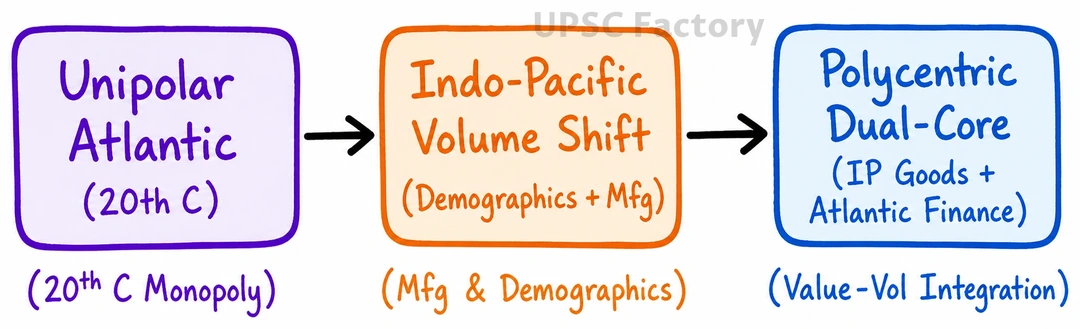
While Indo-Pacific dominance in physical goods volume is undisputed, global geoeconomics remains polycentric—anchored by Asian manufacturing density and Atlantic financial, regulatory, and technological control.