Model Answer:
Flanked by the Line of Actual Control (LAC) and Line of Control (LoC), Ladakh’s national security paradigm relies heavily on local communities acting as India’s primary “eyes and ears.”
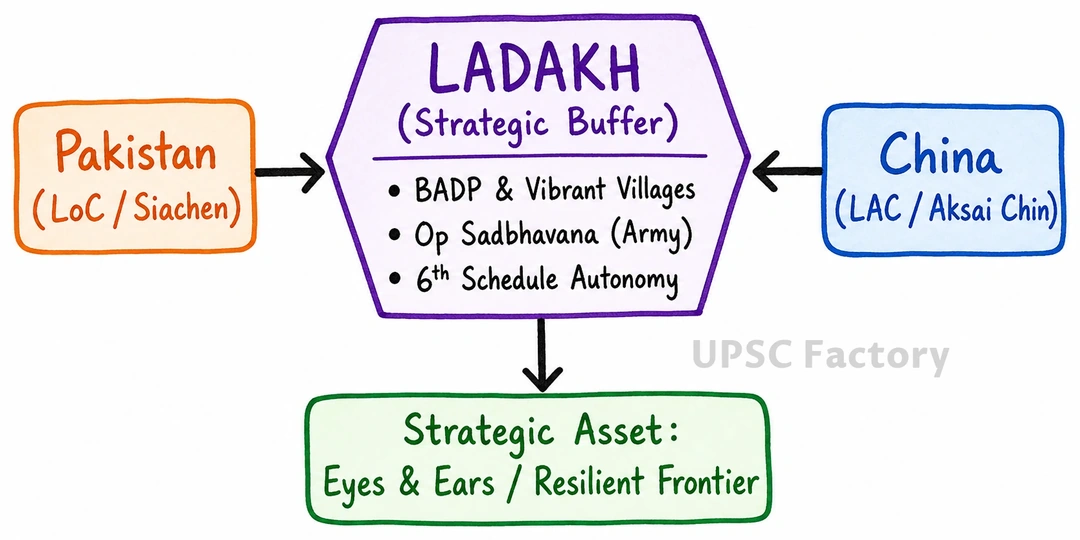
1. BADP and Military Civic Actions: Winning Hearts and Minds
- Vibrant Villages & BADP: Builds multi-sectoral border infrastructure, creates rural livelihood avenues, and arrests strategic out-migration from forward border habitations (e.g., Demchok, Chushul).
- Operation Sadbhavana: Provides quality education through Army Goodwill Schools, specialized medical camps, and micro-infrastructure in far-flung pockets (e.g., Nyoma, Turtuk).
- Strategic Human Intelligence: Fosters deep civil-military integration, turning nomadic pastoralists (e.g., Changpas) into reliable early-warning and logistical assets for the armed forces.
2. Sixth Schedule Demand: Drivers and Security Implications
- Tribal and Ecological Safeguards: Aims to protect Ladakh’s >97% tribal population, fragile Himalayan ecology, and land rights under Article 244(2) from unregulated commercialization.
- Addressing Democratic Deficits: Mobilized by the Leh Apex Body and Kargil Democratic Alliance (LAB–KDA) to regain legislative representation lost post-2019 UT reorganization.
- Frontier Stability: Resolving political grievances prevents disaffection, ensuring local populations remain emotionally integrated with the Indian Union amidst external geopolitical friction.
Harmonizing national security imperatives with regional tribal autonomy—via the MHA High-Powered Committee or enhanced powers to Ladakh Autonomous Hill Development Councils (LAHDC)—is crucial for long-term frontier resilience.