Model Answer:
The Governor occupies a dual constitutional capacity under Article 153—acting as the titular executive head of the State and the vital constitutional link between the Union and the States.
1. Position in the Federal Polity
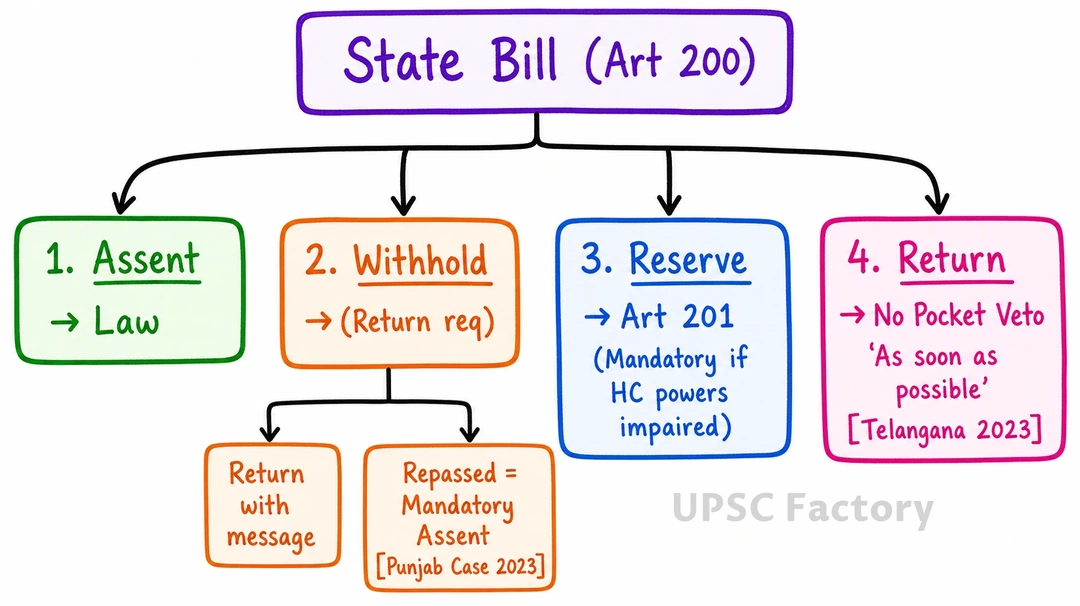
- Constitutional Head: Functions as a parliamentary figurehead bound by ministerial advice, mirroring the President at the Centre (Shamsher Singh, 1974; Art 154).
- Federal Linchpin: Bridges Union-State coordination and preserves national integrity, though unilateral actions often trigger federal friction (Sarkaria Commission).
- Autonomous Constitutional Office: Is neither an employee nor an agent of the Central Government (Hargovind Pant, 1979).
2. Nature of Assent Powers (Article 200)
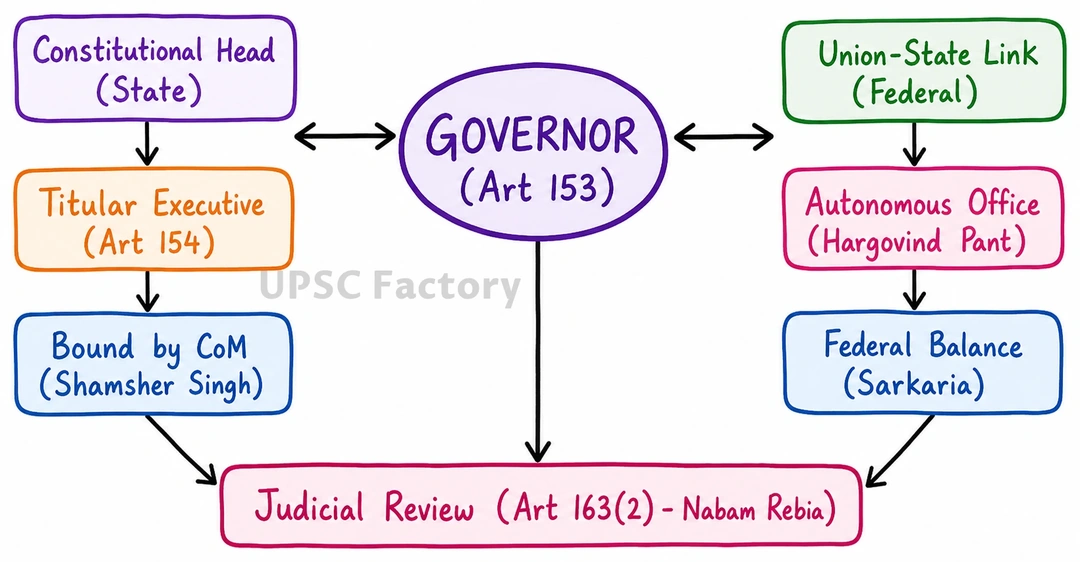
- Constitutional Alternatives: The Governor can grant assent, withhold assent, return the bill (non-Money Bills) for reconsideration, or reserve it for the President (Article 201).
- No Pocket Veto: Assent cannot be deferred indefinitely; the phrase “as soon as possible” mandates timely action (State of Telangana, 2023).
- Qualified Withholding: Withholding assent requires returning the bill with a message; if repassed, assent is mandatory (State of Punjab v. Governor, 2023).
- Mandatory Reservation: Obligated to reserve bills that derogate from the constitutional powers of the High Court (Article 200, second proviso).
3. Extent of “Aid and Advice” (Article 163)
The Governor is not bound by the Council of Ministers in all functions, possessing limited, non-plenary discretion:
- Constitutional Discretion: Explicit mandates such as Sixth Schedule tribal administration and special responsibilities under Article 371.
- Situational Discretion: Appointing the Chief Minister in a hung assembly, dismissing a ministry that has lost legislative majority, or dissolving the house (S.R. Bommai, 1994).
- Constitutional Limits: Discretion under Article 163(2) is subject to judicial review and cannot be exercised arbitrarily (Nabam Rebia, 2016).
Operationalising the Punchhi Commission’s recommendation for time-bound assent and institutional restraint will align the Governor’s office with cooperative federalism and constitutional morality.